A riot broke out during a boxing match at Philadelphia’s juvenile detention center. Now it’s on a provisional license.
State officials cited a riot that broke out at the center in January, sending some kids to the hospital and endangering others.
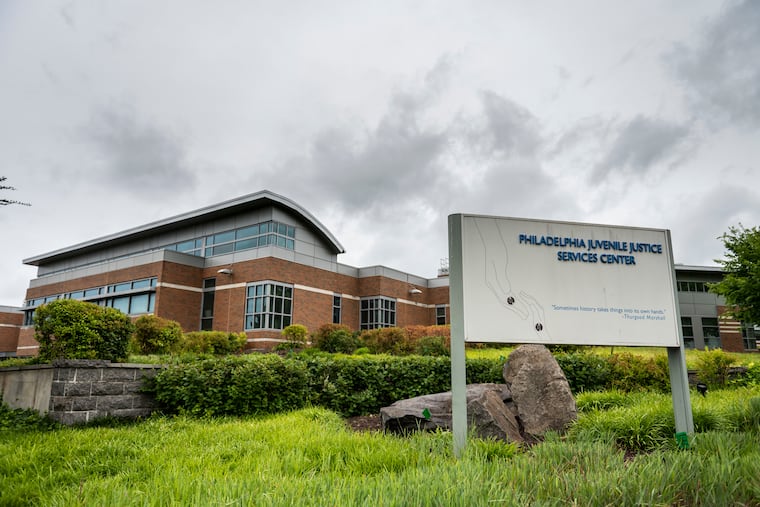
State regulators revoked the license of Philadelphia’s juvenile detention facility this week — reissuing it on a provisional basis only — after a riot broke out during a boxing event there in January, endangering children, officials said.
The state Department of Human Services cited multiple violations at the Juvenile Justice Services Center in West Philadelphia, including the “systemic” and improper use of restraints and restrictive procedures to punish children.
Several teens were injured in the riot, and one or more required treatment at a hospital emergency department, according to the licensing documents. The regulators also found that the facility staff failed to report suspected child abuse.
The Philadelphia Department of Human Services’ leadership rejected the state’s findings — denying that children were placed in improper restraints — and disputed the state’s conclusion that there had been a breakdown in leadership, policy, and procedure.
The city agency added that it “works hard to create and sustain a culture of safe crisis management that takes into account the welfare of every youth in our care.”
Chief Deputy Mayor Vanessa Garrett Harley said in a statement that the provisional license indicates the facility is in “substantial compliance with applicable statutes and regulations.”
”Philadelphia DHS remains committed to achieving full compliance and working with the State as we implement improvements to our practices," the statement said.
But the city pledged to retrain staff and institute new safeguards.
Under the state-mandated corrective plan, staff will be trained in de-escalation, and supervisors must review video of all uses of restraints within 24 hours. Supervisors will also have to closely monitor the use of restrictive procedures, such as placing teens in seclusion.
The state also specifically ordered the facility director and the city’s deputy commissioner for juvenile justice to be retrained on juvenile rights and on policies and procedures.
Marsha Levick, cofounder of the Juvenile Law Center, on Friday called the details surrounding the facility’s license revocation “very disturbing.”
“Somebody might look at that and say the system is working,“ Levick said of the state’s intervention. ”I dissent — the system is not working.”
Levick, whose group was involved with suing the Glen Mills Schools, likened the situation at Philadelphia’s juvenile detention center to that of the now-shuttered Delaware County reform school. According to Levick, it took decades of corrective action before that facility was eventually shuttered in 2019.
It’s the second time in two years that Philadelphia’s 184-bed detention center has been on a provisional license. In 2023, the facility was placed on a provisional license after an incident in which a teen was placed in a restraint that threatened to obstruct the teen’s breathing.
An Inquirer investigation this year revealed a violent climate in the facility, where young people said fights were a routine occurrence. Both children and former staffers said some employees bribed children with cheesesteaks to fight one another as a form of discipline. The city declined to answer questions about those allegations.
Teens also described frequent lockdowns — as long as 10 days, which the city ombudsperson this year concluded amounted to routine and illegal use of seclusion in the facility. In response, Philadelphia DHS said it would retrain staff. But the agency disputed some of the ombudsperson’s findings, saying its records indicated no one was in seclusion more than three days.
This article was supported in part by funding from the Stoneleigh Foundation, a philanthropic organization seeking to improve the life outcomes of young people. Inquirer articles are created independently of donor support.