The FAA reduced flights at PHL Airport. Here’s what you need to know.
Flight delayed or canceled? Here are your options.
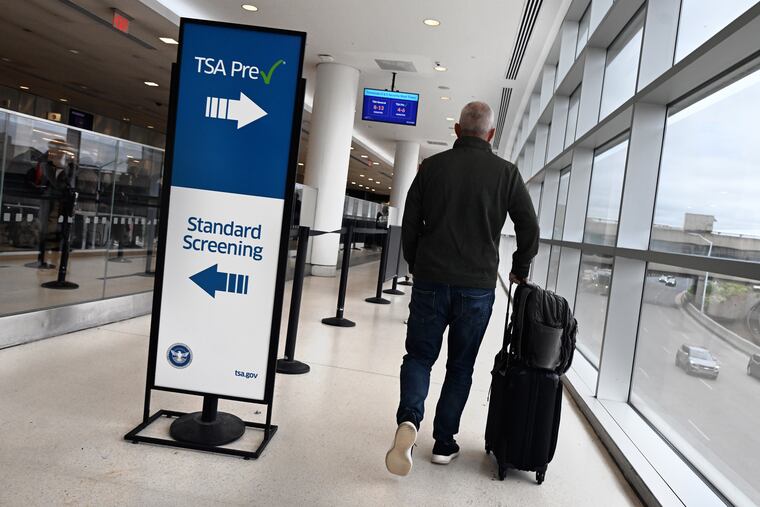
Philadelphia travelers may encounter delays and cancellations at Philadelphia International Airport airport starting Friday.
The federal government shutdown, now officially the longest in U.S. history, has left air traffic controllers and other federal staff without pay and with difficult working conditions. In response, the Federal Aviation Administration (FAA) ordered all airlines to reduce flights by 10% starting Friday, with cancellations extending into the foreseeable future while the shutdown continues.
Which airports are affected by the government shutdown today?
40 major airports across the U.S., including Philadelphia International Airport (PHL), are experiencing air traffic reductions.
Here is the full list of airports affected by the shutdown:
Anchorage International (ANC)
Hartsfield-Jackson Atlanta International (ATL)
Boston Logan International (BOS)
Baltimore/Washington International (BWI)
Charlotte Douglas International (CLT)
Cincinnati/Northern Kentucky International (CVG)
Dallas Love (DAL)
Ronald Reagan Washington National (DCA)
Denver International (DEN)
Dallas/Fort Worth International (DFW)
Detroit Metropolitan Wayne County (DTW)
Newark Liberty International (EWR)
Fort Lauderdale/Hollywood International (FLL)
Honolulu International (HNL)
Houston Hobby (HOU)
Washington Dulles International (IAD)
George Bush Houston Intercontinental (IAH)
Indianapolis International (IND)
New York John F Kennedy International (JFK)
Las Vegas Harry Reid International (LAS)
Los Angeles International (LAX)
New York LaGuardia (LGA)
Orlando International (MCO)
Chicago Midway (MDW)
Memphis International (MEM)
Miami International (MIA)
Minneapolis/St Paul International (MSP)
Oakland International (OAK)
Ontario International (ONT)
Chicago O`Hare International (ORD)
Portland International (PDX)
Philadelphia International (PHL)
Phoenix Sky Harbor International (PHX)
San Diego International (SAN)
Louisville International (SDF)
Seattle/Tacoma International (SEA)
San Francisco International (SFO)
Salt Lake City International (SLC)
Teterboro (TEB)
Tampa International (TPA)
Why is the FAA reducing flights?
Transportation Secretary Sean Duffy said pressure on air traffic controllers amid the government shutdown revealed some “concerning” data, causing the Federal Aviation Administration to swiftly reduce flights at major airports.
Speaking on CBS This Morning on Friday, Duffy didn’t reveal the exact data that led to the move to cut, but said staffing issues in large hubs like New York, Los Angeles, and Atlanta forced the agency to take “preemptive action.”
What did Sean Duffy say about flight reductions?
Secretary Duffy said that flight reductions were necessary due to “concerning data” that appeared after weeks of pressure on air traffic controllers and other staffing issues.
“We saw controllers working six days a week, 10-hour days. That pressure on the controllers was giving us numbers that were not troubling, but were concerning,” Duffy said.
Which flights are the FAA cutting?
All airlines operating at the 40 U.S. airports identified for flight reductions are affected. The FAA is ordering the airlines to decide which flights are canceled or delayed. Each airline is operating differently.
Here’s how a few airlines are handling it:
American Airlines, which operates 75% of the flights out of PHL is offering travelers who have scheduled flights from Nov. 6-14, the ability to change their trip or request a refund.
United Airlines’ long-haul international flying and hub-to-hub flying will not be interrupted. But other shorter, regional flights or flights to destinations that are not UA hubs may experience delays or cancellations. During the FAA-directed flight reduction, any UA customer is eligible for a refund, even if their flight is not impacted.
Delta expects minimal impact to travelers at PHL airport as all planned cancellations for this weekend have been completed. Any Delta customer issued a ticket on or before Nov. 6, for flights between Nov. 7-9, can change, cancel, or refund their flight — without penalty — during this time.
Frontier expects there to be minimal impact to its flights at PHL, said a Frontier spokesperson, but in the case of a delay or cancellation, customers will be notified via email, text, and the Frontier mobile app. Customers with flights that are canceled, or delayed for more than three hours for domestic flights or six hours for international flights, can rebook or request a refund.
Southwest Airlines will contact any traveler whose flight is impacted. Customers with a canceled flight will automatically be rebooked on the next available flight, or they can request a refund. Customers with flights between Nov. 7-12 can also rebook a flight within 14 days of the original date of travel, or refund their flight.
How is PHL affected by flight delays and cancellations?
PHL is experiencing minimal delays and cancellations so far. Only 3% of American Airlines’ 453 flights on Friday were canceled. However, airline and airport staff are working around the clock to keep those delays and cancellations to a minimum.
What are the wait times for TSA at PHL?
Travelers at PHL can check live TSA wait times at phl.org/flights/security-information/checkpoint-hours.
Two TSA security checkpoints, Terminal A-West and Terminal F, were shut down beginning Wednesday, Nov. 5, to increase staffing and efficiency at the other checkpoints.
At the time of publishing, the longest wait time for the TSA security checkpoints is 8 minutes.