Are you satisfied living in Philadelphia right now? For many, the answer is ‘no.’
A global survey of residents of 65 large cities found that Philly residents are near the least satisfied about where they live.
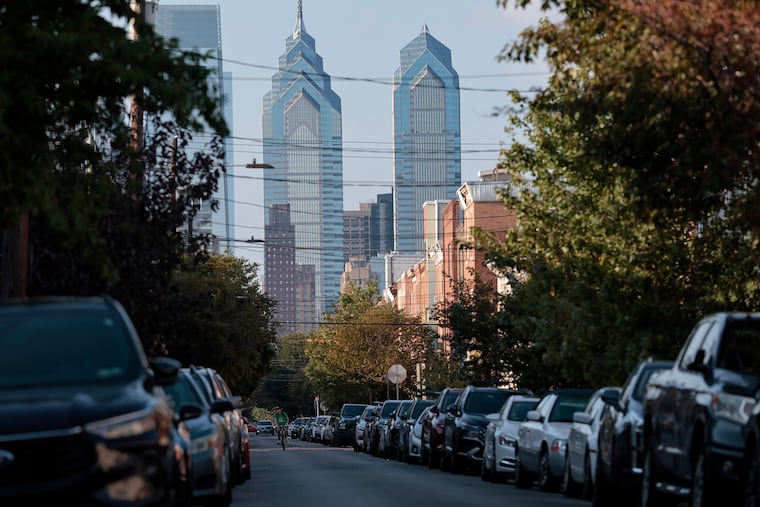
Do you like living in Philly?
In a global survey that asked residents of 65 large cities how satisfied they were with where they lived, Philadelphia came in almost dead last, according to the Gensler Research Institute. Only about 59% of Philly respondents said they were “satisfied” or “very satisfied” about living here.
And among U.S. cities, Philly ranked 26th out of 27, with peers like New York City at nearly 70% satisfaction and Detroit and Columbus, Ohio, at 66%.
But satisfaction is subjective, and surveys are not gospel. As a tumultuous year comes to a close, here is what a handful of neighborhood leaders across the city had to say about living in Philly today, the issues that matter most to their communities, and what still makes them excited to be Philadelphians.
Life feels harder and more expensive
“Things just feel a lot harder and a little bit more expensive,” said Jamila Harris-Morrison, the executive director of ACHIEVEability, a West Philly anti-poverty nonprofit focusing on single-parent and homeless families.
This year, ACHIEVEability has received more requests for assistance than ever before, she said. Inflation has created financial pressure. “We’re talking about people who are working full-time jobs or maybe two jobs and feeling like they can’t make ends meet,” she said.
That pressure has led West Philly’s young people to pick up any side hustle they can, like photography and sneaker cleaning. Some dismiss the idea of going to college or trade school, Harris-Morrison said, because they need money and resources now, not years down the line.
Harris-Morrison hears them talk about aspirations to get out of their neighborhoods one day, but not necessarily out of Philly. And their adult counterparts still hold some optimism, despite recent struggles.
She said that Mayor Cherelle L. Parker’s H.O.M.E. initiative especially has people energized and looking forward to how it might ease their housing burdens.
“There’s still a level of hope,” she said.
Community problem-solving
Affordability is a major issue in West Mount Airy, too, according to Josephine Gasiewski Winter, executive director of the West Mount Airy Neighbors nonprofit. She said it has become more difficult for people who have lived in the area to stay, and for younger families to buy homes.
But in general, people are pretty happy to be living in the neighborhood and the city, she said. Her organization was founded in 1959 to make the area one of the first intentionally integrated neighborhoods, and she said people today still value its diversity, plus its access to green spaces and the rest of the city.
“It is a very magical little corner of Philadelphia,” she said.
A strong sense of community is a key component of making people feel more satisfied, according to Winter. Recently, neighbors have come together for anti-immigration-raid trainings, and for mutual aid activations when SNAP benefits were paused.
“So when it feels like there’s not much you can do, there are people around that are doing things, and they’re united toward that common goal. That is a reason I think why people love living here,” Winter said.
In South Philly, trash and litter are always top of mind for residents, according to Jimmy Gastner, board vice president of the Passyunk Square Civic Association.
The problem persists even going into year two of the Parker administration’s twice-weekly trash pickup program in South Philly, so Gastner’s block has a contract with Glitter, a popular sidewalk and street-cleaning business. Gastner said litter in the area is a multifaceted problem that requires improvements to infrastructure but also personal responsibility.
He said residents have also shared concerns about maintaining safe, accessible options for transit.
Gastner still sees people positive and optimistic about their slice of South Philly, boosted particularly by neighborhood schools, parks, and resident groups. People value the restaurants and small businesses, and together it makes residents feel connected to where they live.
“Particularly coming out of COVID, I think we’re all looking to get that sense of community,” he said
Uncertainty moving forward
While Kensington may have a certain reputation to those living outside the neighborhood, lately residents have shared mostly mixed feelings about living there, said New Kensington Community Development Corp. executive director Bill McKinney.
Their ambivalence is driven strongly by uncertainty. McKinney said people feel unsure about what is coming next from the federal government.
What the city’s latest plan is for the neighborhood’s unhoused population, its open-air drug market, and those suffering from substance abuse is also unclear to residents.
“There’s constant movement but not a lot of clarity,” McKinney said. “You’re kind of just waiting for the other shoe to drop because you know the larger thing wasn’t solved.”
Yet McKinney said there is plenty of positivity around, and it often goes overlooked. Whether or not that adds up to people being satisfied with living there, McKinney said he clearly sees the ways community members are invested in their neighborhood, like reclaiming open spaces to create Kensington’s thriving community gardens.
His agency hosted a workshop series on housing over the last few months, with hundreds of people coming to learn about housing policies work and how coming plans may affect them.
At a packed youth town hall cohosted with the nonprofit FAB Youth Philly, many questioned whether Philly was a place where they could see a future for themselves, McKinney said. He hopes that changes — for young people to envision a home here, a family, a job, and a community that they love. It will take major changes and investment, but McKinney thinks it’s possible.
“I’m here because I love Kensington. I can live anywhere … I believe in it. I believe in the people here,” he said.