Philly courts will ban all smart eyeglasses starting next week
The First Judicial District of Pennsylvania said the rule is designed to protect witnesses and jurors from intimidation.
Philly courtrooms are remaining friendly to the Luddites. At least with eyewear.
The Philadelphia court system is implementing a ban on all forms of smart or AI-integrated eyewear, the First Judicial District of Pennsylvania announced this week.
The ban will go into effect Monday.
From then on, any eyewear with video and audio recording capability will be forbidden in all of the First Judicial District buildings, courthouses, or offices, even for people who have a prescription. Other devices with recording capabilities like cell phones and laptops continue to be allowed inside courtrooms but must be powered off and stowed away.
“Since these glasses are difficult to detect in courtrooms, it was determined they should be banned from the building,” said court spokesperson Martin O’Rourke.
The ban is meant to prevent potential witness and juror intimidation from threats of recording, O’Rourke said. It is unclear whether Philadelphia courts will implement extra screening measures to determine if a person’s glasses violate the rule.
If someone were caught attempting to bring smart eyewear into those spaces, they could be barred entry or removed from the building, and arrested and charged with criminal contempt, O’Rourke said. The only potential exceptions would be if a judge or court leadership had granted prior written permission to a smart glasses user.
Philadelphia is part of an early wave of court systems that are implementing smart eyewear bans, joining systems like those in Hawaii, Wisconsin, and North Carolina. While most courts already ban any kind of recording devices inside the courtrooms, it’s not yet common to have explicit bans on smart eyewear or to completely bar them from the building.
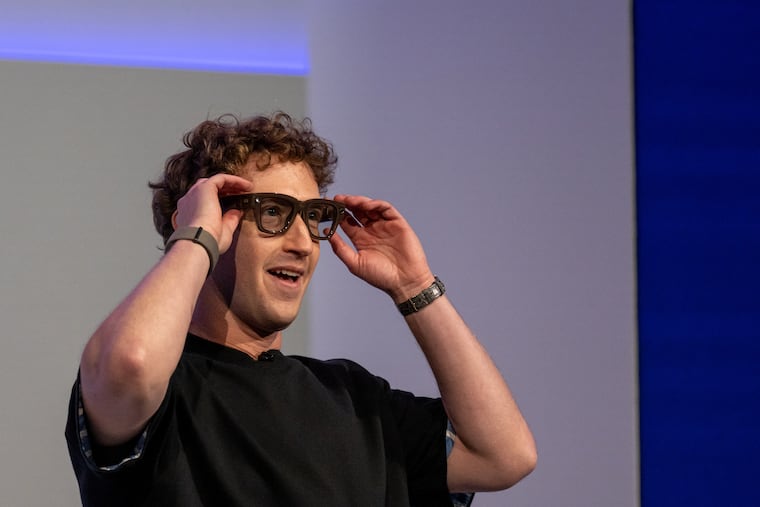
Without direct bans in place, judges typically have latitude to make rulings on what devices are allowed inside their court room. During the recent trial in Los Angeles that found Google and Meta liable for social media causing harm, Meta CEO Mark Zuckerberg and his colleagues wore their company’s smart eyewear into the courtroom. The judge in that case ordered them to remove the glasses, and threatened to hold anyone who had used them to record court proceedings in contempt of court.
Google Glass was a frequent butt of the joke after it was introduced over a decade ago, but reasonably affordable and available smart glasses have finally begun catching on within the last year.
Eyewear giants Ray-Ban and Oakley both now sell glasses integrated with Meta AI and audio and visual recording for less than $500. The new glasses were the focuses of each company’s recent Super Bowl ad campaigns, and the companies reportedly hawked 7 million pairs in 2025. They have a head start on Apple, which is planning to join the market with its own smart glasses in 2027.