Seeing Eye dog trainees navigated Philadelphia International Airport, no boarding passes required
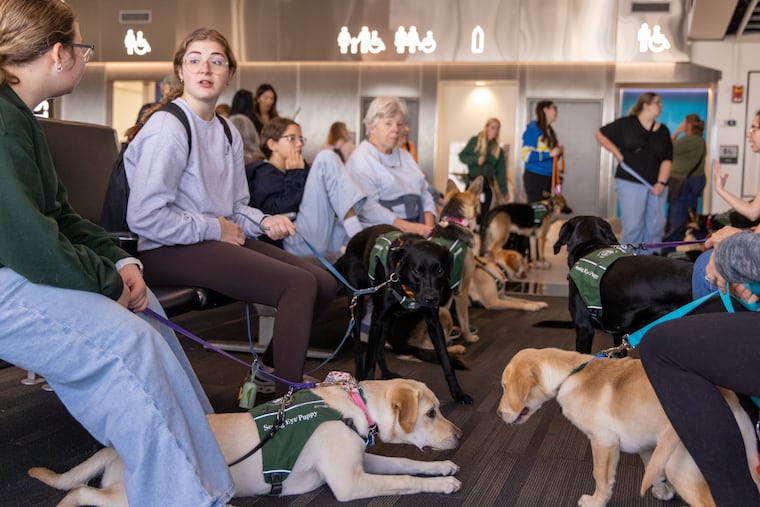
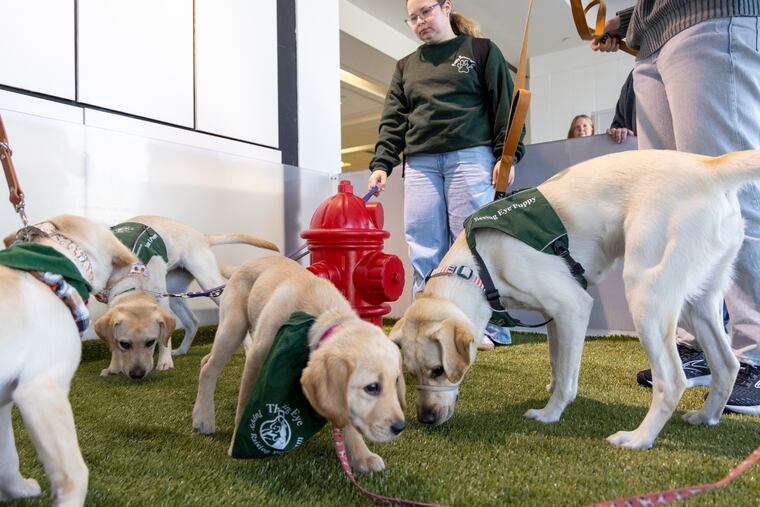
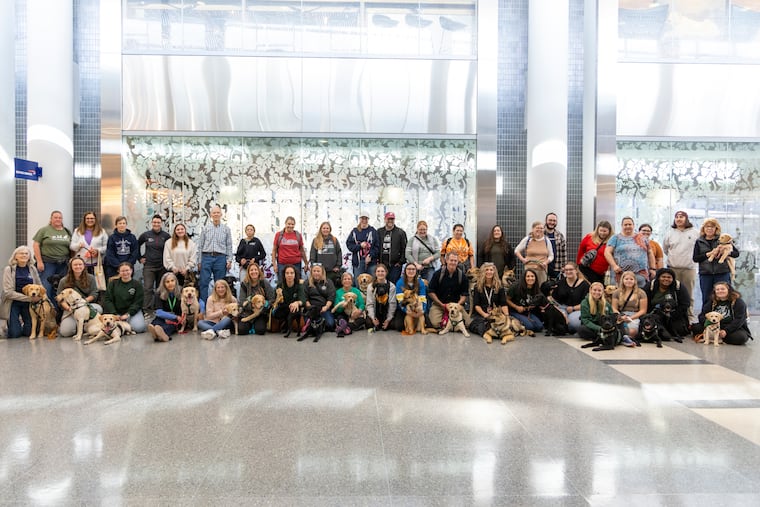
Puppies that are being raised to serve blind people took in the many sights, sounds, and most importantly, the many smells of Philadelphia International Airport Saturday morning.
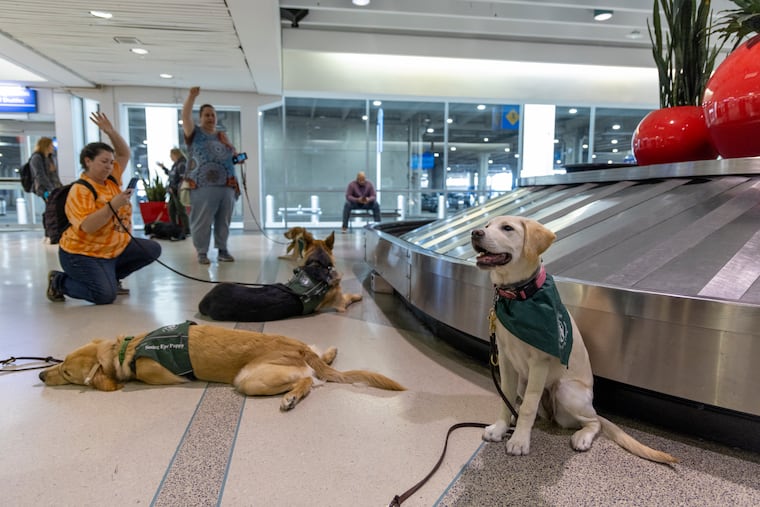
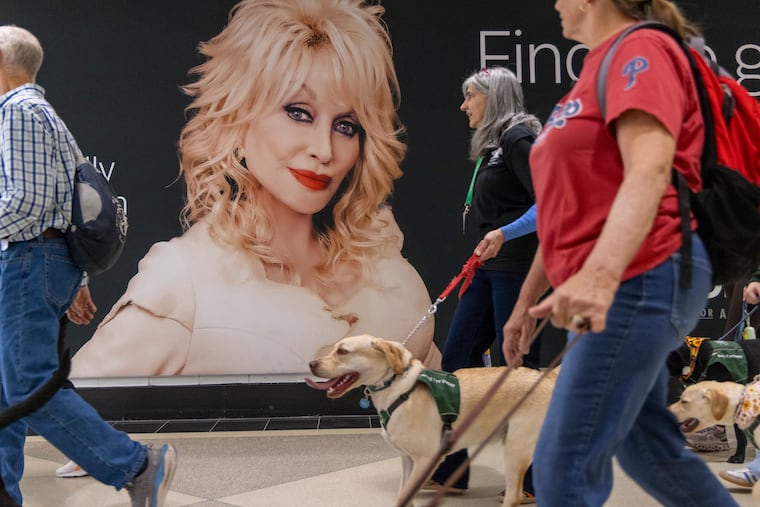
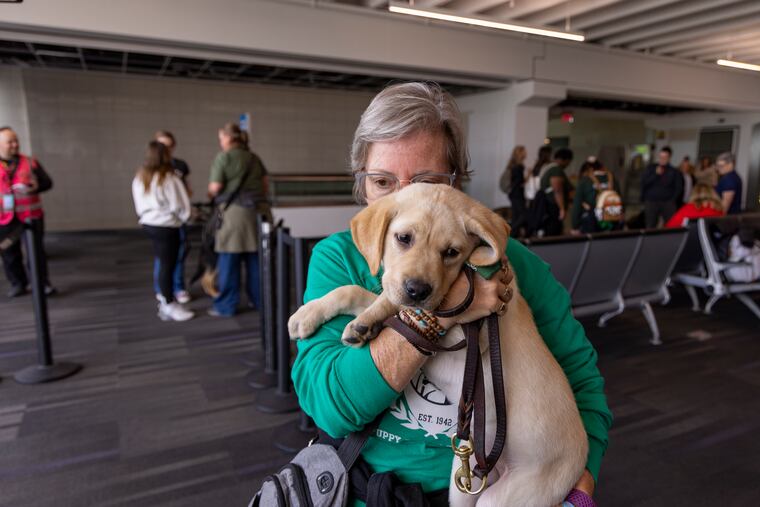
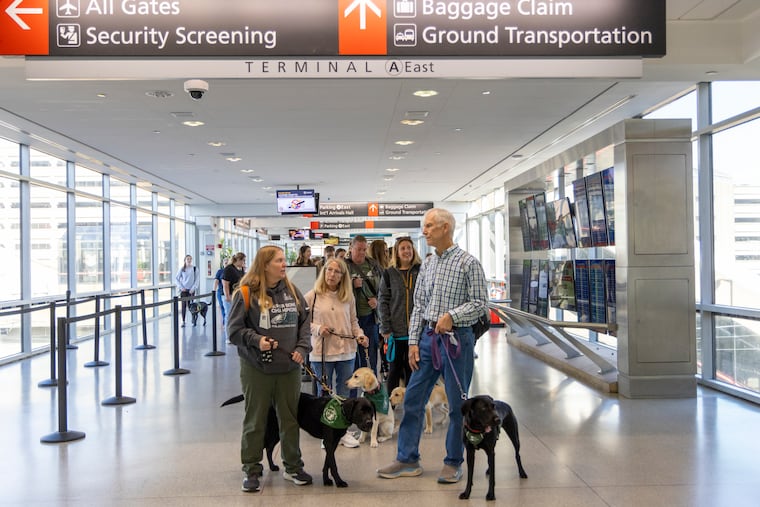
Walking down the concourse at Philadelphia International Airport Saturday morning, Kym Smythe of Bear, Del., imagined what the experience must be like for Atlas, the 12-week old Labrador retriever at her side — a dog she is raising to serve people who are blind.
Smythe, 62, pointed to windows, passing vehicles outside, a small bird that had gotten inside, and the shine of the concourse walkway, all things that can overwhelm a dog. And then, she said, imagine what a dog’s sensitive nose must smell at an airport.
“Like, if we smell pretzels,” Smythe said, pointing to a pretzel stand, “they smell yeast and wheat.”
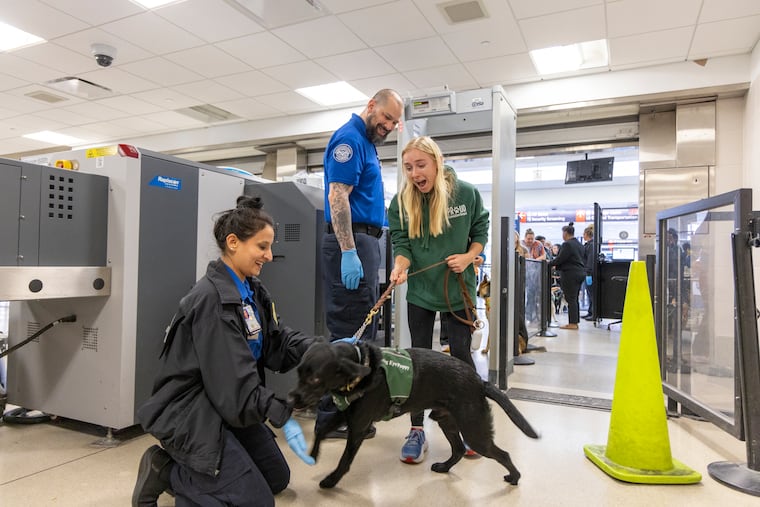
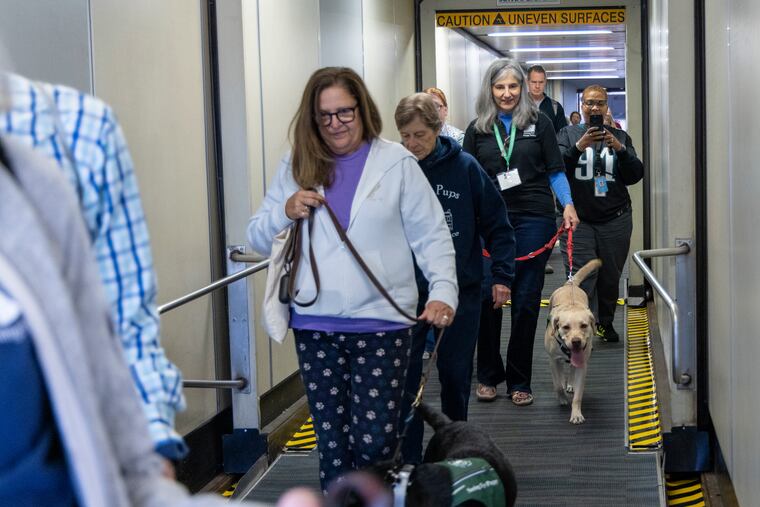
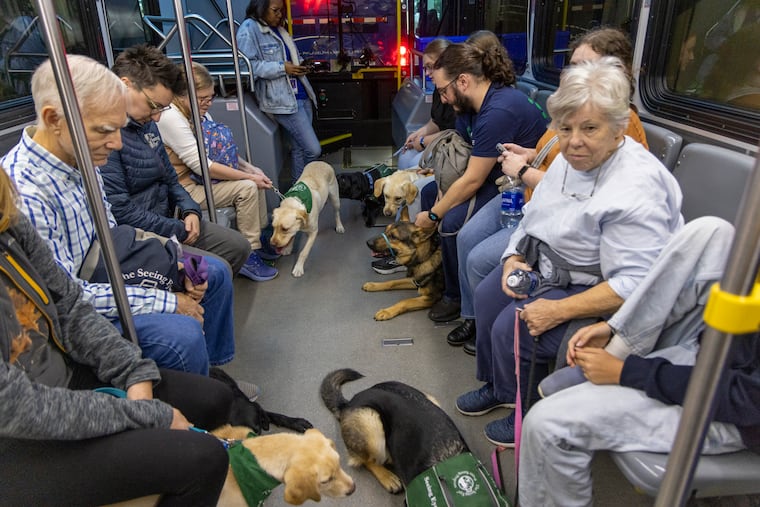
Travelers smiled, laughed, and took photos as the dozens of golden retrievers, Labrador retrievers, golden Labs, and German shepherds tugged their way toward Terminal E.
The dogs were at the airport as part of a training program with the The Seeing Eye, a nonprofit that pairs the pups with visually impaired people. The airport experience is intended to acclimate the puppies to the busy environment they’d likely have to navigate as Seeing Eye dogs.
Atlas, a small white puppy with adorably oversized paws, was still learning to walk on a lead, Smythe said. The appropriate amount of “pull” on the lead, along with having an appropriate pace, are both essential components of being a good service dog.
“They learn to make choices,” Smythe said. That’s important, she explained, because service dogs must eventually develop “intelligent disobedience,” an essential concept for animals charged with protecting people who cannot see.
“We need our dogs to be confident enough that they obey most of the time, but they can decide when a situation is dangerous,” Smythe said.
Lauren Christie, director of canine development at The Seeing Eye, said there’s still a long road of training ahead for the dogs.
Christie, who lives near the nonprofit’s training center in Morristown, N.J., said geneticists at The Seeing Eye bred the dogs with their future careers in mind, “so before they’re even born, they’re already on their journey to being a Seeing Eye dog.”
At eight weeks, the dogs are placed with a volunteer puppy raiser like Smythe. The goal at this point isn’t to train them to work with visually impaired people. Rather, it’s to socialize them and get them used to a wide range of experiences.
“The puppy raisers are such an essential part of training good Seeing Eye dogs,” Christie said.
At about 14 months old, they’ll go to Morristown to be trained, Christie said. Dogs that don’t pass the course are set up for adoption. Those that do pass are matched with a visually impaired person based on that person’s lifestyle, where they live, and other factors.
After about eight to 10 years, each dog “retires” at the discretion of its owner, Christie said. Their owners often keep them, though the person may give the dog to a family member or to The Seeing Eye.
It’s a program that’s improved the lives of innumerable people who are blind or visually impaired as well as the volunteers who help prepare them for the work.
Anne Marie Barford, 77, has trained 15 dogs, including Twila, the 9-month-old golden retriever at her side. “She is very curious,” Barford said. “She’s very loving, obedient, very friendly.”
These are good signs, Barford said. Seeing Eye dogs need to be independent, curious, and interested in their surroundings. The way Twila pulls on the lead is encouraging, Barford added.
“We try to expose them to lots of different situations, so that they’re not afraid,” Barford said. For Twila, that includes being an honorary congregant at Barford’s church, Immaculate Conception in Jenkintown, where “everyone knows her.”
The volunteer work is meaningful, Barford said, since she’s ultimately helping another person by raising a dog. The Seeing Eye pays for food and medical costs. And, the dogs are great companions.
After a nice long walk Saturday at the airport, the dogs and their humans reached their destination: a Frontier Airlines jet set aside for the experience.
Along with their handlers, the dogs boarded the jet while flight attendants looked on, and some of the volunteers joked that they were headed to Cancun, Mexico.
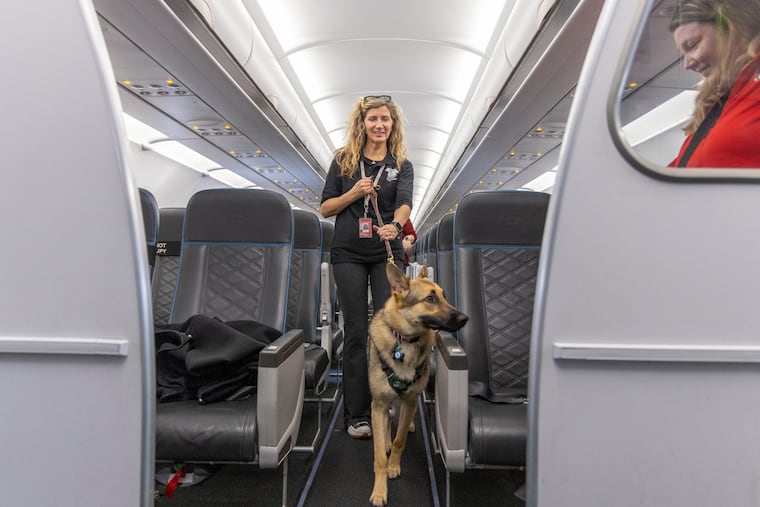
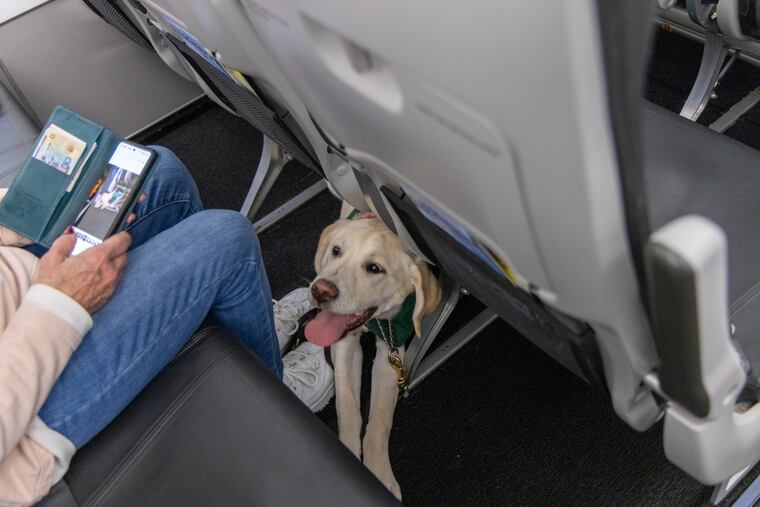

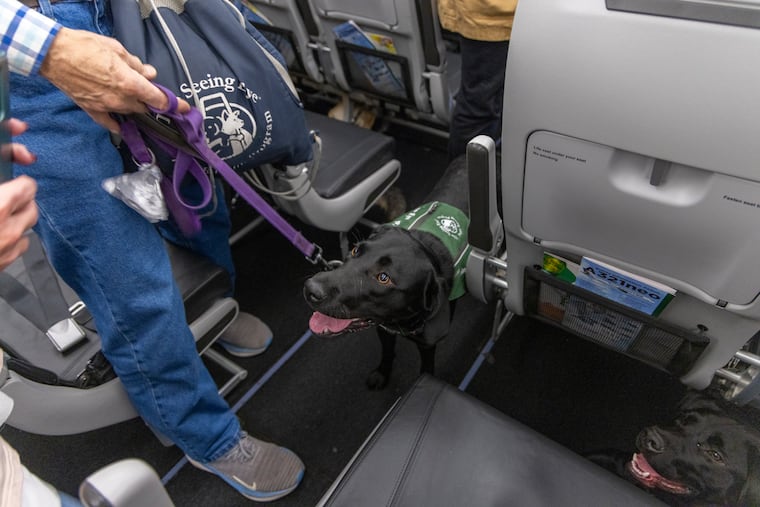
They weren’t; the jet wasn’t going anywhere. But according to volunteer Jackie Brennan Barbeau, a junior in University of Delaware’s pre-veterinary program, the whole experience served an important purpose: The next time the dogs board a plane, it’ll likely be after they’ve been paired with their new companions.
“Winston is doing spectacularly,” she said of her 3-month-old black Lab, who had situated himself under her seat. “He’s been handling all the people really well.”
Winston is the third dog Brennan Barbeau has raised. She said the university offers its students chances to raise a dog.
For others who may be curious about raising a service dog, Christie at The Seeing Eye said no experience is required to enter the puppy-raising program.
Smythe, who by this point was holding young Atlas in her arms, said it’s a rewarding experience for anyone who likes dogs.
“It really is a ton of fun,” Smythe said. “Each one of them holds a place in our hearts.”