Twitter calls foul as Axios photo of Stacey Abrams perpetuates ‘angry black woman’ trope
Stacey Abrams, the Democratic candidate for governor of Georgia, will give the Democratic Party's response to the State of the Union speech. But Axios, a political news site, chose a photo of Abrams that critics said played into the "angry black woman" trope. People tweeted, Axios caved.
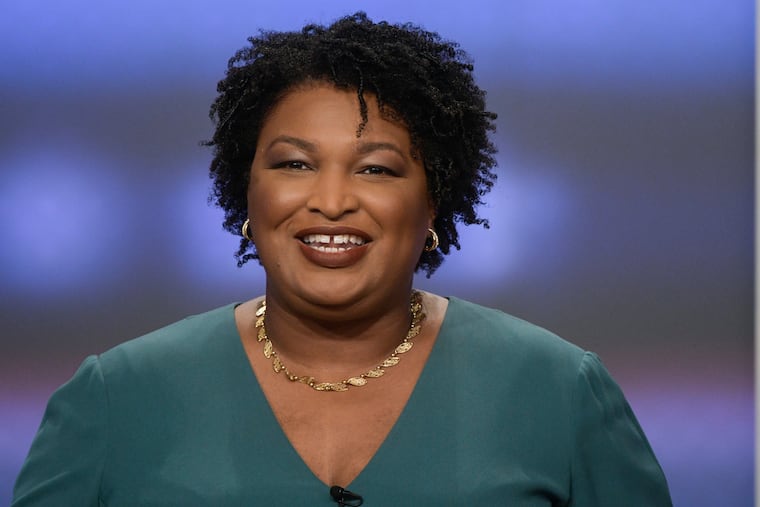
The first tweet from Axios announcing that Stacey Abrams would give the Democratic Party’s response to the State of the Union address next week showed Abrams looking angry, mouth contorted, finger jabbing.
Almost immediately, Twitter clapped back at Axios, an online news outlet focusing on politics, about how it represented the former Democratic candidate for the governor of Georgia. Axios, which also posted a story about Abrams musing why Democrats would select someone who might be deemed a “loser,” did not immediately respond to an email seeking comment (although it switched to a more appealing photo of Abrams 33 minutes after the first critical tweet).
“There are countless photos of Stacey Abrams and her glorious smile. Axios must have had to search to find an image to fit the ‘angry black woman' trope," writer Leah McElrath posted on Twitter Tuesday afternoon.
But some Twitter users said they were OK with Abrams showing anger; it’s reflective of a pending federal lawsuit alleging discrimination against black people and other minority voters because of a biased election system. The lawsuit, filed last November by Fair Fight Action, alleged Georgia purged the names of voters from registration lists, and voting precincts with majority black voters experienced problems with absentee and provisional ballots.
Only days earlier, Rebecca Traister, the journalist and author of Good and Mad: The Revolutionary Power of Women’s Anger, had tweeted about the photo TheHill.com had used for its story on New York’s rookie Democratic congresswoman, U.S. Rep. Alexandria Ocasio-Cortez.
We talked to Tanzina Vega, host of “The Takeaway" for WNYC and PRI and the former beat writer for race and ethnicity at the New York Times, about the photo’s implications. She, too, tweeted in the early hours Wednesday, both about Abrams’s photo and Ocasio-Cortez, who apparently inspired a former Starbucks CEO to run for president because she had proposed a 70 percent marginal tax rate for the ultra wealthy.
What were your thoughts when you saw the tweets criticizing Axios for the Abrams photo?
First of all, I’m not in [Axios’] photo-editing department and I don’t know what went into the decision process. And I wish that women of all races, but particularly women of color, were allowed to express the same range of emotions that other women and that men are allowed to express.
That said, I did see the photo before it was changed and my initial reaction was one of concern. Women, women of color in particular, black women and Latinos are often stereotyped as being angry, as being hotheaded, as being incapable and as being over emotional. Because of those stereotypes, there is a danger in perpetuating those stereotypes through images.
Why is it important to talk about how news organizations choose photographs?
The images we see in media matter. We’ve seen examples of this, often when we look at a mug shot. A news organization makes a decision on what kind of photograph to use for someone who allegedly committed a crime.
Why do you think Axios acted so quickly to change the photo?
To their credit, there were a lot of women who saw this. … We’re at a really interesting point in our society and one of the things that social media has done is that it’s created an environment, for better or worse, for a quick course correction. It gives us the ability to immediately react. And it gave Axios the ability to immediately respond. It’s allowed for conversation to stop happening in silos, where instead of just people of color and other women talking to each other, we’re all talking about these issues.
Is it a positive step that white women were among the first to criticize the photos?
The examples we are seeing in society are so egregious in this level of inequality that it’s starting to stick. It’s starting to stick with the broader public. The problem is that, so often, assertiveness and power in women is misconstrued as anger.
.