Four years after Russian invasion, Ukrainians around Philadelphia are thankful for support, wary of future
Philadelphia has become a hub for veterans and refugees seeking medical care and community.
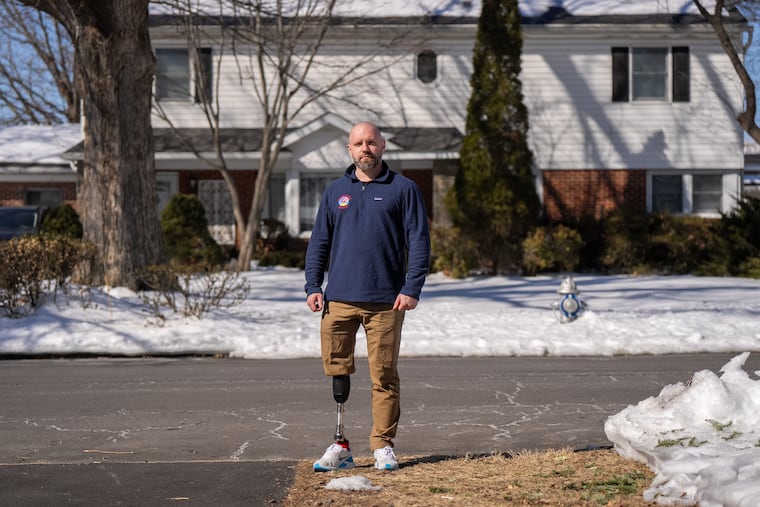
To explain his journey from Ukraine to Huntingdon Valley in Montgomery County, Ukraine army veteran Illia Haiduk first must explain one of the worst days of his life.
On Nov. 3, 2023, Haiduk and about 70 other Ukrainian soldiers were at an outdoor awards ceremony in Zaporizhzhia, near the war’s front line. After an enemy drone spotted the gathering, the Russians launched an Iskander-M ballistic missile.
“You hear nothing,” Haiduk said. “It just hits immediately.”
Haiduk awoke on the ground. To his left, people were moving. To his right was “a mess, fire, and smoke.”
He tried to get up. That was when he realized shrapnel had mangled his lower right leg.
Haiduk belted a tourniquet around his thigh and tried to crawl to another soldier from his unit, the 128th Mountain Division. “I wanted to get to him. And there was this hole in his chest. Nothing could save him. He was the same age as me,” the 35-year-old said.
The attack killed at least 19 soldiers and wounded dozens more, according to news reports.
Haiduk’s injury sent him on a long path of healing that ultimately brought him to the Philadelphia area. But more than two years later, the attack is just one incident in a war that has claimed an estimated 2 million lives.
Four years after Russia invaded Ukraine, the war’s effects can be found throughout the region, among refugees and veterans seeking support services and the advocates helping them. Many are concerned about the future.
“In 2022, support and donations poured, but every year they become smaller and smaller,” said Roman Vengrenyuk of Philadelphia, who helps run the Revived Soldiers Ukraine program that brought Haiduk to the U.S. “A lot of nonprofits closed.”
Vengrenyuk said he has no expectation that the war will end this year. The Trump administration has failed to provide Ukraine with the weapons it needs to win, he said. Meanwhile, the bloodshed has left 60,000 Ukrainians in need of amputations, overwhelming hospitals in Ukraine and Europe.
Though it has gotten harder to get attention for their cause, an alliance of healthcare providers, nonprofits, and advocates across Philadelphia has continued to help wounded veterans and refugees. And for that, Vengrenyuk said, he is grateful.
“The Philadelphia community of doctors really stepped in,” Vengrenyuk said.
Life after war
After recovering from his injury, Haiduk went home and attempted to return to civilian life, but he felt depressed. That changed, however, in 2025, when he traveled to Canada to compete in the Invictus Winter Games, a multisport event for disabled veterans. He won a bronze medal in the skeleton race, and he found purpose and fellowship with others who had similar experiences.
“We can talk really freely, because we know that this man will understand me,” Haiduk said of his fellow veterans.
Later that year, Revived Soldiers Ukraine sent Haiduk to Orlando , where he received a prosthetic lower leg.
Haiduk got more involved with the Florida-based nonprofit. He has since helped numerous disabled veterans who were routed to the Philadelphia region for medical care.
One is 30-year-old Vladyslav Romanenko, a former engineering student from Kharkiv who joined the army in 2022 and lost his lower arms in a drone strike last May. Romanenko is one of six Ukrainian war veterans living together at two homes in Huntingdon Valley.
Revived Soldiers Ukraine flew Romanenko and his partner to Philadelphia. At Wills Eye Hospital, a Ukrainian-speaking doctor, Michael Klufas, helped to restore vision in his right eye. Then, Prosthetic Innovations in Eddystone, Delaware County, outfitted him with bionic arms. “I’m very grateful to the Ukrainian and American doctors,” Romanenko said in Ukrainian, as Haiduk translated.
Haiduk said Romanenko’s story is typical of the soldiers he works with: men from a wide range of professions and ages, who signed up to save their people. “I would never have joined the army, but because the war started, it was my responsibility to join, for my country,” Romanenko said.
Haiduk said people in the U.S., and most of the world, support the Ukrainian cause of “democracy and humanity.” However, more pressure needs to be put on Russia, he said.
“There is support, but it isn’t enough support to end this war,” Haiduk said.
Paying to stay in the U.S.
As an American-born Ukrainian whose parents were displaced after World War II, 71-year-old Mary Kalyna said, she considers it her mission to help those in “the Ukrainian diaspora.” The fluent Ukrainian speaker from Mount Airy said the situation has gotten worse for Ukrainian refugees since last year.
“Even though Ukraine is not in the news as much, I believe people still support Ukraine,” Kalyna said. “The problem is our government has changed. Now we have a government that is less supportive of Ukraine.”
She criticized President Donald Trump for welcoming Russian President Vladimir Putin and holding peace talks where Ukraine was expected to cede land to Russia.
To her, Trump administration policy is working against local efforts from churches and communities that have embraced Ukrainians.
“There are many, many screws being tightened,” Kalyna said.
She provided an example: Due to one provision in Trump’s “One Big Beautiful Bill,” thousands of Ukrainians who previously had been invited to the U.S. through the federal United for Ukraine program have to pay $1,000 per family member to maintain their humanitarian parole status.
On a Sunday afternoon at an apartment in Norwood, Delaware County, Kalyna met with one family who received such a notice at the end of December. Yurii Konoshchuk, 43, explained that he and his wife and four children came to the U.S. in May 2023. His 9-year-old daughter, Milana, has leukemia and is receiving treatment at Children’s Hospital of Philadelphia.
“We don’t have any safe place in Ukraine,” Konoshchuk said. “It is so important for us to be here. We thank God that we’re in Philadelphia.”
Though Konoshchuk works full-time at the Barry Callebaut chocolate factory in Eddystone, and has a supportive community at the nearby Living Hope Ukrainian Baptist Church, money has been tight. Then, he got a bill from the federal government to pay $6,000 or risk his family being deported.
As Kalyna prayed with the family and shared in the Sunday dinner they had prepared, she was brought to tears when asked about the money. Kalyna said that after people in the Northwest Regional Refugee and Immigrant Network sent out emails, they raised $6,000 within a few hours.
“People really want to give,” she said. “They understand.”
At the dinner table, the Konoshchuk family recounted their journey. Katie Konoshchuk, 14, remembered going weeks without school, and having to evacuate to the school basement during air raids. Each child had to carry a flashlight. Her 13-year-old sister, Ohli, said they used to hope that if the bombs came, they would come on a day they had to take a test.
“People adjust to the situation that they’re in,” their mother, Anna Konoshchuk, said.
Yurii Konoshchuk said he saw missiles flying so low overhead that he could read the words written on them. “It’s good then, because you think it will not fall on you, but you don’t know about next time, and you don’t know who it did fall on.”
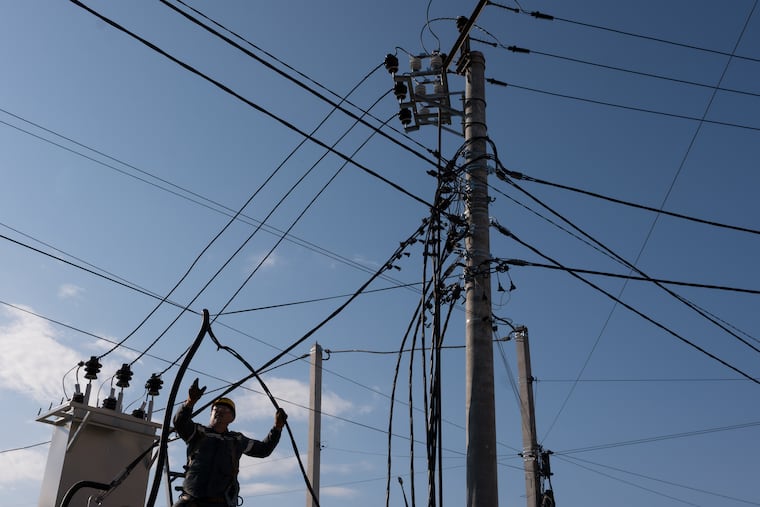
One of the missiles struck an electric power station less than a mile away, he said, and over the winter of 2022-23, it was a regular occurrence to rush from their home to the air-raid shelter in a city without light.
“We never in the city saw such bright stars,” he said. “It was beautiful on the heaven, but not on the earth.”
Yurii Konoshchuk struggled to predict what will happen next. “We are thankful, first to God, and to American nation, to give us the possibility of treatment here,” he said.
When they came to the U.S., Anna Konoshchuk said, she told her children life would be better, more peaceful. “But we’re treating it as an experience,” she said. “We don’t know how long America will allow us to stay. We’re being flexible.”