Philly’s 1960s war on glue-sniffing yields lessons for today’s anti-vaping efforts
Efforts to curb youth vaping have stalled, echoing a similar effort in the 1960s to disrupt a glue-sniffing fad.
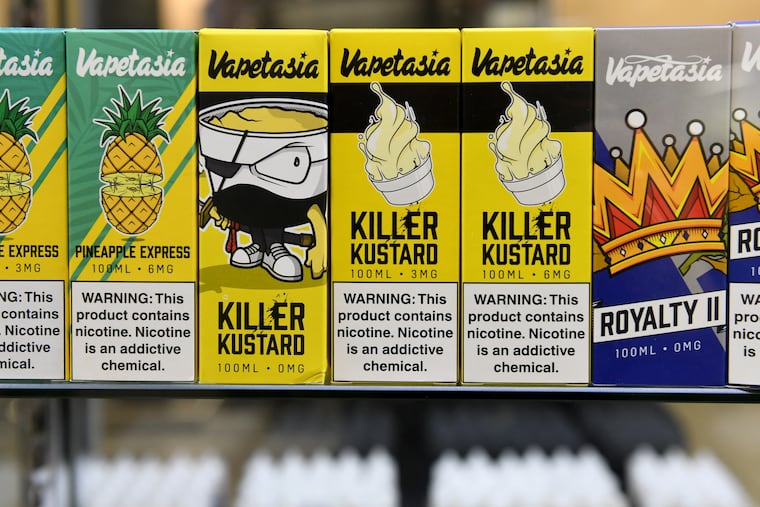
This spring, the School District of Philadelphia hosted a Youth Vaping Prevention Town Hall to try and curb vaping (smoking e-cigarettes) among youth—especially since vaping paraphernalia may contain addictive and illegal chemicals like nicotine and marijuana. In June 2025, City Council unanimously passed councilmember Nina Ahmad’s anti-vaping bill restricting e-cigarette sales to youth under 21 and fining businesses up to $2,000 for sales to minors. Four months later, Mayor Cherelle Parker lauded the legislation, but returned the bill unsigned because the city’s Home Charter Rule already has a smoke-free policy in public spaces and instructs businesses with a legal exception to ban minors from their premises or face a $300 fine. Thus, a vape ban for youth has not become law.
This isn’t the first time city officials have tried to curb underage drug use. During the 1960s, a nationwide glue-sniffing fad provoked police intervention and legislative proposals that also did not pass. Instead of city officials cracking down on drugstores that illegally sold amphetamines, cough syrup, and glue to minors, they went after young people who were using and abusing substances to manage and escape their personal stress, depression, pain, and trauma. It may be more feasible to criminalize youth than to regulate commerce and access to mind-altering substances. But history shows that it is ultimately young people who pay the price for this trade-off.
» READ MORE: Drugs took her legs and her son, but she commits to sobriety
Between 1960 and 1964, police and journalists identified a “West Coast fad” of glue-sniffing that they claimed began in California and migrated to Las Vegas, Salt Lake City, Denver, and Phoenix before it arrived in Philly and its suburbs. By 1962, police first reported abnormal glue sales in West Philadelphia and sniffing in North Central and Northwest Philadelphia.
Mostly young people sniffed glue. Young people would purchase Testor’s glue for making model airplanes from “hobby shops” or from hardware, drug, and candy stores. They’d squeeze a tube into a brown paper bag and inhale it for 30 minutes until the glue hardened, to achieve a high. The typical symptoms of intoxication were exhilaration, followed by a drunken feeling, loss of muscular control, double vision, slurred speech and hallucinations. Users might feel nausea, lose consciousness, or sustain burns to their nose tissue.
Glue-sniffing occurred citywide. However, children from working-class, immigrant, Black and Latino communities who lived in redlined and deindustrialized sections of North Philadelphia, particularly Norris Square and the former garment district of Kensington, were heavily represented in police and news reports covering this new drug addiction.
The glue-sniffing fad intersected with devastating changes to Philadelphia’s economy. While Philadelphia had been a hub of textile, metal production, and construction industries during both world wars, by the 1960s, thousands of these jobs became obsolete due to automation or migration to other cities. As jobs disappeared, high unemployment, poverty, home abandonment, and declining public services devastated neighborhoods like Kensington. Police reports from the Juvenile Aid Division detailed how poverty-induced crimes like burglary, robbery and purse snatching were common solutions to financial woes, but substance abuse also became an escape from emotional suffering. Over time, the neighborhood later reemerged as a drug market site for people to buy and consume illegal drugs and narcotics like heroin.
In December 1964, Republican Councilman Thomas M. Foglietta introduced an anti-glue-sniffing bill to City Council, arguing that glue intoxication could lead to addiction or alcoholism. Court psychiatrist Dr. Nicholas D. Frignito later promoted the bill stating that he knew of 18 glue-sniffing cases in one year and had evaluated two addicted teens who, he said, became “psychotic” and were eventually sent to Byberry Hospital.
Foglietta sent a letter to City Council President Paul D’Ortona requesting a public hearing, framing his concerns around the health impacts of glue-sniffing, and its potential to increase violent behavior.
A local court case seemed to reinforce the link between glue and violence. In February 1965, Philadelphia Judge Juanita Kidd Stout presided over a case in which four youths “thrashed” 72-year-old Jacob Nemerofsky with a chain in a South Philadelphia phone booth following a “glue-sniffing party” in a vacant house. Judge Stout wanted to send 12-year-old Darol Brown to the State Correctional Institution (SCI) Dallas in Luzerne County. Since the boy was under 15, Brown was placed in the overcrowded Pennhurst School for mentally disabled adults.
Focusing on glue sniffing as a crime rather than a youth health issue, D’Ortona instructed City Solicitor Frederick G. Bauer to beef up the bill before the legislation faced a public hearing. The revised legislation outlined a ban on the sale of glues and cements containing solvents made of ether, toluene, acetone or another substance that could release toxic vapors to youth. Anyone under 21 who possessed, bought, or was caught sniffing glue would be punished with fines up to $300 and 90 days imprisonment. Storeowners would be required to keep a “permanent record of glue purchasers” regardless of the buyer’s age.
In one letter to the editor published in the Philadelphia Daily News, “Worried Mother” discussed glue-sniffing as a serious crime in her Southwest Philadelphia neighborhood. The McCreesh Playground area was a popular spot for glue sniffing parties, she argued, with empty glue tubes left strewn on the ground. She wrote that she hoped and prayed City Council would pass Foglietta’s “strong law.”
But by April 1965, City Council rejected Foglietta’s bill by a 9-4 vote. The council’s main critiques were that it was “too loosely worded,” glue sales should be regulated at the state level, and it was nonsensical to ban an everyday product that only a few misused.
Although the legislation never passed, police still arrested and charged youth with disorderly conduct for glue-sniffing. They were sent to the Youth Study Center to be detained, attended a brief juvenile court trial, and were released to their parents. Cops and teachers continued to identify and punish glue-sniffers, especially in poor and declining neighborhoods.
Meanwhile, community organizations like Harrowgate Park Civic Association, the Rose Hill Civic League, and the Paradisio Club distributed pamphlets and hosted “rap sessions” to promote awareness and petition the government to pass a glue ban. Over the next four decades, glue sniffing declined in popularity, but the “huffing” of everyday products like gasoline, paint, household cleansers and air fresheners continued. Police, city officials and journalists shifted their focus to heroin and cocaine users and sellers as those illegal drugs—especially during the 1980s crack epidemic—became cheaper and easily accessible to young people in their neighborhoods.
Since the 1960s, local bans on underage drug use have not stuck because profit — as well as the increasing popularity by the 1980s of an ethos emphasizing “personal responsibility” — has often taken precedence over health and safety.
Police are the first responders to violence and crime that occur in open-air drug markets like the one that exists today in Kensington. And while the state’s response to drug use is frequently punitive, it is not the only way to address the underlying problems that can make addiction so devastating: poverty, disinvestment, and economic decline. Community members undergo Narcan training and establish programs tackling homelessness along with food and clothing insecurity, while rehabilitative centers focus on curbing addiction to address today’s opioid crisis. Some community organizations and politicians–namely former Mayor Jim Kenney–have advocated for safe injection sites where registered nurses are on hand to supervise drug use and reduce rates of overdose, HIV/AIDs transmission, and death. However, some residents disapprove of these harm reduction facilities in their neighborhoods and the U.S. Justice Department regularly shuts down these locations for violating the Controlled Substances Act of 1970 and the Anti-Drug Abuse Act of 1986.
The history of the failed effort to regulate glue sniffing by targeting stores that sold it is instructive. Regulating commerce is an uphill battle. Even today vape and pharmaceutical companies are rarely held accountable for marketing and enabling drug use that can lead to addiction and death. After all, drug use, abuse, and treatment is a business.
Menika B. Dirkson is an associate professor of History at Morgan State University and the author of the 2024 book, Hope and Struggle in the Policed City: Black Criminalization and Resistance in Philadelphia.
Made by History takes readers beyond the headlines with articles written and edited by professional historians. Opinions expressed do not necessarily reflect the views of The Inquirer.