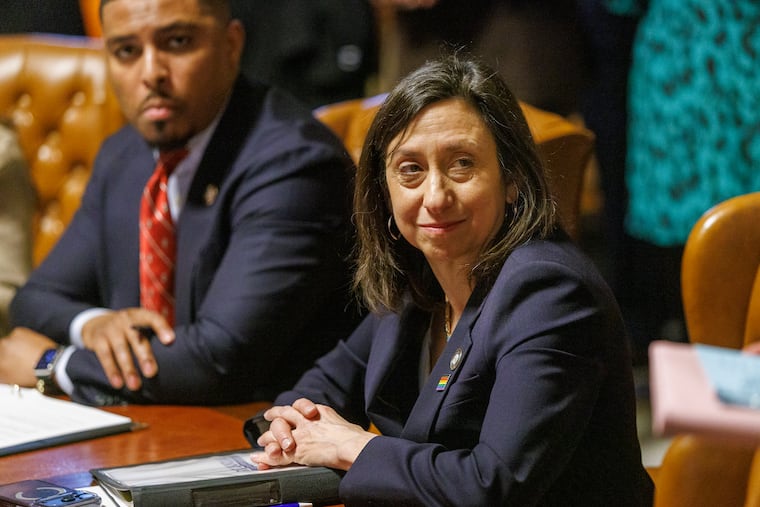
Venezuelans in Philadelphia have mixed feelings after the U.S. strike. Ukrainian Americans feel uneasy about what may be next.
The weekend strike by the U.S. against Venezuela left many in Philly feeling uneasy a day later — including Ukrainian Americans who wonder what may come next.

Venezuelans in the Philadelphia region had mixed reactions to the U.S. strike against their home country over the weekend, which removed Nicolás Maduro from power and left the future of the South American country unclear.
But some Ukrainian Americans in the region felt an uneasy sense of déjà vu as they watched events in Venezuela unfold — and are concerned about what it could mean for relatives and compatriots 6,000 miles away from Caracas, in Ukraine.
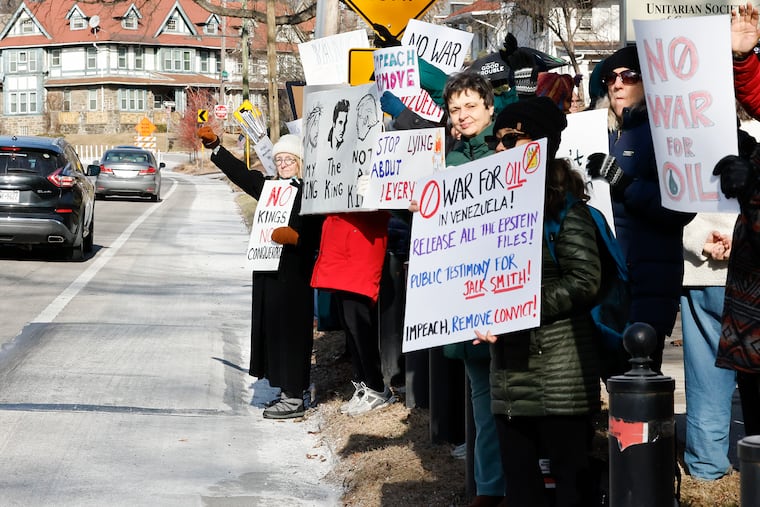
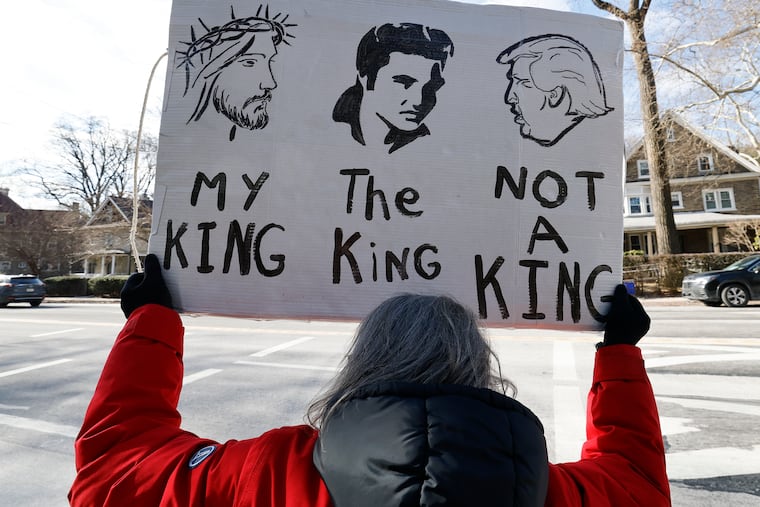
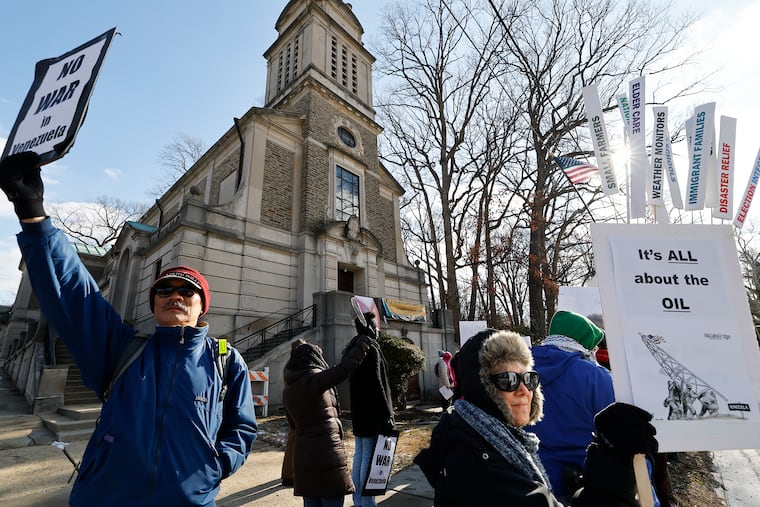
“This action, which is an illegal action, gives the light to people like [Russian President Vladimir Putin] and other dictators to do whatever they like,” Ukrainian American activist Mary Kalyna said Sunday amid a 60-person anti-war rally outside the Unitarian Society of Germantown in West Mount Airy. “Why should he not invade Ukraine or Poland or Lithuania, when the U.S. is invading Venezuela?”
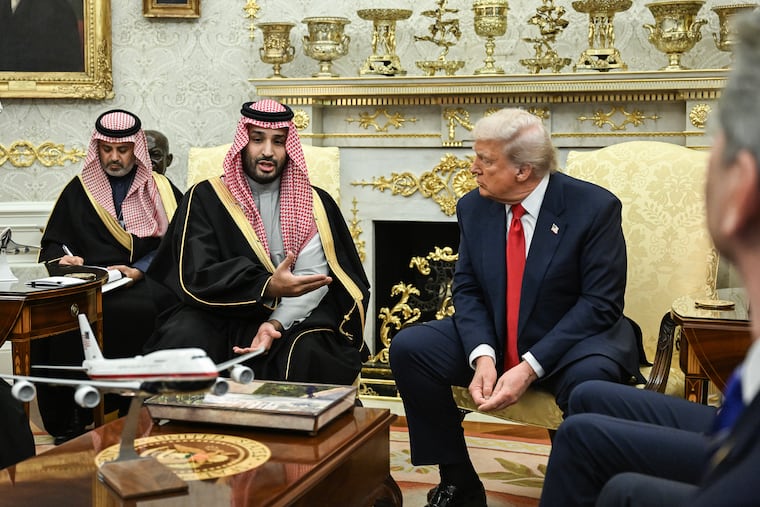
The Trump administration’s unilateral action sends a message to other countries, like Russia, that the United States may no oppose a larger nation meddling in a smaller country’s political affairs, said Paula Holoviak, a political science professor at Kutztown University, in an interview.
“It just doesn’t set a good precedent,” said Holoviak, who is a Ukrainian American.
‘We have been waiting for this for 26 years’
Venezuelan flag in hand, Diana Corao Uribe, 53, and her family drove from Media to the Cathedral Basilica of SS. Peter and Paul to attend a Sunday vigil for the future of Venezuela, organized by local groups Casa de Venezuela Philadelphia, Casa de Venezuela Delaware, and Gente de Venezuela Philadelphia.
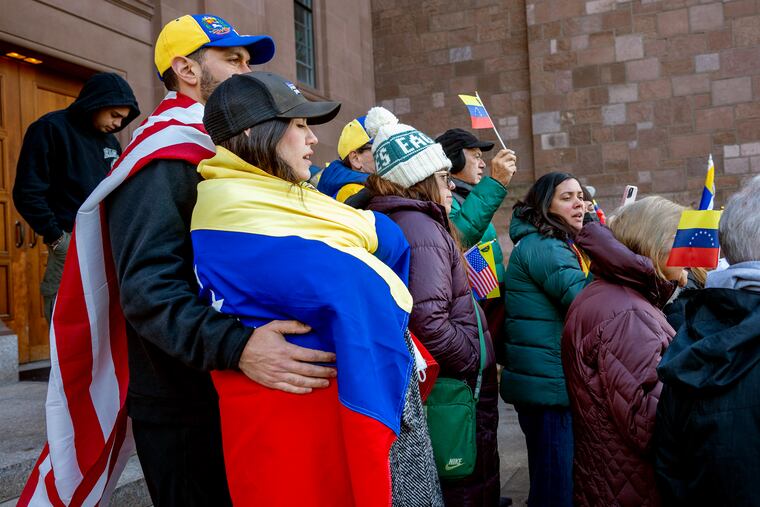
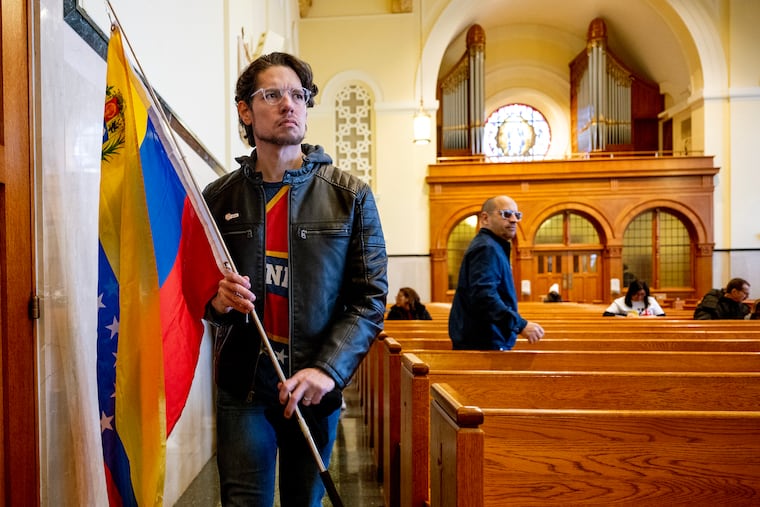
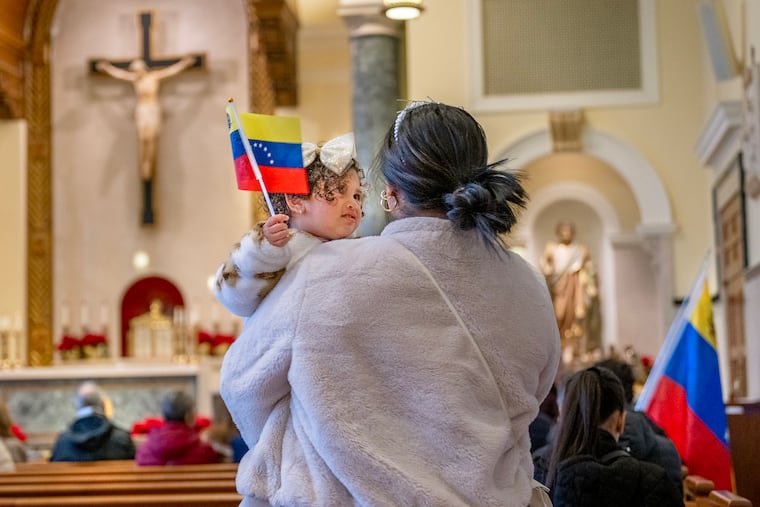
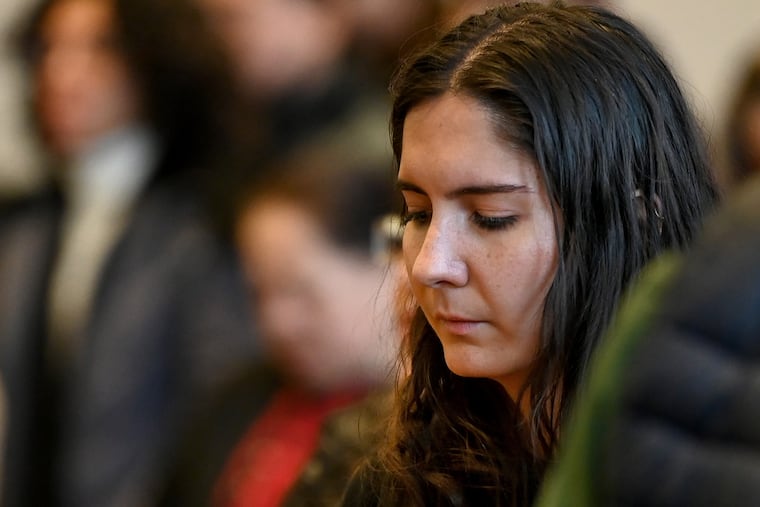
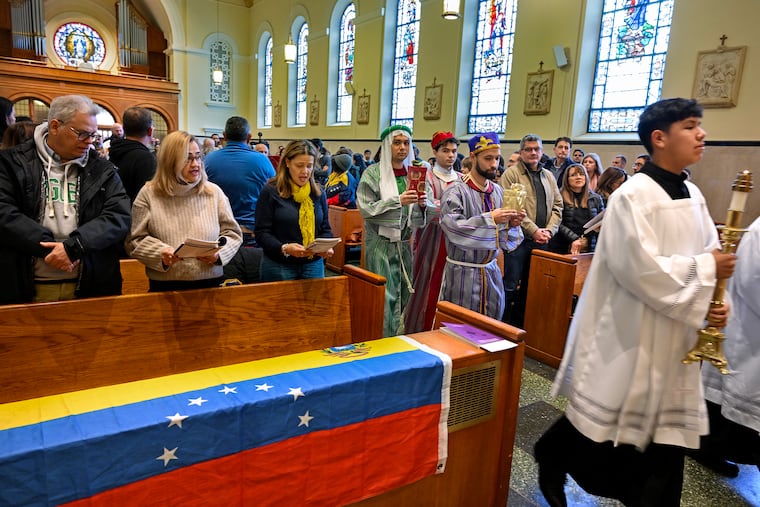
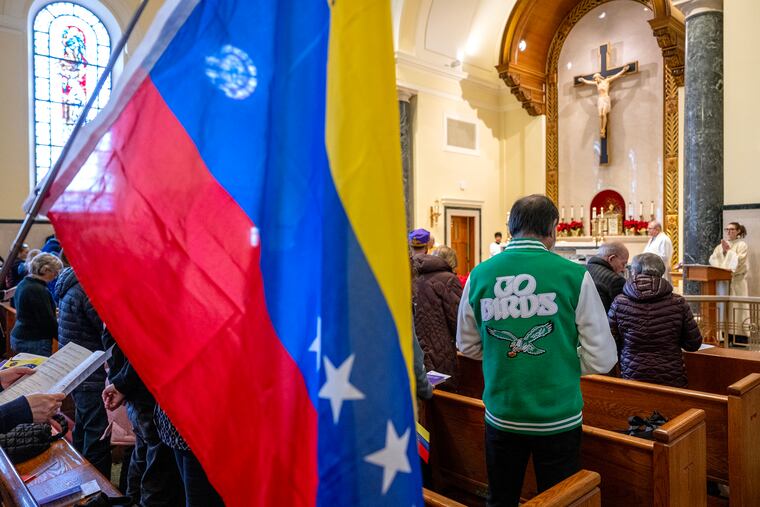
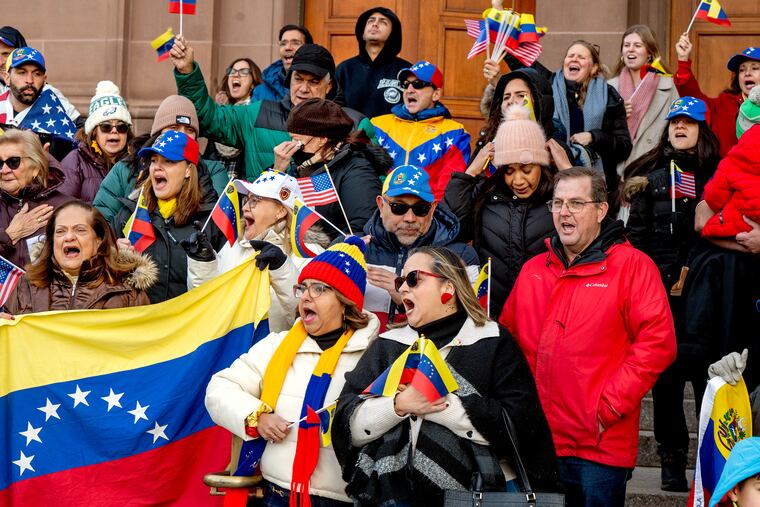
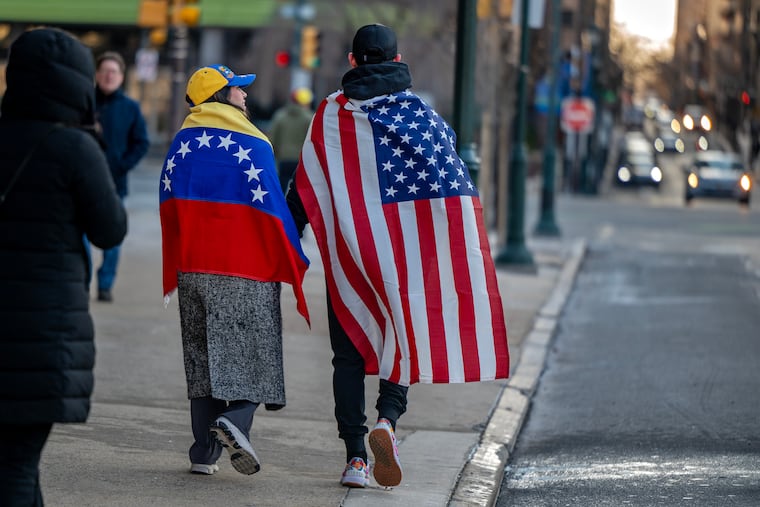
Hundreds of people hugged, cried, and prayed as they waited inside with flags and apparel, brightening the basilica with yellow, red, and blue. Members of the crowd were largely critical of the rule of Maduro and his predecessor, Hugo Chávez.
“We have been waiting for this for 26 years; you cannot imagine the feeling, the joy, the happiness, the hope that we feel right now,” Corao Uribe said.
But Corao Uribe said that as the hours passed, her feelings have grown more complicated. Until President Donald Trump announced the U.S.’s intentions to “run” Venezuela until a “safe, proper and judicious transition” could be completed, Corao Uribe had hoped Edmundo González Urrutia, who faced Maduro at the polls in the 2024 Venezuelan presidential election, would become the next president.
The announcement was unexpected and a bit concerning, she said, but it wasn’t enough to shake her sense of happiness.
Philadelphia resident Astrid Da Silva, 32, said it felt bittersweet.
“The amount of joy that seeing the dictator out of Venezuela brings — it’s immeasurable; it’s normal when there has been torture and pain for so long,” Da Silva said. “But without a democratic transition of power, fear starts slipping in.”
Hearing Trump say that opposition leader Maria Corina Machado lacked support in Venezuela clouded her feelings.
“People don’t want the U.S. there; we want the opposition or at least a free election,” Da Silva said, adding that the country’s political turmoil forced her to emigrate to the U.S. at age 7.
Ongoing power struggles have at times made her feel like people view Venezuela as a pawn, forgetting there are real lives at stake, she said.
‘It could be very destabilizing’
The U.S. has a long history of intervening in other countries, Holoviak noted, but that hasn’t always gone well. “We do have an extremely powerful military, but we might not want the aftermath of this,” Holoviak said. “It could be very destabilizing.”
Ukrainian leaders have largely welcomed the liberation of Venezuelans from Russian-allied Maduro’s regime. Speaking with reporters in Kyiv, President Volodymyr Zelensky said, “Well, what can I say? If dictators can be dealt with in this way, then the United States of America knows what it should do next.”
Eugene Luciw, a Ukrainian American who lives in Montgomery County, said in an interview that he interpreted Zelensky’s comments to mean that he believes the U.S. should arrest Putin — and Luciw agrees.
Luciw said that he has no problem with Trump removing Maduro, whom he called “a dictator who slaughters people.”
However, Luciw questioned Trump’s motives and said his actions were inconsistent.
“If we want to do away with a real dictator, with absolute evidence that he’s a genocidal maniac,” then the U.S. should be tougher on Putin, he said.
At the Cathedral Basilica, Fernando Torres, 45, said he has struggled with what the future may hold for Venezuela after Trump’s actions.
“Even if we don’t like Trump, we have to separate things. It’s like if you were drowning and someone threw you a life buoy,” Torres said. “You don’t care who threw it or what their intentions were; you just care about saving your life. What people don’t understand is that Venezuelans needed their life buoy and now for the first time we have hope.”
As political decision-making continues to unfold, Corao Uribe, Da Silva, and Torres agree on one thing: the importance of listening to what Venezuelans want for their future.
“Venezuelans have suffered for so long, don’t try to understand our pain; this isn’t about politics, it’s about the suffering of the Venezuelan people,” Corao Uribe said.
This article contains information from the Associated Press.