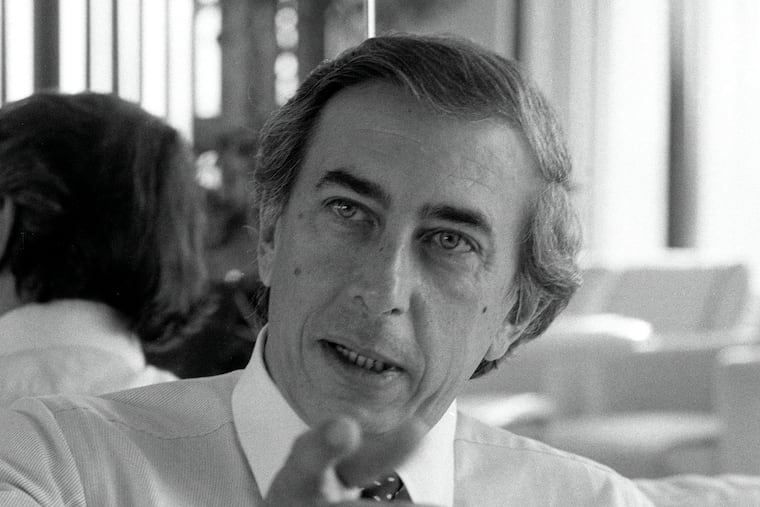
George Gould, a pioneering Philadelphia legal aid lawyer, has died at 83
George Gould was one of the original, crusading members of the legal aid community in the 1970s.
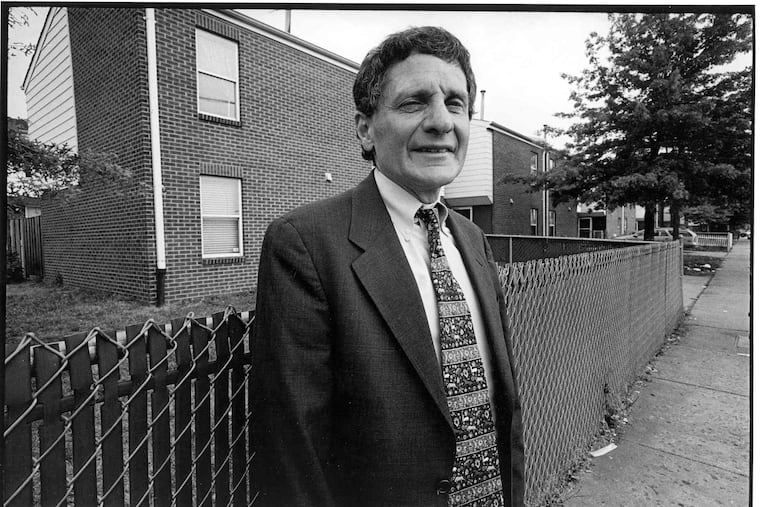
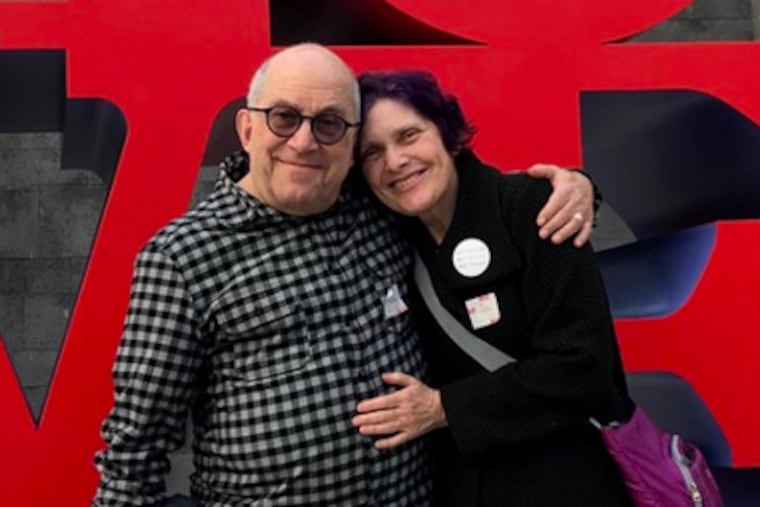
George Gould, 83, of Philadelphia, who founded the housing unit at Community Legal Services and fought for the rights of struggling Philadelphians, died on Sunday, June 28, at Abington Hospital after a long illness.
For over 50 years, Mr. Gould worked in legal aid and housing law, arguing unique angles in the courtroom and often winning precedent-setting rulings.
Mr. Gould represented public housing residents and families stricken by lead paint poisoning, while lobbying for new laws and regulations in City Hall and Harrisburg. He clashed with powerful politicians, but he also knew how to wield influence with officials and build alliances.
“He was the archetypal legal services lawyer,” said Jonathan Stein, a longtime colleague at Community Legal Services. “He brought so much unbound energy, dedication, aggressiveness, and creative lawyering to his work.”
Mr. Gould was born in Philadelphia on March 12, 1943, grew up in Elkins Park, and played football at Cheltenham High School and Muhlenberg College, where he majored in history. After a stint as a public school teacher in North Philly, he attended Dickinson School of Law.
He joined Community Legal Services in 1970 and was soon tasked with founding its housing unit, where he won rights for public housing tenants and fought to ensure that affordable homes were built even in neighborhoods where residents resisted.
“George was full of passion, he lived deeply, and with such enthusiasm and energy,” said his wife, Diane Lee Gallagher. “It was hard to keep up with him, but I have to say he challenged me in so many good ways.”
In a landmark case in the 1970s, Mr. Gould went up against Mayor Frank Rizzo with Stein and Richard Nixon‘s housing department. He and his teammates proved in court that the mayor’s intent to block public housing from the overwhelmingly white South Philly neighborhood was racially motivated.
Their victory got 120 homes built in Whitman after over a decade of delay.
“It did have an impact on the city, especially finding a mayor guilty of intentional racial discrimination,” Mr. Gould recollected in a 2015 interview. “That was ... unheard of.”
Mr. Gould sought to get utility allowances adjusted for public housing residents when rates change, a case in which he fought the Philadelphia Housing Authority for 15 years before eventually winning in federal court.
“It was just very creative and courageous lawyering,” said former colleague Irv Ackelsberg. “It’s hard to minimize just how important he was and how much he was loved by his colleagues.”
Mr. Gould’s passion for his work was legendary and at times intimidating.
In the days before computers or online legal databases, Mr. Gould would pore over law books for hours looking for precedent on which to build his cases, slamming the thick tomes in frustration.
“Then all of a sudden, he’d find a good case, and you would hear ‘oh baby, oh baby, oh baby,’” Ackelsberg recalled. “It was just so much fun.”
Mr. Gould also lent his expertise to brothers John and Milton Street, who went on to become Philadelphia’s mayor and a state senator, respectively, as they made a name for themselves by protesting the status quo in city politics and housing policy.
“With the help of [Mr. Gould], we had indisputable information to validate our public policy positions,” former Mayor John Street said of his relationship with Mr. Gould during the 1970s. “When we talked about our issues we were armed with legitimate and very valuable facts and figures to substantiate our position — something that is often missing when community groups protest.”
During the harsh recession of the early 1980s, Mr. Gould helped craft the state-level Homeowners Emergency Mortgage Assistance Program, which allowed unemployed people to make lower payments on their homes for up to three years. Close to 60,000 applicants have been approved.
Later, Mr. Gould served as a mentor for generations of younger lawyers, including Councilmember Rue Landau.
“He taught me the foundations of everything I know,” Landau said. “His fighting and optimistic outlook was super helpful when you were drowning in your cases.”
During his early decades at Community Legal Services, he was known for his work ethic. John Street recalls that he could call Mr. Gould any time and that “his work-life balance appeared to me to be totally out of wack.”
That changed as Mr. Gould got older. He married his longtime partner Diane L. Gallagher in 1990, and a few years later they adopted their son Peter.
“He really modeled for me that can be very invested in your family,” while working very hard, said a former colleague Rachel Garland, who now leads the Housing Unit. “It’s like he was the ultimate workaholic, but he also took lots of really fun vacations.”
Mr. Gould loved skiing, ran marathons, fished, rode his bike to work, and was obsessed with the Eagles. He cooked seafood and enjoyed gin gibsons, a martini with cocktail onions instead of olives. When dining out, he sometimes brought his own jar of onions.
Until his retirement, Mr. Gould could still be found in City Hall lobbying for stricter regulations on lead paint in rental properties and other tenant rights issues.
In addition to his wife and son, Mr. Gould is survived by two cousins who were like brothers to him, Stephen and Robert Isard.
Services are scheduled for 2:30 p.m. Friday, July 24, at Trinity Memorial Church, 2212 Spruce St., Philadelphia 19103.