James Levine, former Metropolitan Opera conductor whose golden eminence was tarnished by abuse allegations, has died
Mr. Levine made his Met debut in 1971 and became one of the signature artists in the company’s century-plus history. He was fired in 2018 after allegations of sexual abuse.
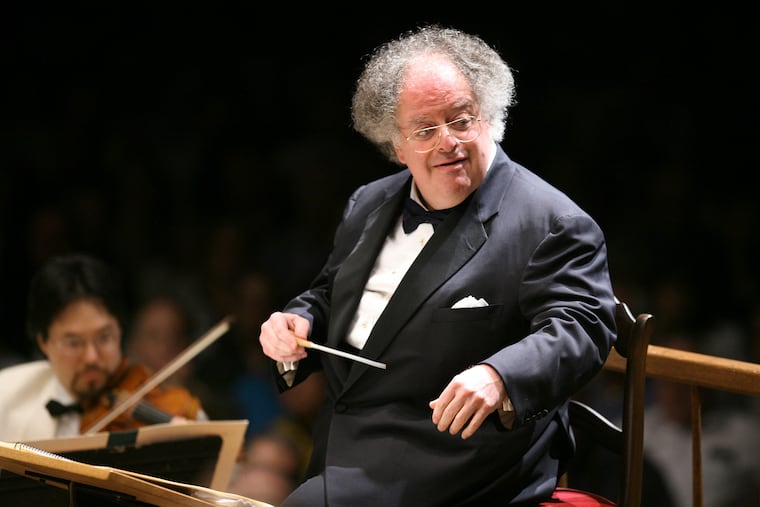
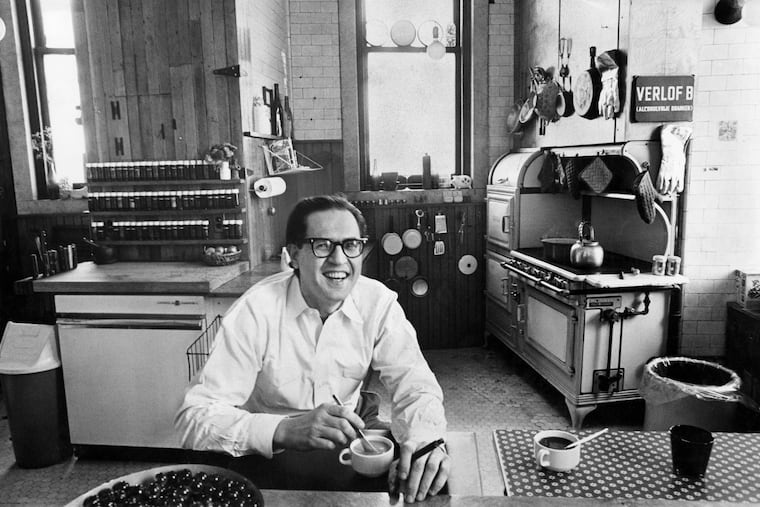
James Levine, 77, a conductor whose spectacular musical versatility and vitality — and near-infallible knowledge of the works he interpreted — made him one of the world’s most acclaimed orchestra leaders but who lived to see his legacy blighted by accusations of sexual abuse, died March 9 at his home in Palm Springs, Calif.
Len Horovitz, his personal physician, confirmed the death but did not disclose the immediate cause.
Mr. Levine had been in precarious health for more than a decade, canceling many of his performances after 2008 and undergoing spinal surgery. Even when conducting from a wheelchair, he remained a vigorous and indefatigable presence in American cultural life far beyond the rarefied opera world — widely considered the country’s most influential conductor since Leonard Bernstein.
That all changed in December 2017, when the Metropolitan Opera suspended all association with Mr. Levine, after three men came forward with accusations that he had abused them sexually decades before, when they were in their teens.
The accusations of misconduct went back to 1968 and had been the subject of talk in music circles since the mid-1970s. Several media organizations had looked into the rumors over the years, but they had been impossible to confirm. However, amid a national reckoning over how powerful men in many fields — including the arts, politics, and business — have abused younger men and women, Mr. Levine was the subject of renewed attention. In a written statement, he called the allegations “unfounded. As anyone who truly knows me will attest, I have not lived my life as an oppressor or an aggressor.”
The Met fired Mr. Levine in March 2018 after an internal investigation, saying the company had “uncovered credible evidence that Mr. Levine engaged in sexually abusive and harassing conduct toward vulnerable artists in the early stages of their careers, over whom Mr. Levine had authority.”
Mr. Levine then sued the Met for $5.8 million and the Met countersued. A settlement was reached in the summer of 2020 with both parties sworn to a confidentiality agreement. That September, the New York Times revealed that Mr. Levine had received $3.5 million to leave.
At the peak of his career, Mr. Levine was the artistic director not only of the most celebrated opera company in the Western Hemisphere, the Met, but also of the Boston Symphony Orchestra, which ranks among the most prestigious institutions of its kind. In 1983, Time magazine put him on its cover, calling him “America’s Top Maestro,” and he appeared opposite Mickey Mouse in Fantasia 2000, Disney’s follow-up to the original film classic.
With his bushy mess of graying hair and sweeping gestures, he was an immediately recognizable figure to anyone who had ever flipped on public television to see him conducting classical warhorses, as well as more avant-garde works. He exuded control and excitement about the music he led — no matter how many times he had watched Violetta waste away in La Traviata or the title heroine jump to her death in Tosca.
In a field that relies heavily on donors and stalwart subscribers, Mr. Levine drew hundreds of people to the Met for performance after performance, year after year, even as the longest-lasting singers had to retire their voices.
He guided revered performers such as Luciano Pavarotti, Plácido Domingo, Jessye Norman, Cecilia Bartoli, and Kiri Te Kanawa and earned a reputation as one of the most supportive conductors and accompanists in the field. “I could go where they pay four or five times what I get at the Met,” Domingo once said. “But the other places do not offer the opportunity to work with Jim.”
Mr. Levine spent most of his career — more than four decades and an unprecedented 2,555 appearances — at the Met. He was 27 when he made his company debut in 1971 and soon was named principal conductor. He was appointed music director in 1976 and was elevated to artistic director in 1986. He conducted there for the last time just as the abuse allegations broke, on Dec. 2, 2017. Perhaps fittingly, he led Verdi’s Requiem Mass — a musical commemoration of the dead that had already been scheduled — instead of an opera.
During his tenure, he was credited with vastly improving the orchestra. He transformed it from a passable “house band” into a gleaming ensemble that some critics and listeners deemed the best in New York — even better, at times, than the New York Philharmonic, the oldest surviving musical organization in the United States.
From the late 1970s through the early years of the 21st century, Mr. Levine spent more than seven months a year with the Met and led numerous first performances there. They included the company premieres of Mozart’s long-neglected Idomeneo and Alban Berg’s once-shocking modern masterpiece Lulu, as well as world premieres such as John Corigliano’s The Ghosts of Versailles, the first new work presented by the Met in almost a quarter-century, in 1991.
Yet Mr. Levine was equally comfortable in the standard operatic repertory — in the more familiar works of Mozart, as well as Verdi, Wagner, Bizet, Puccini, and Richard Strauss — and in the symphonies of Beethoven, Brahms, and Mahler.
In 1996, he conducted the “Three Tenors” — Domingo, Pavarotti, and José Carreras, all of whom had sung with him at the Met — in a multicity tour. Earlier recitals, in Rome and Los Angeles, became the basis of one of the most commercially successful classical records and videos of all time.
In 2002, Mr. Levine was among recipients of the Kennedy Center Honors. The award cited his career “making music and drama of unparalleled excellence and sublime beauty.”
In addition to his work at the Met, Mr. Levine performed or recorded with the Chicago Symphony, the Berlin Philharmonic, the Vienna Philharmonic, and many other top ensembles. His is noted for Philadelphia Orchestra recordings in works of Mahler and Schumann. He was for a time a popular guest conductor in Philadelphia and had briefly been considered for the music director post. From 1999 to 2004, he was chief conductor of the Munich Philharmonic.
Survivors include a sister, according to Horovitz.