Louise Lasser, star of TV’s ‘Mary Hartman,’ is dead at 87
The deadpan comedic actor began her screen career in Woody Allen movies and became a star as the wrenchingly sympathetic title character of Norman Lear’s off-center 1970s comedy
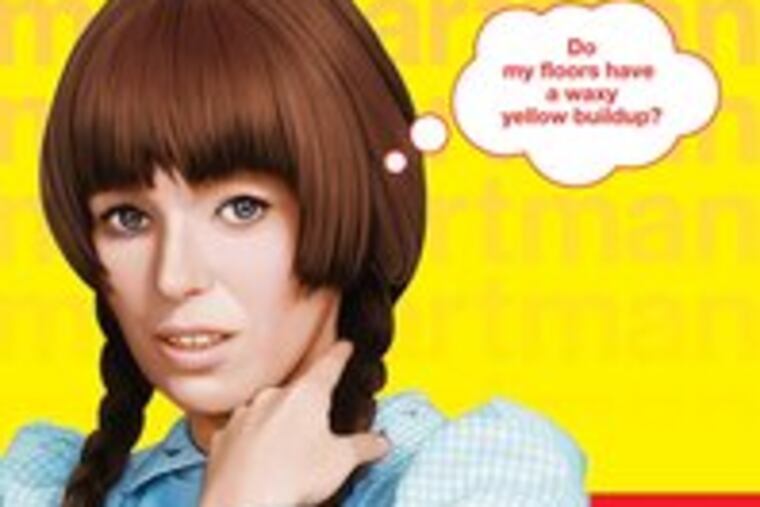
Louise Lasser, the deadpan comedic actor who began her screen career in Woody Allen movies and became a star as the wrenchingly sympathetic title character of Mary Hartman, Mary Hartman, Norman Lear’s off-center 1970s comedy, died Monday at her home in New York City. She was 87.
Her death was confirmed by Susan Charlotte, a friend.
Mary Hartman, Mary Hartman was a phenomenon, a syndicated parody of midcentury soap operas that ran Mondays through Fridays after the late news in most major markets. It followed a befuddled Ohio housewife as she tried to hold herself together amid mass murders, sex scandals, and everyday consumer anxieties. She wore pigtails, puffed sleeves, and gingham (while real American women were in Dorothy Hamill bobs and designer denim); fretted about waxy yellow buildup on her kitchen floor; and was emotionally abused by her conveniently impotent blue-collar husband (Greg Mullavey).
“She’s a survivor,” Ms. Lasser said of her put-upon character in a 1976 interview with the New York Times. “But that makes me sad. Because she’s a survivor in a world I wonder if it’s worth surviving in.” (The character did eventually have a nervous breakdown.)
Articles about the series proliferated, and Ms. Lasser — somehow simultaneously neurotic and girlish — appeared on the covers of major magazines, including People, Newsweek, Ms., and Rolling Stone. The show ran only a year and a half, from January 1976 to July 1977, but that was 325 episodes.
Louise Lasser was born in New York City on April 11, 1939, the only child of Sol Jay Lasser, a tax accountant and author, and Paula (Eisenreich) Lasser, a designer. (Louise had no middle name but later chose one: Jane.)
She spent her childhood in the city’s Bronx borough, where she attended Fieldston, a prestigious private school. At Brandeis University, she majored in political science but also appeared in shows that friends wrote. She dropped out during her senior year and began acting lessons with Sanford Meisner.
Living with her parents in Manhattan, she worked in theater and cabaret, and appeared in television commercials, notably for NyQuil and Excedrin. She was the first actress to win a Clio Award, the advertising industry’s highest honor. In 1962, she understudied a rising star, 20-year-old Barbra Streisand, in the Broadway musical I Can Get It for You Wholesale, and briefly took over the role when Streisand left.
She met Allen on a double date — he was with the other woman — and made her screen debut in The Laughmakers, a 1962 pilot he wrote. Set at a comedy club, it never became a series but was broadcast as a special. The two began dating and married in 1966.
After an uncredited part as a masseuse in the Peter Sellers comedy What’s New Pussycat? (1965), written by Allen, and a voice-over in What’s Up, Tiger Lily? (1966), Allen’s directorial debut, Ms. Lasser had full-fledged roles — with character names and screen time — in Allen’s next three auteur efforts, which he wrote, directed, and starred in.
In Take the Money and Run (1969), she was a bank robber’s neighbor, impressed by his fame. In Bananas (1971), she was the hero’s activist girlfriend who drops him because he shows no political leadership skills. The next year, in Everything You Always Wanted to Know About Sex (But Were Afraid to Ask), she played a woman who could achieve orgasm only in public. In the middle of all that filmmaking, in 1970, the Allens divorced.
Ms. Lasser spent a few years doing guest roles on sitcoms (The Mary Tyler Moore Show, The Bob Newhart Show) and drama series (Medical Center, McCloud) and television movies like Coffee, Tea or Me? (1973), a comedy about a flight attendant. Then Lear called.
Critics, including John J. O’Connor of the Times, were initially skeptical of Mary Hartman. But O’Connor admitted, in a January 1976 preview article, that Ms. Lasser had “an uncanny ability to touch as well as tickle.”
In May that year, Ms. Lasser was charged with cocaine possession in a highly publicized case that began at an antiques store where she was shopping. In her tote bag, police officers found 80 milligrams of the drug, which she always contended was a fan’s gift she had forgotten about. She received six months’ probation on the condition that she continue seeing her psychiatrist.
That July, when she hosted Saturday Night Live, drugs and breakdowns were the comic topics. Viewers had trouble telling whether some skits were scripted or were showing a desperate performer crumbling in front of a nationwide audience. The episode was long kept out of reruns.
Ms. Lasser stayed busy, writing and starring with Charles Grodin in Just Me and You (1978), a television movie about two strangers driving cross-country, and doing one season (1981-82) of It’s a Living, a sitcom about servers.
She appeared in Allen’s Stardust Memories (1980), in a cameo as his secretary; Todd Solondz’s film Happiness (1998), for which the ensemble cast won a National Board of Review award; and Darren Aronofsky’s Requiem for a Dream (2000). And she taught acting in New York.
She appeared in three episodes of HBO’s Girls (2014-15), playing an elderly artist who has been rediscovered. But she always said her favorite project was a part in The Lie, a 1971 BBC movie written by Ingmar Bergman. Its American broadcast won three Emmys.
She is survived by her longtime partner, Michael Citriniti.
The Mary Hartman questions never ended. Asked in 2013 if there had been a withdrawal period after the show’s end, Ms. Lasser told Interview magazine, “I’m still withdrawing.”
That same year, she assured the website The Toast that Mary never felt like an outsider. Then how did you explain this small-town Midwesterner’s decided New York accent?
“You don’t,” Lasser said, adding: “It’s a typical existential dilemma to try to make sense of something that has no sense. I think that’s what makes it work.”
This article originally appeared in the New York Times.