Political theater at the Pa. Society, more bad ideas from Council, and preservation done right | Shackamaxon
Apparently Champagne, cigars, cocktails, and filet mignon are a necessary component to talking productively with the other side.
This week’s Shackamaxon goes to the Pennsylvania Society dinner in Manhattan, explores more Council shenanigans, and extolls an example of positive preservation.
We’re all pals here
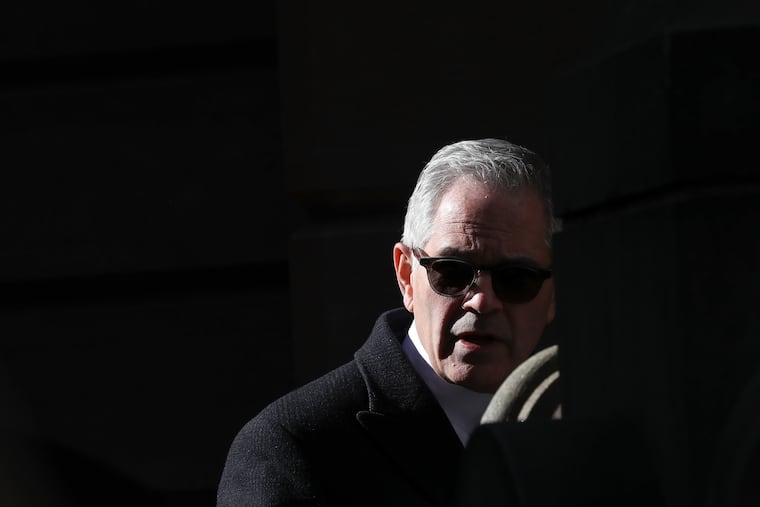
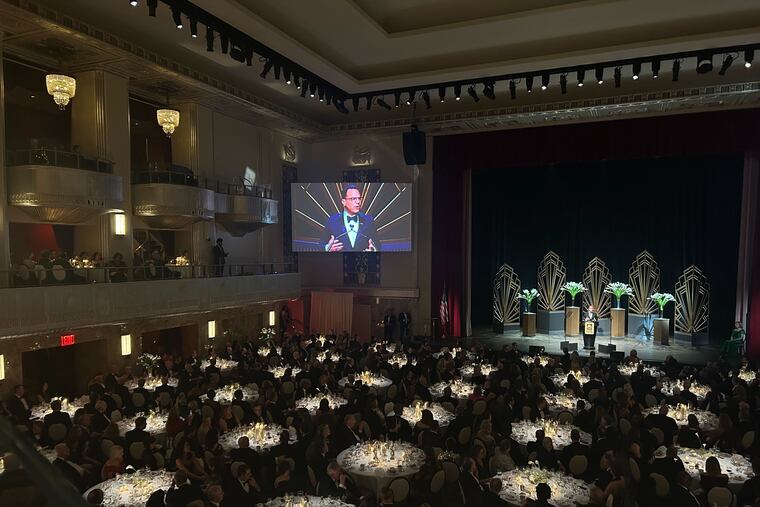
I made a rookie mistake while attending my first Pennsylvania Society retreat in New York City last week: I arrived far too late. Instead of attending the various parties hosted by lobbyists and law firms, which is where the real political news is found, I covered the signature gala at the recently reopened Waldorf Astoria.
Former Ed Rendell right-hand man, Comcast executive, and onetime Canadian ambassador, David L. Cohen, was honored with the nonprofit organization’s Gold Medal. Both Cohen and Gov. Josh Shapiro gave speeches praising the value of bipartisanship. In fact, bipartisanship seemed to dominate the air at the event — despite the rising division in just about every other aspect of political life.
Where was this bipartisan love over the summer, as Pennsylvanians waited for months for a state budget? Where was the political collegiality when local governments and school districts were forced to shutter services or take out loans, and transit riders faced brutal service cuts?
Apparently Champagne, cigars, cocktails, and filet mignon are a necessary component to talking productively with the other side.
Lacking these amenities in the General Assembly, Harrisburg politicians chose vitriol over working together. Beyond the infamous Joe Pittman speech where the Senate majority leader showed how much he resents the southeastern part of the commonwealth he’s supposed to help lead, our local politicians also engaged in a blatantly partisan strategy to secure sustainable transit funding, one that ultimately failed.
In one of the most boneheaded political moves I’ve ever seen, Pennsylvania Democrats openly bragged they hoped the brutal SEPTA cuts would help them make political gains. While they succeeded in forcing local Republican senators like Joe Picozzi, Frank Farry, and Tracy Pennycuick into making a bad vote to divert transit funding to roads in other parts of the state, this strategy only inflamed partisan tensions, making a deal less likely.
At it again
I really try to avoid having Jeffrey “Jay” Young, the City Council member representing North Philadelphia’s 5th District, make a weekly appearance in this column, but he makes that very difficult. His latest bad idea is to ban housing on and around the campus of what had been Hahnemann University Hospital.
To be clear, the loss of Hahnemann is an absolute tragedy. My eldest was born there, and the attentive care she and my wife received was excellent. Yet the hospital is closed, and it has been closed for more than five years at this point. There are no plans to reopen it. In fact, the property was sold earlier this year to Dwight City Group. The developer told my colleague Jake Blumgart they were avoiding high-end apartments.
With a location right next to a subway station, midmarket housing is an ideal way to ensure the property does not become a source of blight over time. The former hospital’s neighbors include the Convention Center, the Pennsylvania Academy of the Fine Arts, a couple of highway ramps, and a ton of parking lots.
Young claims his bill is meant to “promote job creation.” Maybe for zoning lawyers, but not for anyone else.
Preservation done right
St. John’s Baptist Church at 13th and Tasker Streets has an interesting story that follows the demographic shifts of its neighborhood over the 132 years it housed a congregation. Thanks to a pragmatic local preservation law, the building should avoid demolition and remain standing for years to come.
In the late 1800s, immigrants from Europe, in particular from Roman Catholic Italy, were flocking to South Philadelphia for work and opportunity. Some viewed this trend with consternation. They saw Protestant Christianity as integral to being an American, and they sought to convert the new residents.
This process was called “Christian Americanization.” A cross-denominational effort led to the establishment of “missions” to reach these groups. St. Thomas, built in an Italianate style, was a part of this movement.
Originally a Reformed Episcopal Church, the building was later transferred to a Baptist denomination. The Baptists had bilingual Italian clergy and were thought to be better suited to evangelizing the new residents. In the 1950s, the church diversified. It became known as a house of prayer for all people, and welcomed its new, non-Italian neighbors to its pews — in particular, Burmese and Indonesian immigrants, many of whom came to America specifically to practice their faith.
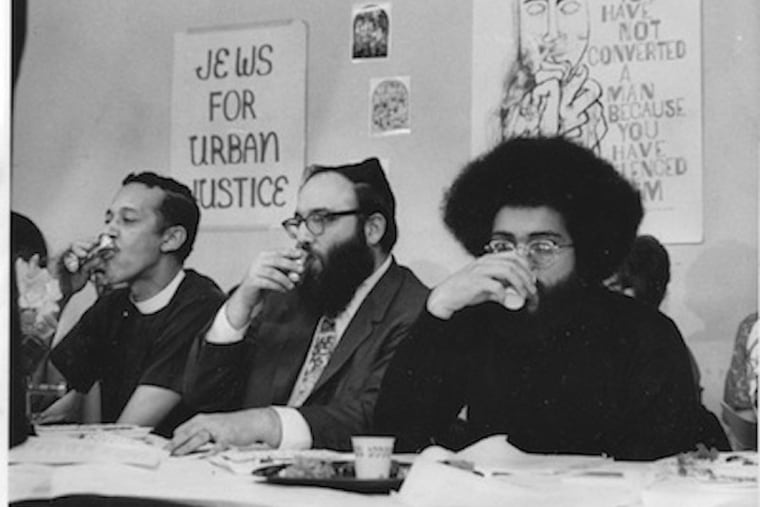
The congregation’s last pastor was Tony Campolo, an evangelical leader who eschewed a megachurch pulpit and televised program in favor of the itinerant preaching popular among earlier leaders in that tradition. He exhorted his fellow Christians to set aside conservative politics in favor of social justice.
Campolo died last year, not long after the church closed its doors. A fuller history of the congregation can be found in its historic nomination.
While many houses of worship end up demolished after years of plans and negotiations fail to come to fruition, St. John’s will not join their ranks. That’s because of a 2019 law passed by City Council, which makes it easier to reuse historically protected buildings, like churches. While the project of turning a place of worship into apartments may seem daunting, other conversions in the city have worked out well.
If the purpose of preservation is to deepen the link between past and present, this pragmatic approach is the right way forward.