Challenge the high school student group inspired by Charlie Kirk, but don’t censor it
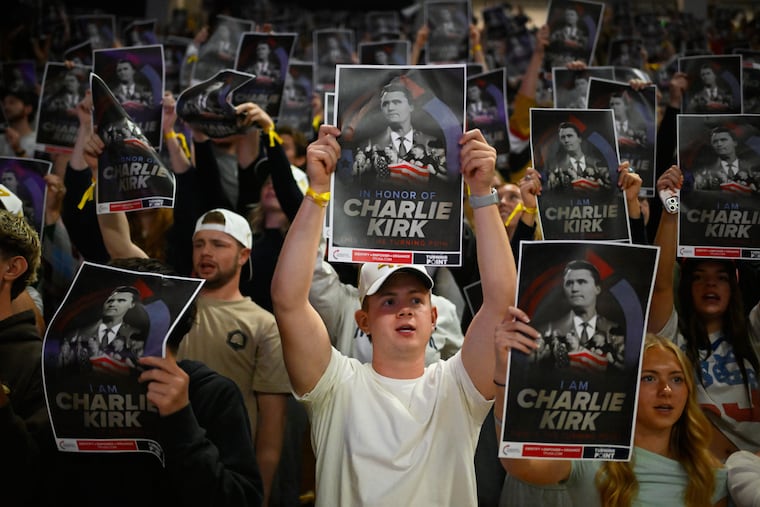
Kirk’s Turning Point group has established a high school operation named Club America. The answer to this kind of conservative activism is not to shut it down, but for liberals to raise their voices.
“If there’s going to be Club America, by God, there needs to be Club Progressive.”
That’s what a citizen in upstate New York said during a fiery debate about whether her local high school should allow a chapter of the student group inspired by right-wing activist Charlie Kirk.
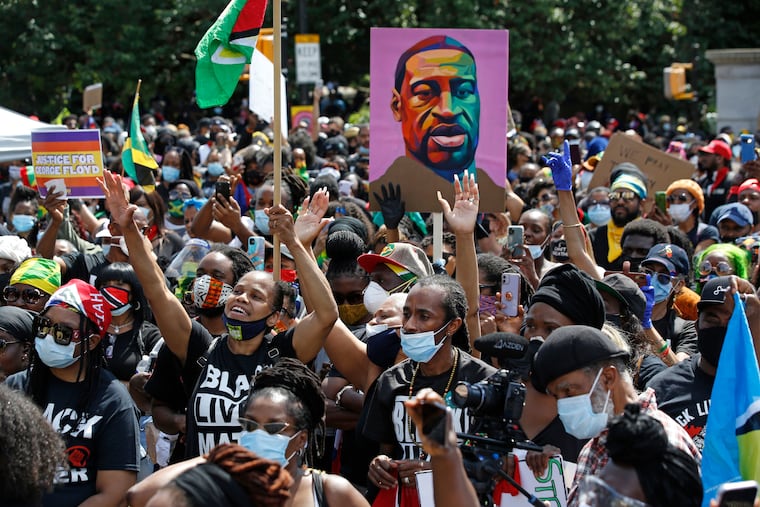
And I say: Right on. The answer to conservative political activism in schools is not to shut it down, as some of my fellow liberals have tried to do. We should instead form our own student groups to challenge Club America.
That’s the American way. If you don’t like someone else’s speech, raise your own voice. And create your own clubs.
That’s what Kirk did. His Turning Point USA, an organization focused mainly on colleges and universities, sponsors campus events where conservatives face off against liberal students. Kirk was taking part in one of those forums — debating trans rights with a critic at Utah Valley University — when he was murdered on Sept. 10.
Turning Point also established a high school operation, which it renamed Club America last July. Its chapters have nearly tripled since Kirk’s death, rising from 1,200 to more than 3,300. Eastern Pennsylvania now has nearly 40 chapters, Turning Point says, up from 11 at the end of the last school year.
Several area schools named by Turning Point denied that they had Club America chapters, which suggests the organization might be exaggerating its growth. But any growth is too much for its critics, who have called on schools to prohibit it.
“This club is an easy way to incorporate hate and discrimination in our high school,” declared a petition against a proposed Club America chapter at West Chester East. “Educational institutions should be a platform for learning and growth, free from political partisanship and the tensions it can cause.”
Kirk embraced “replacement theory” — the idea that people of color are displacing white people — and also said the Civil Rights Act of 1964 was a “mistake.” I understand why parents and other community members might find that deeply offensive, and not want their schools to host an organization acting in his name.
But under federal law, schools can’t pick and choose among the student groups they allow. And that’s exactly as it should be. Otherwise, a conservative school board might bar High School Democrats of America, which has chapters in all 50 states.
And it’s absurd to pretend we can keep politics out of our schools, as the West Chester East petition imagines. That echoes claims by Club America and its defenders around the country, who insist the group isn’t political; it’s simply promoting patriotism and Christianity.
It’s absurd to pretend we can keep politics out of our schools.
That sounds pretty political to me. Governors in several Republican-led states have called for the establishment of Club America chapters in every high school. And the national organization distributes materials to students that repeat conservative talking points about guns, taxes, and other hot-button issues.
That should inspire liberals to create their own student organizations or support existing ones, like the High School Democrats. And they should also exercise their right to criticize Club America at every turn.
That’s what happened last December at a Northern California high school, where students showed up at a Club America meeting to challenge a local city council member whom the chapter had invited. The speaker said she believed marriage should be reserved for straight couples, but that her own daughter was gay — and married to a woman — because of trauma she had suffered as a child.
Students pushed back on that claim, and also on the speaker’s comments about the Rev. Dr. Martin Luther King, Jr., whom she called a “Marxist.” In a subsequent statement, she said she was explaining Kirk’s views of King instead of expressing her own.
By then, however, the censorship machine had already kicked in. Citing the speaker’s remarks, critics called on the school to disband its Club America chapter. “They have a First Amendment right to have that club,” a local Democratic leader said. “But they don’t have a right to misuse that platform in a way that harms the student community.”
Never mind that the students had surely learned something important from their debate with the speaker. Her words were harmful, critics said, so the group that invited her had to go.
That patronizes the students, all in the guise of protecting them. And it lets Club America play the victim, which is the last thing liberals should want.
“This club was created to facilitate respectful conversations about pressing issues in America,” declared West Chester East’s Club America chapter, replying to the petition against it. “And if free speech is free it must be free for us as well.”
Exactly. The best way to create conversations in our schools is to encourage everyone to speak. And if you want to silence Club America, watch out! One day, by God, the censors may be coming for you.
Jonathan Zimmerman teaches history and education at the University of Pennsylvania. He is the author of “Whose America?: Culture Wars in the Public Schools.”