From Kensington to Dictionary.com, what 6-7 reveals about America
What does cultural appropriation look like? Parents of 6-year-olds turning 7 holding 6-7 themed birthday parties, while the social issues in the Kensington neighborhood Skrilla raps about are ignored.
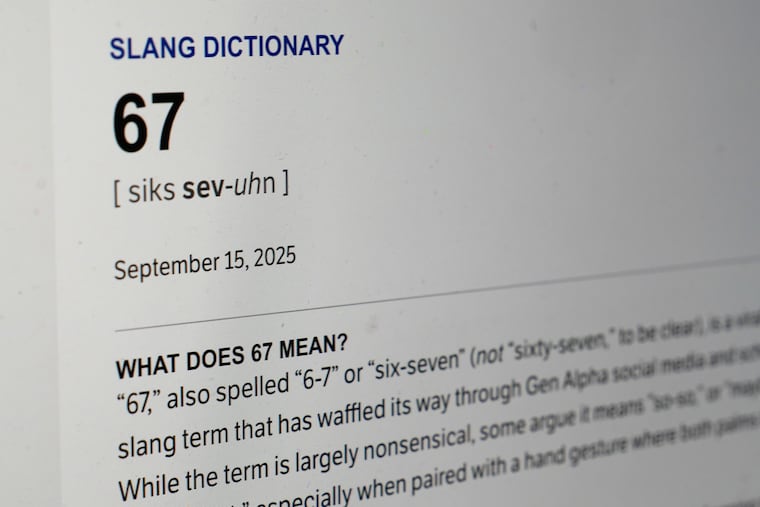
White America struggles with cultural appropriation. What’s the difference between cultural appreciation and cultural appropriation? What does cultural appropriation look like? It looks like this: kids across the country chanting “6-7,” schools banning 6-7, parents of 6-year-olds turning 7 holding 6-7 themed birthday parties, while the social issues endemic to the neighborhood for which the artist advocates are largely ignored.
6-7 is the 2025 Dictionary.com word of the year. Merriam-Webster defines the phrase as “a nonsensical expression connected to a song and a basketball player.” When asked about its meaning, Jemille Edwards, the rapper professionally known as Skrilla, says originally it was negative, but that has changed.
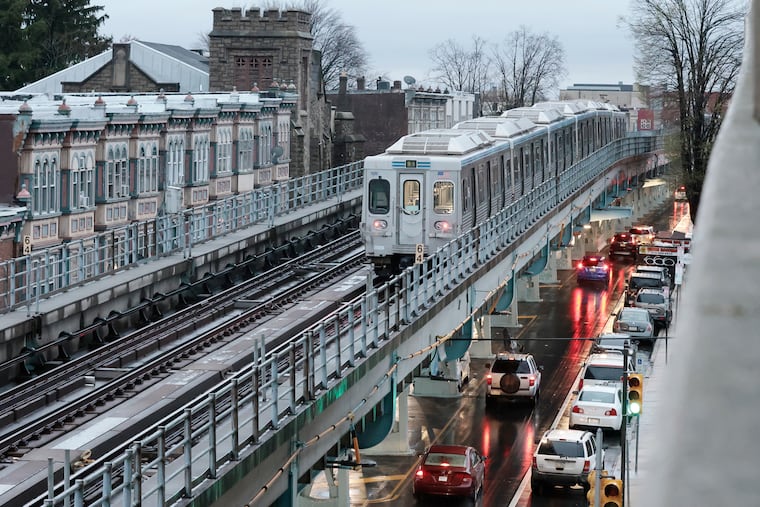
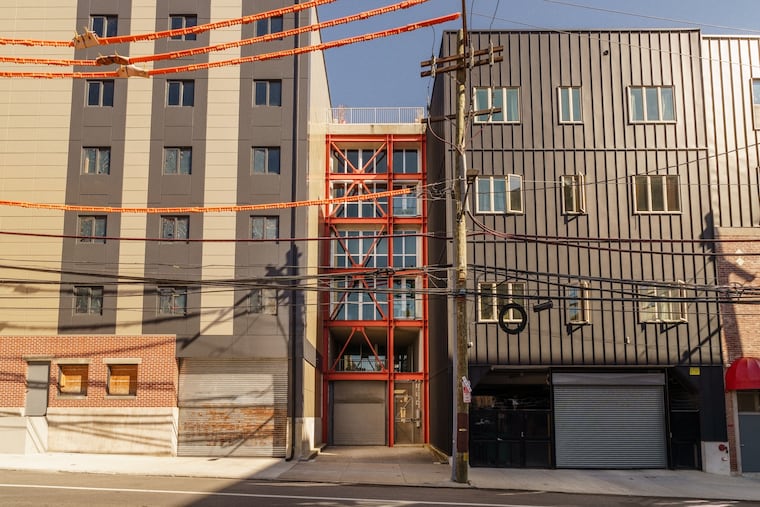
Skrilla, who is of Black and Mexican heritage, refers to the area he grew up in, Kensington, as Zombieland. His current tour is named “Z Tour.” Kensington is a hub of the opioid epidemic. On TikTok and YouTube videos, he discusses the area and people suffering through substance use disorder. In one titled, “Skrilla Saving Lives in Kensington,” he administers Narcan to someone who is unconscious.
Like most large metropolitan areas in the United States, Philadelphia is also racially segregated. In the 1930s and 1940s, the federal government’s redlining maps, which designated which areas were the best investments and which areas would be denied home mortgages, Kensington was designated as “hazardous” and colored in red.
Today, Kensington still bears those scars. The majority of residents are Black and Latino, and resources are scarce. Compared with Philadelphia at large, there is higher violence, 30% higher in Kensington than in Philadelphia, lower income, about half the average income of Philadelphia, and more desolation, with twice the proportion of vacant lots. According to census data, only 7% of the population has a bachelor’s degree.
This past summer, I read the fiction novel Long Bright River, now a TV series. The setting for both is Kensington. Spoiler alert: The long bright river is not the Delaware River, which runs through Philadelphia. It’s not a geographical river running through a land of soil at all. It refers to the river of veins that are injected with drugs.
In the song “Doot Doot (6 7),” Skrilla raps about death, guns, and drugs. If we are willing, we can use the 6-7 trend to educate: to see the impacts of centuries of white supremacy, poverty, and institutional neglect on a geographical area and the raw experiences of substance abuse disorder.
But, seemingly, we are not in an America that wants to do better. While kids across America have been loving 6-7, racial and economic segregation continues, Dictionary.com did not launch a campaign to uplift the Kensington area, and we still have a white supremacist president whose administration wants to censor discussion of racism from our schooling systems.
To be sure, I don’t know Kensington nor Skrilla. As a sociologist, I know about racism, classism, and the historical and present-day institutionalization of these -isms. And I know that the 6-7 phenomenon is an example of cultural appropriation. Cultural appropriation is bantering 6-7 or carving 6-7 in your Halloween pumpkins while ignoring the life and work of the artist who originated the phrase.
If we want to do better, the time is always now. The era of 6-7 is not a time to merely laugh, eye roll, or move on. It’s a time to reflect, to learn about Skrilla and his advocacy for his community and neighborhood. It’s a moment to invest in more knowledge and in making a better, more socially sustainable world where inequality is not one of the largest byproducts of our shared reality.
We can advocate for and get to know our local populations who are about to lose SNAP benefits. We can vote out the officials, local and federal, who block diversity, equity, and inclusion, who are OK with institutionalized inequity and making food harder for single mothers to access. Their policies are not neutral. They uphold white supremacy by design.
And neutrality in the face of injustice is always complicity.
Megan Thiele Strong is a sociology professor at San Jose State University, a public voices fellow at the OpEd Project, and a member of the Scholars Strategy Network.