The borders inside

Just before 9 p.m. on Oct. 15, Tracy pulled up outside the townhouse on the west side of Chicago. She ushered Juliana and her 6-year-old, Yori, into the back seat and headed for Union Station — the overnight train to New York City, their best shot at safety.
For a month, mother and daughter had barely opened the door of their one-room apartment. Yori stopped attending first grade. Juliana stopped cleaning houses. Neighbors left groceries at the threshold.
In mid-September, during a construction site raid, U.S. Immigration and Customs Enforcement (ICE) agents detained José, Juliana’s husband and Yori’s father, and deported him to Venezuela. He was “lucky”: at least he wasn’t lost in detention purgatory or sent to a prison in El Salvador.
From Venezuela, José texted me about conditions at the Broadview Detention Center, where he had been held before deportation, calling them inhumane.
He asked for only one thing: “Please help my family leave Chicago. It’s too dangerous for them there.”
I first met José outside my local grocery store, Jewel-Osco, in Wilmette, one of Chicago’s North Shore communities. He held up a sign, seeking odd jobs. Many Venezuelan immigrants who congregated around the Jewel ended up there when Texas Gov. Greg Abbott bused them to Wilmette shortly after they crossed the border in late 2023.
I spoke with José and hired him to do some repairs and painting. He traveled by subway two hours each way for work, Juliana and Yori in tow. While José worked, I drew with Yori.
One warm summer day after José finished working, we all walked to the edge of Lake Michigan, where Yori made sand castles.
These were good people who faced difficult circumstances. It felt right to help them.
José was a proud craftsman, and I recommended him to other friends, including Tracy — one of the three of us who would later make sure Juliana and Yori had some money and helped arrange their transportation to New York after José’s deportation.
What happened last month is not the 1930s. But as a Jewish woman, I can’t ignore the echo of that dark period.
In Adolf Hitler’s Berlin, families packed by day and moved quietly toward the border by night, clutching papers that might open a path to New York, a city that, for many, meant survival.
They wrote to cousins, begged for affidavits, queued at consulates, and measured hope in stamps and signatures. The promise was simple: make it to New York, and you can gain freedom from terror.
The moral test feels painfully familiar.
Our family, led by my great-uncle Max Berg, had settled in New York City after immigrating from Poland. On the eve of World War II, letters began arriving from people in Europe desperate to escape Hitler. They wrote because they shared his last name — Berg — hoping for a connection that might save them.
Max never knew whether any of the 49 families were actually relatives, but he sponsored them all, buying their passage and covering their first month’s rent so they could begin new lives.
The differences matter, of course. Hitler engineered annihilation; today’s migrants are not facing that. But the moral test feels painfully familiar.
When government policy makes ordinary life like work, school, or a doctor’s visit unsafe for families who pose no threat, do we widen the circle of protection or narrow it? In the 1930s, too many Germans hid behind drawn curtains rather than opening their doors.
As residents of Philadelphia and other American cities steel themselves for the possible deployment of immigration agents, Chicago offers a bleak preview of this chilling and shameful moment in our nation’s history.
My hometown has faced an onslaught of immigration enforcement as part of Operation Midway Blitz. Chicago has responded to the crisis by widening its circle of protection. Our neighbors are already organizing.
Rapid-response networks canvass homes and storefronts, sharing “know your rights” cards and training witnesses to safely document encounters with ICE — even here in the affluent North Shore, where there are few immigrant residents but many immigrant workers.
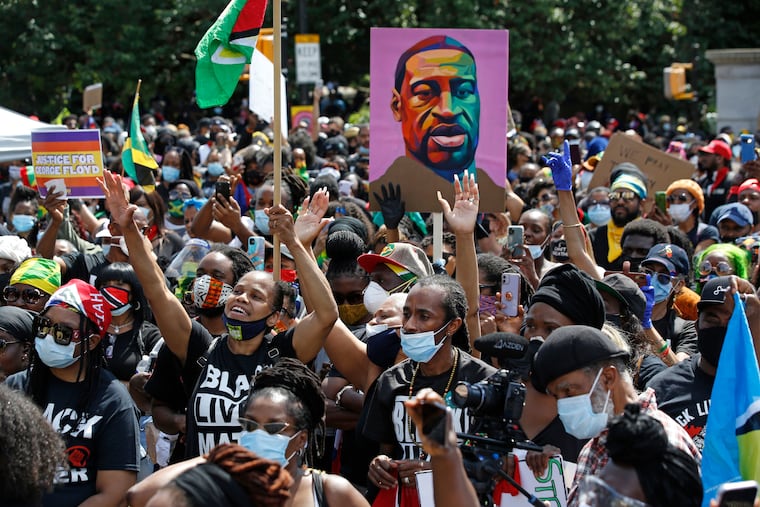
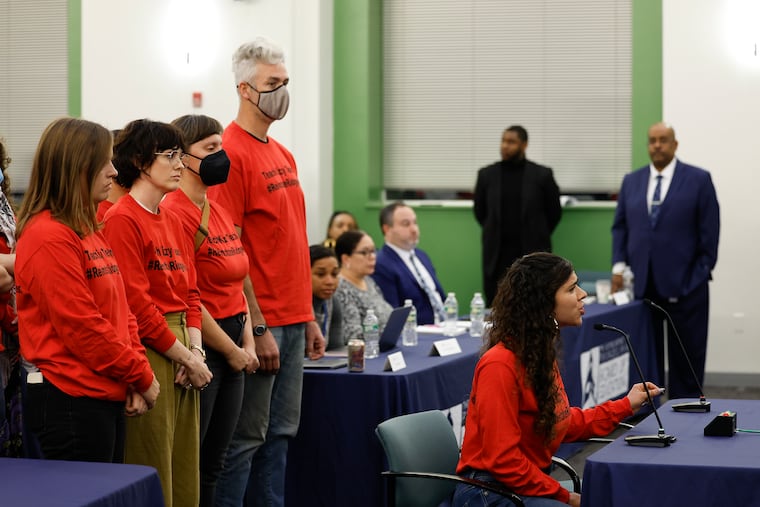
We also hold peaceful protests, which include clergy and citizens from across Illinois, to exercise our right of free speech.
And we record encounters whenever possible. In some instances, Chicagoans have faced down multiple ICE agents wielding weapons during an attempted arrest. In one such incident, a man, once pinned to the ground, was released because bystanders gathered to document and demand accountability.
However, ICE agents are using aggressive tactics, often crossing the line into violence directed at protesters and people who document their activities.
On Sept. 19, federal agents, who appeared like snipers perched on a rooftop at the Broadview Detention Center, shot a local pastor in the head with a pepper ball and then teargassed him.
In recent footage, rows of agents in tactical gear surround protesters and push their faces into the pavement. On Oct. 10, a producer with a local television news program was thrown to the ground, handcuffed, and detained without cause.
These are not “isolated incidents,” but rather tactics intended to intimidate and provoke. Chicago feels combustible — one itchy trigger finger from our own Kent State massacre.
The real suffering isn’t confined to the protesters, of course, but to the detainees inside Broadview’s walls. In Lake County, Ill., immigration attorney Kimberly Weiss described the case of her client, Juan — who, like all the immigrants included in this commentary, was willing to be included in this essay only if his surname was withheld. (Likewise, some of the native-born U.S. citizens I interviewed agreed to participate only if their surnames were withheld, for fear of retribution.)
Juan is a widowed father of four U.S.-born children, ages 12 to 20, detained by ICE outside his home. “His children contacted me terrified,” Weiss said.
That same night, she filed emergency motions to stop his deportation and request bond, with a hearing set for the next morning. “It would have been a strong case,” she said. “He entered legally, held valid documents, like a work permit, Social Security number, and driver’s license. He’s a union roofer, a widower caring for his U.S. citizen children. He qualified for lawful status under a widower petition.”
But before the hearing could take place, Juan was gone. Weiss said her client described Broadview Detention Center as so inhumane that he couldn’t endure another night. Detainees had no access to water. The air was so thick and suffocating that Juan witnessed others gasping for breath.
Officers threatened Juan into signing his deportation papers, using an ICE agent as a “translator” to deceive him. Without his glasses and terrified, he finally signed. By the next afternoon, Juan was across the border.
Dread doesn’t stop at the gates of Broadview.
“There’s no accountability for what happens inside Broadview,” Weiss said. “It’s overcrowded, filthy, and cruel. There is no oversight, even when the conditions amount to torture.”
Stories like these ripple far beyond detention centers. Dread doesn’t stop at the gates of Broadview. Anxiety seeps into neighborhoods, workplaces, and schools, touching even those who are U.S. citizens.
During a recent nighttime raid in a South Shore neighborhood, Blackhawk helicopters dropped armed federal agents on top of an apartment building, as dozens of masked ICE agents arrived in trucks.
Hundreds of agents moved through the building, kicking in doors, setting off flash-bang grenades, and rounding up residents as they slept. Children were separated from parents, zip-tied, and held in vans for hours.
Imagine being a child, awakened in the middle of a peaceful slumber, snatched from your parents, and restrained. The U.S. Department of Homeland Security proudly boasts about the raid, but dozens of those arrested were U.S. citizens.
» READ MORE: We are Jewish parents of two college-age children. Don’t use us as an excuse for persecution. | Opinion
We’ve now reached the point where friends of mine, Indian American physicians named Shila and Ravi, make sure they and their 14-year-old daughter always leave the house with their driver’s licenses and U.S. passports, in case they are stopped by ICE.
“Show me your papers” is a demand one might expect from the Gestapo, Hitler’s secret police, but as Americans, we do not expect this, and should never accept it.
“Being a brown-skinned woman in America means constantly proving my right to belong,” Shila told me recently. “My citizenship and contributions never seem enough to erase the question — ‘Where are you from?’ — that marks me as foreign. I’ve learned to live with this othering, but seeing my child inherit it breaks my heart.”
“What was once an occasional ‘Go back home’ has become a deeper threat: ‘I’ll make sure you get home,’” she added. “But where is home when this is the only one we’ve ever known? Nothing can shield us from the fear that belonging can be questioned or revoked at any moment.”
When ICE occupied Los Angeles and the National Guard was deployed, José and I exchanged texts so that I could better understand his asylum case.
José then called me at the end of August. I could feel his embarrassment reaching through my phone, but he asked: Could he and his family move in with us? He’d heard about the planned ICE buildup and wondered whether his family would be safe in the predominantly Latino neighborhood where they were living.
I declined. I thought of families in Europe who hid neighbors in attics and back rooms, and felt the weight of closing my door to him. My daughters were still home from college, and there wasn’t space for anyone else. I also wanted time with my girls before they left.
And truthfully, I wasn’t sure José and his family would be any safer in my predominantly white suburb. I suspected my next-door neighbors were Trump supporters, and worried they would report him.
Still, I told myself that by mid-September, when the girls returned to school, I would offer them refuge.
But when I finally texted him, it was too late. He had already disappeared.
Compassion is not a policy, but a choice.
When Juliana and Yori finally arrived at Penn Station, they carried two small suitcases with everything they could fit. They left behind their clothes, furniture, toys, traces of a life they built from nothing.
With the help of an acquaintance, they found a family shelter in New York City, a place that feels more like exile than arrival. The noisy streets outside, thick with strangers and sirens, overwhelm them. Yori cries every day; she misses her father. Juliana leaves the room only to buy food. She had hoped to find work, but even mastering the city’s subway system seems like an impossible task.
She once dreamed her daughter would breathe freely, run in the open air, play on a jungle gym. Instead, they live in a small room where safety feels borrowed.
Watching Juliana and Yori struggle to rebuild their lives, I realize that what failed them wasn’t only my courage, but our collective conscience. The duty to offer refuge doesn’t belong to governments alone; it begins in the smallest places — on our streets, in our homes, within ourselves. Compassion is not a policy, but a choice, a door we decide to open or keep closed. The question is no longer who will offer them refuge, but who we become when we hide behind our curtains.
I still replay that call, wondering whether borders are drawn only on maps, or instead, inside of us.
Jennifer Obel is a founding member of the New Trier Rapid Response Team and coleader of Sukkat Shalom’s immigration task force.