My son asked me about Instagram. What I know should scare every parent.
Here is what keeps me up at night: The same architecture that keeps a child scrolling past midnight also keeps a teenager in a feed of Holocaust denial. These are not two separate problems.
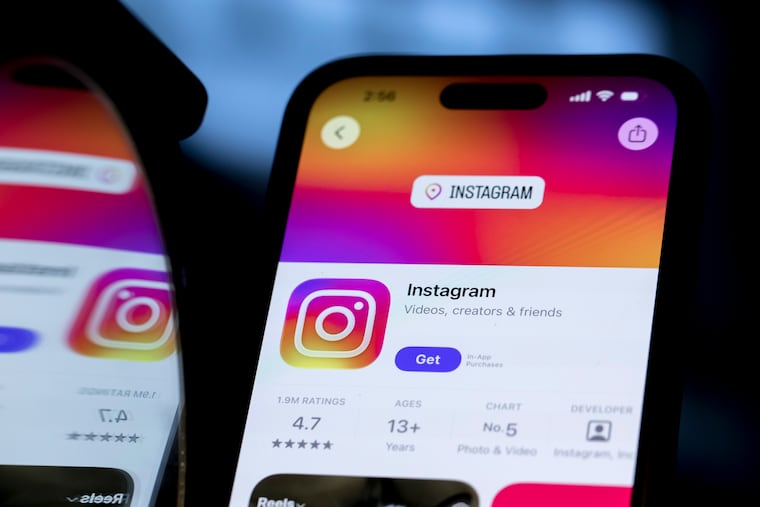
Recently, my teenager asked me about getting an Instagram account. I paused longer than he expected.
That pause wasn’t about distrust in him. It was the pause of a parent who spends his days documenting what happens on that platform: what gets amplified, what goes unmoderated, and what finds its way into the minds of children who just want to connect with their friends.
The Anti-Defamation League Center on Extremism recently released a report that should stop every parent in their tracks. Between January and February, ADL researchers reported 253 pieces of violative content to Instagram through the platform’s standard user reporting system. Instagram removed just 7% of it. In 20 cases, Instagram told researchers it lacked the bandwidth to even review the reports.
Among what remained: a reel joking that Adolf Hitler should run the United States, which accumulated 2.7 million views and 172,000 likes. Islamic State propaganda overlaid on footage of the Bondi Beach, Australia, massacre, calling for Jews to be killed in “streets and synagogues.” A network of 105 accounts affiliated with white supremacist Nick Fuentes with 1.4 million combined followers.
This is the environment our children enter when they open Instagram.
Here is what keeps me up at night: The same architecture that keeps a child scrolling past midnight also keeps a teenager in a feed of Holocaust denial. These are not two separate problems. They share one cause: platforms engineered to maximize engagement, at any cost, in any direction, for any user.
Internal Meta documents introduced during a landmark trial in California showed executives writing, “If we wanna win big with teens, we must bring them in as tweens.” Meta CEO Mark Zuckerberg himself acknowledged that his company’s 2025 moderation rollback means “we’re going to catch less bad stuff.” That is not an oversight. That is a policy.
I am not calling for the elimination of social media or for censorship. I am calling for accountability, the same accountability we require of any industry whose products affect our children.
A toy manufacturer cannot sell something it knows is dangerous.
A cigarette company cannot legally market its product to children.
We do not consider those standards censorship.
This is the bare minimum we can ask for. Bipartisan legislation currently before Congress would require large social media platforms to publish their content moderation policies, report enforcement actions regularly to the attorney general, and face real consequences for failing to act on terrorist and extremist content. This is transparency. It is not a ceiling on free speech; it is a foundation for accountability. Congress should act.
And there is something each of us can do that no law can substitute for: talk with our children, not once as a lecture, but as an ongoing conversation.
Ask what they are seeing. Ask how it makes them feel. Tell them algorithms are not neutral; they are engineered.
Help them understand the difference between a platform that connects people and one that profits from keeping them in a state of outrage or self-doubt.
That kind of critical thinking is the one protection no content filter can replace.
My son asked me about Instagram. I paused because I know what that platform can do, what it is designed to do, and what it has failed to stop. The research and reporting make clear that none of this was an accident.
The question before us is whether we will demand better. Not just from our children. From the companies that built the world they inhabit, and from the lawmakers with the power to hold them to account.
Andrew Goretsky is the senior regional director of the Anti-Defamation League’s Philadelphia office, serving Eastern Pennsylvania, Southern New Jersey, and Delaware.