As we search for autism’s cause, we ignore those living with it
Each year, more than 120,000 young people with autism turn 18 and "age out" of pediatric medicine into an adult system that is unprepared to help them.
Top federal officials talk about finding a cause for autism, generating more buzz by the day. More substantively, the owner of the Philadelphia Eagles gave an extraordinary sum — $50 million — to a local hospital to discover its cause and develop new treatments.
While such gifts deserve praise, another urgent crisis goes largely unnoticed: how to care for the millions of adults already living with autism.
Each year, more than 120,000 young people with autism turn 18 and “age out" of pediatric medicine. They enter an adult system that is unprepared to help them. They enter a world with no standardized guidelines for care, no specialized training for physicians, and far less support. Families must navigate a cliff, not a bridge. More than five million adults now push past herculean obstacles for what is often worse care.
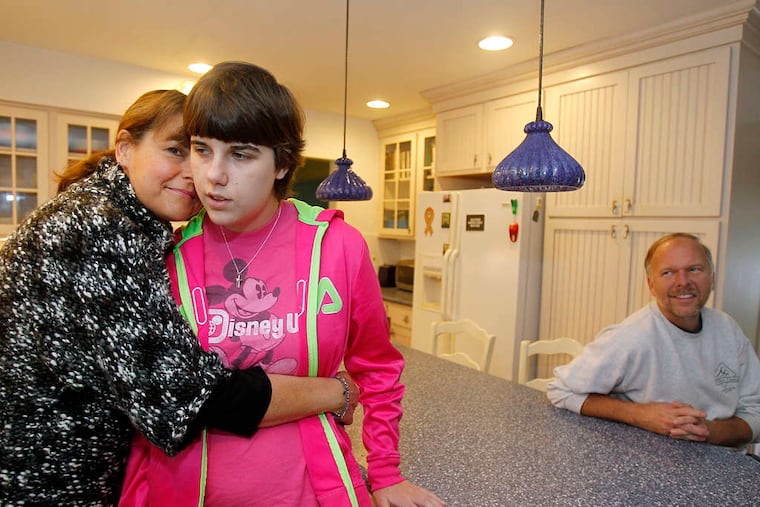
I view this crisis as a pediatric emergency medicine doctor and as the mother of a transition-age autistic son.
Fear for the future
We parents are terrified by what will happen to our adult children when we are no longer around to care for them. Parents weep — and sometimes wail — when I refer them to an alternate site for adult care. Our system can no longer remove an appendix or mount a crisis intervention once these children cross over.
As a doctor, I know how this change can cause unnecessary admissions and a loss of social work and case management. Caregivers must suddenly educate the provider on the patient’s basic needs. As a parent, I watch my son Alexander and others hop from one tiny island of support to another.
When Alexander broke his arm at age 6, surgeons were called in to pin his shattered bone and clean the wound where the disrupted muscle had burst through the skin. Alexander was ridiculously compliant and poised; I was less so.
His surgeons accidentally cut one of the three main motor nerves in the arm when they tried to stabilize his floppy elbow. It took many visits over eight weeks to get proper attention. By then, his arm was floppy from a medical error.
In our home, we work hard to protect him: Trampolines are forbidden, helmets always on, seat belts firmly buckled. Yet, I failed to anticipate how Alexander’s autism could hurt him. This label — his scarlet letter “A” — kept his surgeons at a dangerous distance.
Could it happen again when I am no longer around?
We parents are terrified by what will happen to our adult children when we are no longer around to care for them.
We know autistic adults suffer more illness and death compared to their peers. They are more likely to be misunderstood, dismissed, or undertreated. The data are abundant — and damning. We fail these people.
Deserve tailored care
I continue to teach Alexander to be responsible for his care so he will thrive when I cannot be beside him. In 2023, the National Institutes of Health formally designated people with disabilities as disadvantaged. I am relieved to see a growing acknowledgment of autistic people as a vulnerable group, at risk for health disparities, deserving of tailored care.
I have also gained confidence in my voice as an advocate for Alexander. I’ve become a “gang member.”
Senior staffers for Gov. Josh Shapiro respectfully dubbed my fellow autism advocates as “the mom gang.” It is reassuring only in this context that I present as intimidating. Our band of six wants to make sure that half-baked federal plans to create a national autism registry never happen in Pennsylvania without privacy safeguards.
Meanwhile, the autism community holds diverse opinions on what to do. Should profound autism be classified separately from other presentations? Is “cure” the right goal? Is Tylenol a risk factor?
While these conversations pull us in different directions, we must not lose sight of a common purpose to create a better system.
Autistic adults deserve accessible and affirming change. There are models, tools, and innovations in which to invest:
Training emergency, inpatient, and outpatient teams to recognize how autism presents in adults
Designing calming public environments that ease communication
Creating dedicated consult services — including behaviorists, communication specialists, and caregivers — available in person and via telehealth
Prioritizing prevention and de-escalation over restraint
Highlighting the voices of autistic individuals in policy decisions that affect them
And, critically, funding and scaling programs that treat autism across the lifespan
Lack of resources
Resources are scarce. Historic gifts fill some gaps from interrupted government funds pulled from disability and diversity programming. Casualties include the Department of Education’s “Charting My Path for Future Success” transition program, a research-based effort to help high school students with disabilities enter the workforce or higher education.
We may all agree there is an immediate need to build better supports for adults with autism.
I worry for my son. I need to know I have pushed every edge of possibility to smooth his way forward. I do this for my daughters, too, who learned from their earliest days their brother needs the same supports they are accustomed to, but he is often denied.
One day, they will take my place slaying this dragon.
Eron Friedlaender is a public health investigator, an emergency medicine physician at Children’s Hospital of Philadelphia, and a board member of the Institute for Human Centered Design.