Philadelphia has built African trade ties for decades. Trump’s silence on one expiring law could undo that.
The African Growth and Opportunity Act, or AGOA, is set to lapse in December. The White House has signaled ambivalence toward the program. Congress may not have the votes to save it.
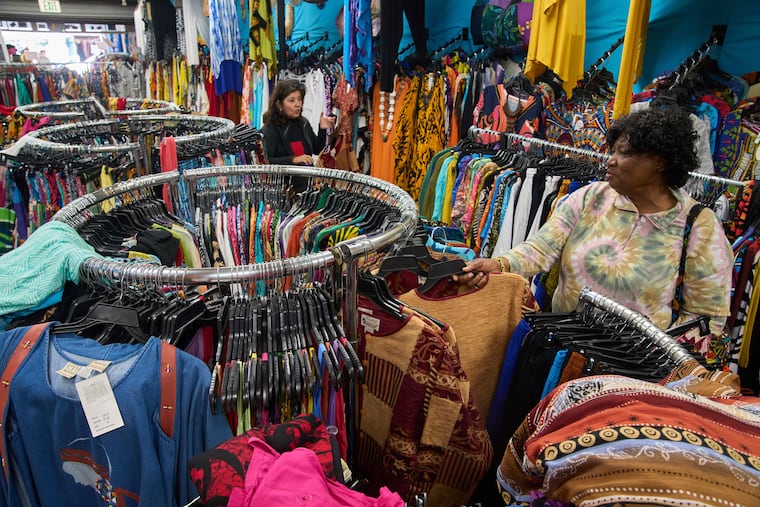
For Maxwell Adew, the owner of Kuueza, a U.S. import-export and sourcing company based in Southwest Philadelphia, uncertainty surrounding the African Growth and Opportunity Act is more than just a policy debate in Washington — it has forced him to rethink his business strategy.
Known as AGOA, the trade preference program allows over 7,000 products from eligible African countries to enter the United States, but it is set to expire on Dec. 31. Because of concerns raised by the Trump administration about the fairness of the program, Congress faces a steep climb to save it.
Adew argues that AGOA is well worth saving due to the critical role it plays in helping African goods enter the U.S. market at competitive prices.
“Without AGOA, some businesses using our platform have actually stopped exporting,” he said.
The uncertainty about the program’s future comes at a particularly challenging time for many businesses owned by African immigrants in the United States, including in Philadelphia.
“A lot of immigrant-owned small businesses have been affected,” Adew said. “Some have already shut down. Organizations like the African Cultural Alliance of North America in Southwest Philadelphia are helping businesses navigate these challenges.”
Why it’s important
President Trump has questioned the fairness of the trade preference program, but in February extended it for a year while policymakers weigh its merits. Rosa Whitaker, the president and CEO of the Whitaker Group and one of the program’s architects, said preserving AGOA was an important reminder to the rest of the world about the U.S. commitment to Africa.
“The extension of AGOA sent a powerful signal that Africa was perhaps more important to the United States than many people realized,” she said.
As Congress debates AGOA’s future, several U.S. industries are pressing for both renewal and reform.
“AGOA has not generally been utilized to leverage improved market access for U.S. agricultural products, even though it was intended as a tool for that purpose to facilitate that two-way trade,” said Jim Remcheck, director of export services at the U.S. Meat Export Federation.
But Florizelle Liser, the president and CEO of the Corporate Council on Africa, the leading U.S.-Africa corporate business association, said the program is worthwhile in terms of opening up Africa as an alternative supply chain.
“AGOA has also been beneficial to U.S. companies looking to diversify their sourcing away from China,” she said. “And it supports hundreds of thousands of jobs in the United States, as well as producing significant savings for U.S. consumers.”
While critics argue AGOA has not met its full potential, analysts at the Center for Strategic and International Studies (CSIS) point out that it has generated measurable economic benefits to both African countries and the United States. In a report, the center noted that AGOA imports totaled $9.7 billion in 2023.
U.S.-African relations have been sorely tested under the Trump administration amid disputes over trade, aid, migration, and diplomatic engagement.
Nevertheless, Adew has already changed his investment decisions in Africa because of the uncertainty.
“We’re not sure about the future of AGOA,” he said. “We have to rethink where we invest our resources, and focus on products with stronger demand and higher value.”
U.S.-African relations have been sorely tested under the Trump administration. Some analysts and business leaders say cooperation between the U.S. and African nations has deteriorated amid disputes over trade, aid, migration, and diplomatic engagement.
And while U.S. companies lobby Congress to keep the lines of trade open, South Africa is pushing for a 15-year extension of AGOA, a key part of marketing its vast resource of critical minerals. Government and business leaders there warn that a shorter extension or suspension will undermine investor confidence and disrupt manufacturing plans.
Whitaker believes the African diaspora can enhance U.S.-Africa relations and make them more inclusive to amplify trade and investment efforts.
Beyond trade
For Whitaker, the future of U.S.-Africa economic relations must extend beyond AGOA to support regional integration efforts such as the African Continental Free Trade Area (AfCFTA). Global shocks and a reduction in foreign aid have left the continent too vulnerable, she said. And she underscored the need for structural reforms in the international financial system to help the continent become more competitive with other parts of the world.
“Africa is recognizing that it must become more self-reliant,” Whitaker said. “Economic integration is no longer optional.”
As Washington debates the future of AGOA, businesses like Adew’s are already adjusting their strategies. The possibility of AGOA’s renewal is no longer theoretical. It is reshaping the future of U.S.-Africa commerce in real time.
Alexanderia Haidara is a former U.S. diplomat and U.S. Agency for International Development specialist helping U.S. companies expand to emerging markets.