Alito’s push to revisit the Hazelwood decision isn’t about student speech. It’s about religion in public schools.
The push to expand religious and ideological advocacy in schools erodes the neutrality that underpins American public education.
By any objective measure, public schools serve one of the most diverse populations in American society. Students arrive with different religious beliefs, political views, family backgrounds, and life experiences. The constitutional challenge has always been to ensure public schools remain places where all students are welcome, regardless of faith or ideology.
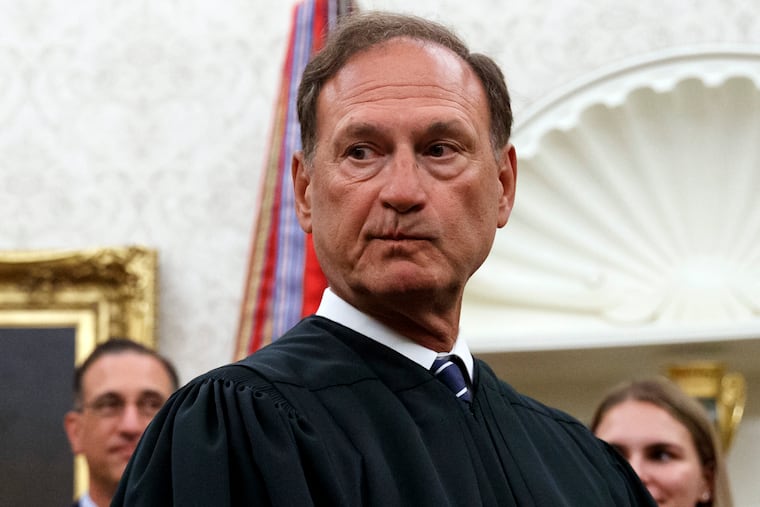
That is why recent comments by Justice Samuel Alito, suggesting that the U.S. Supreme Court should reconsider the landmark case Hazelwood School District v. Kuhlmeier, deserve close scrutiny.
On the surface, revisiting Hazelwood may sound like a debate about student free speech. In reality, it is part of a broader legal movement that seeks to redefine the relationship between religion and public education.
In Hazelwood, the Supreme Court held that school officials may exercise editorial control over school-sponsored student publications when their actions are reasonably related to legitimate educational concerns. The decision recognized a practical reality: When a newspaper, yearbook, or other publication bears the school’s imprimatur, the public may reasonably perceive its contents as carrying the school’s endorsement.
Maintaining neutrality
Critics of Hazelwood argue that it gives administrators too much authority. But the ruling has also provided schools with an important tool for maintaining neutrality on contentious political, ideological, and religious issues. It allows educators to prevent school-sponsored platforms from becoming vehicles for messages that could be interpreted as official school positions.
Alito’s concern appears to be that Hazelwood has sometimes been used to restrict religious expression. Yet, that concern cannot be viewed in isolation. It comes after a series of Supreme Court decisions that have steadily expanded the role of religion in public institutions.
Cases involving school prayer, religious displays, and public funding for religious organizations have increasingly shifted the court away from the traditional emphasis on separation between church and state. Under this approach, actions that once raised establishment clause concerns are now often framed as exercises of religious liberty.
Revisiting Hazelwood would fit neatly within that trajectory.
A current example of this trend can be seen in the efforts of Turning Point USA and its “Club America” initiative. While marketed as a student club, Club America is not simply a grassroots organization created and directed by local students. It is part of a national network organized, funded, and guided by an outside political advocacy organization with a clearly defined ideological mission.
Turning Point exerts tight control over Club America chapters. It requires members under 18 to sign contractual agreements and periodically report back to the organization. It also asks that club members report on teachers and administrators who are viewed as not in compliance with Turning Point’s ideology, evidence that Club America chapters are not truly being run independently by students, but are under strict control by the parent organization.
Supporters argue that students should have the freedom to form clubs reflecting their beliefs. That principle is not in dispute. The concern arises when outside organizations effectively use school-sponsored activities as vehicles to advance political and religious agendas within public schools.
Club America materials emphasize themes that blend political conservatism, patriotism, and religious values. While those viewpoints are entirely legitimate in the public square, public schools must be careful not to allow externally controlled organizations to transform educational settings into platforms for ideological advocacy.
Political objectives
The issue is not whether students may discuss religion or politics. They can and should. The issue is whether a public school should lend its name, resources, facilities, and institutional legitimacy to activities designed and directed by outside organizations pursuing broader political objectives.
This is where Alito’s suggestion that Hazelwood should be revisited becomes especially significant. If the Supreme Court further limits the ability of schools to oversee school-sponsored speech and activities, administrators could find themselves increasingly unable to distinguish between genuine student expression and organized efforts by outside groups to influence students through the school’s own channels.
Public schools should neither suppress religious expression nor promote it.
The result could be a fundamental shift in the role of public education. Instead of serving as neutral institutions dedicated to academic inquiry and civic engagement, schools could become battlegrounds for competing ideological movements seeking access to captive student audiences. Religious advocacy groups, political organizations, and culture war activists of every stripe would have powerful incentives to establish a greater presence within schools.
The constitutional principle at stake is not hostility toward religion. It is neutrality. Public schools should neither suppress religious expression nor promote it. They should neither favor conservative ideology nor progressive ideology. Their mission is to educate students, not recruit them into political or religious movements. The danger of weakening Hazelwood is that it becomes increasingly difficult to maintain that distinction.
Viewed through this lens, Alito’s criticism of Hazelwood appears less like a defense of student speech and more like another step in a broader campaign to expand the role of religious and ideological advocacy within public education. Whether through school newspapers, school-sponsored events, or externally organized clubs, the result is the same: a gradual erosion of the neutrality that has long been the foundation of public education in a pluralistic society.
Pressure on schools
If school-sponsored publications become less subject to administrative oversight, disputes over religious content are likely to increase. Schools could face pressure to publish explicitly religious viewpoints in newspapers, broadcasts, and other school-sponsored forums.
Administrators who attempt to maintain neutrality could find themselves accused of discrimination against religion.
Supporters would describe this as protecting religious expression. Critics would see something different: the gradual erosion of the principle that public schools should not appear to endorse particular religious beliefs.
The issue is not whether students should be allowed to express their faith. They already can. The Supreme Court has repeatedly recognized that students do not shed their constitutional rights at the schoolhouse gate. Students may pray, discuss religion with classmates, form religious clubs, and express religious viewpoints in many contexts.
Public schools belong to everyone. They serve Christians, Jews, Muslims, Hindus, atheists, agnostics, and families whose beliefs fall outside traditional categories altogether. The government’s role is not to promote one worldview over another, but to create an environment where all students can learn together as equals.
For decades, Hazelwood has helped schools navigate that difficult balance. Weakening it may be presented as a victory for free speech. But viewed in the broader context of recent constitutional trends, it is difficult to avoid the conclusion that the ultimate goal is something more ambitious: expanding the presence and influence of religious ideology within public education.
Americans can disagree about where the proper line should be drawn. What they should not do is pretend that the debate is merely about student journalism. The stakes are much larger. They concern whether public schools remain neutral civic institutions, or become battlegrounds in a continuing effort to blur the constitutional boundary between church and state.
Michael A. Gottesman is the founder of the New Jersey Public Education Coalition, a nonpartisan group that advocates for secular public education.

Inquirer Opinion Newsletter