Our unhappy anniversary
A generational looking glass may be the best instrument for observing what’s gone so terribly wrong with America. And for figuring out what we’ll need to do to get our mojo back.
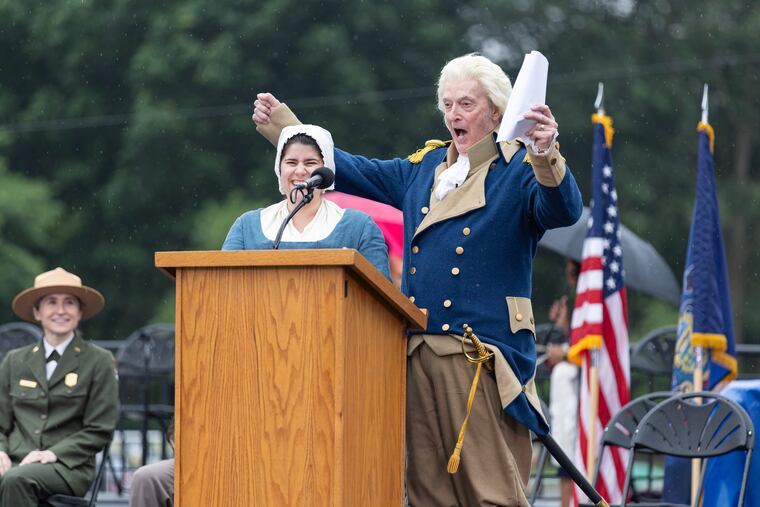
Can there be a worse time for America to throw itself a 250th birthday party?
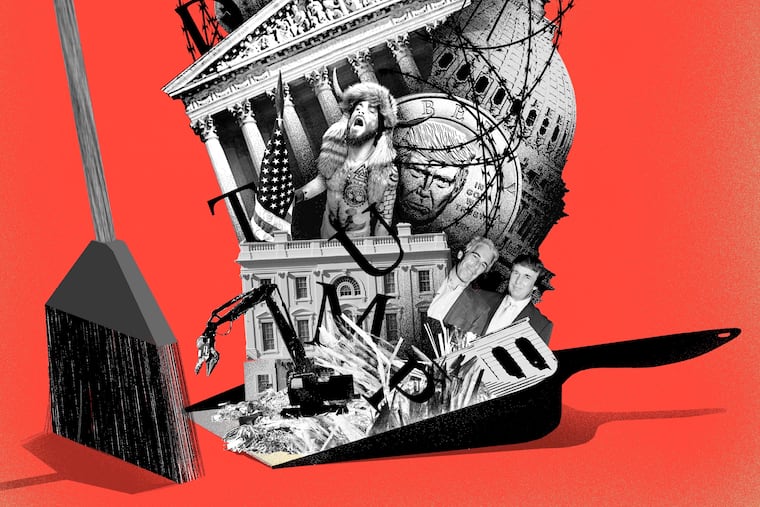
We’re angrier with one another than we’ve been since the Civil War. Most of us think our country’s best years are behind us. We’re aggrieved, tribal, stuck. We have pants-on-fire fights about pronouns, vaccines, and halftime shows. We can’t agree on what’s real and what’s fake. Our politics chokes on its own bile. Our economy coddles the rich. A majority of Americans say that a majority of Americans have bad morals.
How did we get here?
Before everyone barks out, “Donald Trump!” let’s back up. Yes, Dear Leader has lit everything on fire. But why is America such a tinderbox? And how did a nation that used to be young and scrappy get so old and cranky?
In his farewell address, Ronald Reagan sang the praises of America as “forever young … forever bursting with energy and new ideas, always on the cutting edge, always leading the world to the next frontier.”
A young nation
From the get-go, that was us. In 1776, James Monroe was 18, Alexander Hamilton, 19, John Marshall, 20, James Madison, 25, John Jay, 30, Thomas Jefferson, 33, Thomas Paine, 39, John Adams, 40, and George Washington, 44. The grand old man of the band, Benjamin Franklin, was 70.
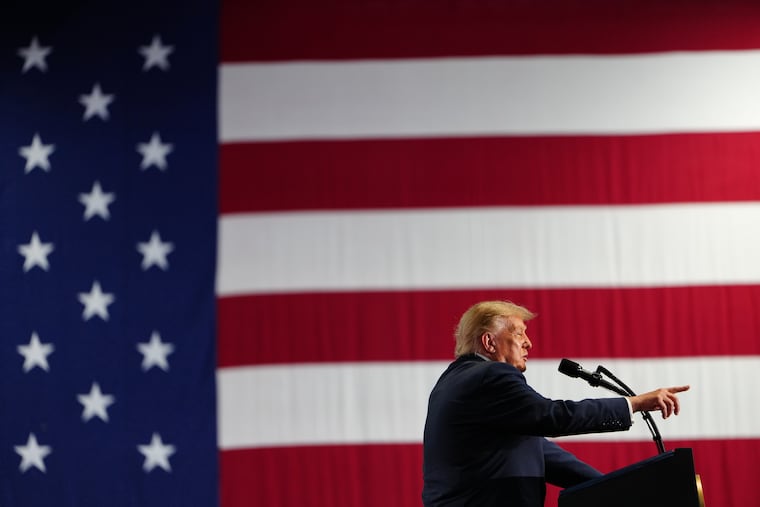
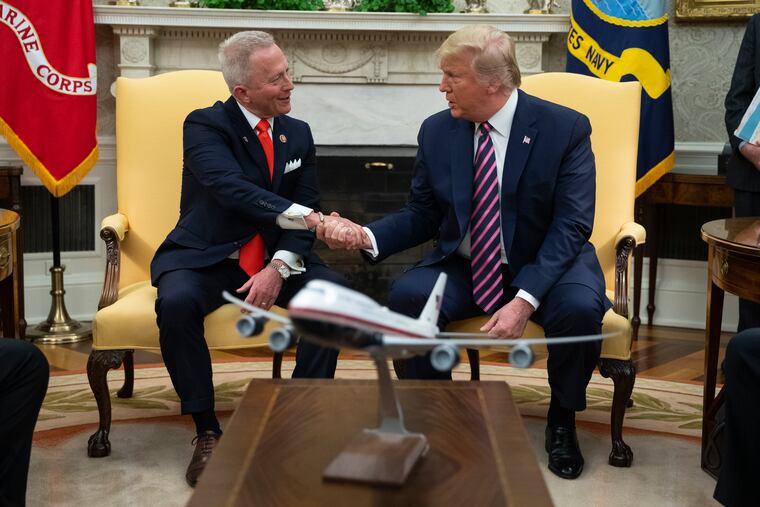
Look at us now. On Inauguration Day last year, Joe Biden, 82, passed the baton to Donald Trump, 78 — the two oldest men ever to live in the White House. A mile up Pennsylvania Avenue, the average age in the U.S. Senate is 64, a tick below its all-time high.
Our gerontocracy didn’t cause our hellscape. But a generational looking glass may be the best instrument for observing what’s gone so terribly wrong with America. And for figuring out what we’ll need to do to get our mojo back.
Let’s start with my generation, the baby boomers. We’ve wielded political power longer and made ourselves richer than any generation in history. But we’ve done so at the expense of tomorrow. We were gifted the American dream on a platter. We’re passing along the table scraps.
The country that boomers grew up in was steeped in egalitarian norms. Today in America, we have a government of, by, and for billionaires — the culmination of a half-century’s devolution in our values, policies, and national character. In today’s economy, the typical Fortune 500 CEO earns nearly 300 times more than the typical worker. When we were young, that ratio was 20-1.
In this winner-take-all economy, boomers have been the biggest winners. We own more than half the nation’s wealth, even though we make up less than a fifth of its population. And virtually all of us benefit from a safety net for older adults that’s the crown jewel of government social policy.
Leaving a mess
But look at the mess we’ve left for our progeny. They’ll be stuck paying off tens of trillions of dollars of debt we racked up. They’ll inherit a Social Security and Medicare system that won’t pay full benefits when it’s their turn to retire. And they’ll have to deal with policy fiascos like immigration, climate change, and gun violence that seem intractable because my generation never figured out the formula for bipartisan compromise.
These policy failures transcend party. Politically, we’re all over the map, but many of us share personality traits that turn out to be ill-suited to good governance. We tend to be self-righteous, self-interested, self-regarding, uncompromising. Each of us thinks we know best.
Our swagger is a product of our upbringing. We were raised by parents who celebrated the end of World War II by having lots of babies and treating us like little princes and princesses. As we came of age, we paid them back by rebelling against their old-fashioned ways.
The social and civil rights revolutions of the 1960s were, by my lights, the best part of the boomer story. My generation’s idealism and activism helped make America a better place for women, minorities, gays, immigrants, and the disabled. Good for us.
But social change on that scale inevitably produces a backlash. You invent the ship, you invent the shipwreck. Boomers never figured out how to mitigate the damage.
Today, the generation gap has become a chasm. It may also be our salvation.
As we made the journey into middle age, many of us lost touch with that idealism of our youth. Hippies became yuppies. Greed is good became a 1980s mantra. The Boomer Generation became a conservative juggernaut. It provided the electoral muscle that powered the Reagan revolution, which strengthened big corporations and weakened the labor, environmental, and civil rights movements.
Immigration
There is, however, one notable ‘60s-era reform that neither Reagan nor the presidents who followed him into the White House ever slowed down: open borders.
In the six decades since it was enacted, the Immigration and Nationality Act of 1965 has brought 70 million newcomers to our shores, by far the largest immigration wave in human history. Nine in 10 arrived from Latin America, Asia, the Caribbean, the Middle East, and Africa. They’ve turned our black-and-white tapestry into a coat of many colors.
Roughly one-fifth of them are here illegally, either because they snuck in or overstayed their visas. Decade after decade, politicians of both parties allowed this to go on.
Republicans because they catered to industries that needed cheap labor. Democrats because they welcomed the potential for millions of new voters.
Leaders of both parties liked how cheap labor drives down everyone’s cost of living. No one paid much attention to the travails of white working-class Americans, who didn’t appreciate the competition for their blue-collar jobs and came to feel like strangers in their own country.
Then Trump came along, with his feral genius for grievance. In 2016, he called immigrants “murderers and rapists.” By 2024, they were “vermin” who “poisoned our blood.” Never mind that the crime rate is lower among undocumented immigrants than among native-born Americans. Or that immigrants are more likely than the native born to start a business. Trump hit a nerve. A backlash exploded.
So here we are now: a gerontocracy in which most old people who still run the show are white and conservative, and most young people are neither. But we won’t stay this way for long. One birth and one death at a time, the generational torch will pass. Within two decades, America will be a majority nonwhite country. In today’s schoolyards and playgrounds, it already is.
Back in the 1960s, we coined the term “generation gap” to describe that era’s social and political tumult. Today, the gap has become a chasm. It may also be our salvation.
The best thing about today’s young is that they are champions of diversity. For most of American history, “melting pot” was the aspirational metaphor for a nation that welcomed immigrants. For Gen Xers, it’s “mosaic.” They don’t want everyone to be like everyone else. They celebrate the beauty in our differences. Good for them.
The most worrisome thing about them is that they’re coming of age as a liberal generation with illiberal tendencies — a victim mentality, an intolerance of viewpoint diversity, a distrust of institutions, a wariness about human nature, a cynicism about the whole American Experiment, and an instinct for group grievance at the expense of national identity.
Given that they’ve grown up inside the political hellscape we boomers built, it’s not hard to see why they have so little faith in American exceptionalism.
Out of one, many
But whether they recognize it or not, they’re the latest embodiment of that exceptionalism. Today’s America is trying to become a nation the likes of which the world has never known — a multiracial, multiethnic democracy in which no single group is in the majority, and the blessings of political liberty, individual autonomy, and economic opportunity are shared by everyone in every group.
We’ll only get there by heeding the founders’ motto: E pluribus unum. Out of many, one.
We’ll only get there if today’s young come around to understanding that a mosaic needs more than its beautiful pieces. It also needs glue.
That’s the American dream. Reagan understood it well. In that farewell address he gave in 1989, he singled out “each wave of new immigrants to this land of opportunity” as the special sauce that keeps America forever young.
Centuries ago, Adam Smith wrote that in every nation, “there is a great deal of ruin.”
That’s always been true of America. What’s also true is that we’re the only nation in the world whose culture, creed, and very existence originate from an idea — that we’re all created equal.
We’ve never fully made good on that idea. But it’s still the best idea anyone’s ever had for a country.
Now, more than ever, it’s worth protecting, preserving, perfecting. And on July Fourth, it’s surely worth celebrating.
Paul Taylor is the author of “This is Getting Old: Two Boomers and Their Generation at Dusk.”