What today’s American churches can learn from Germany’s past theologians
Moral clarity rarely emerges from comfort. It comes from the willingness to name what is wrong, even when doing so risks alienating congregants, donors, or political allies.
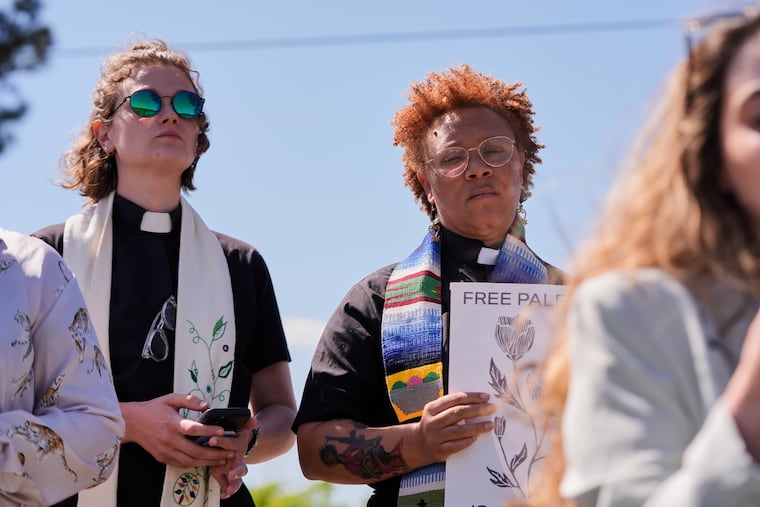
In moments of political crisis, societies often look to their religious leaders for moral clarity.
During the rise of Adolf Hitler, a small but courageous group of German theologians — Martin Niemöller, Karl Barth, and Dietrich Bonhoeffer — refused to let the church become an instrument of the state. They spoke out when silence meant complicity. Their resistance was not partisan. It was theological, moral, and rooted in the conviction that the dignity of human beings cannot be subordinated to political power.
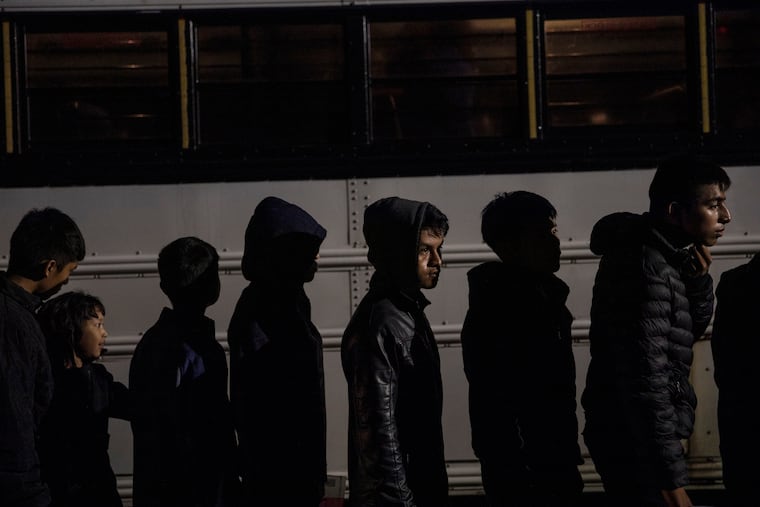
Today, as the United States wrestles with deep political division and troubling scenes at its borders, the contrast is hard to ignore. Children held in detention facilities, families separated, deaths involving immigration enforcement. These are not abstract policy debates; they are moral questions that cut to the heart of what religious traditions claim to value. And yet, despite the outcry from some theologians and advocacy groups, the nation has not seen a united response.
Why?
Part of the answer lies in history. The German church struggle was triggered by a direct attempt to reshape Christian doctrine. Hitler’s government sought to absorb the Protestant churches into a state‑controlled Reich Church, replacing the Gospel with nationalist ideology. For Niemöller and others, this was a line that could not be crossed. Their resistance began not with politics, but with the defense of their own faith.
The American situation is different. No administration — Donald Trump’s included — has attempted to dictate theology or restructure the church. Religious institutions remain free, protected by the Constitution. Without a direct threat to ecclesial identity, many clergy do not perceive an existential crisis that demands collective resistance.
But that explanation only goes so far. The deeper issue is fragmentation. American Christianity is not a single institution, but a sprawling landscape of denominations, traditions, and political loyalties. What one group sees as a moral emergency, another interprets as a defense of religious liberty or national sovereignty. The result is paralysis: a theologically moral confusion instead of a theologically moral chorus.
German theologians understood that a church’s credibility depends not on its proximity to power, but on its willingness to speak when human dignity is at stake.
And yet, the absence of unified condemnation does not mean the absence of moral responsibility. The images from detention centers, the stories of families torn apart, the deaths that occur in immigration enforcement — these are precisely the kinds of injustices that once stirred theologians like Niemöller to action.
They understood that a church’s credibility depends not on its proximity to power, but on its willingness to speak when human dignity is at stake.
The lesson from the German theologians is not that today’s political moment is identical to theirs. It isn’t. But their example does remind us that moral clarity rarely emerges from comfort. It comes from the willingness to name what is wrong, even when doing so risks alienating congregants, donors, or political allies.
Some American clergy have taken that risk. Many have not. And in the silence, something essential is lost: The sense that faith can still serve as a compass when the nation drifts. The question now is whether religious leaders will reclaim that role. This comes about not by mimicking the past or predicting the future, but by recognizing that moral courage is timeless. The German churches, although a minority, did not wait for consensus. They spoke because the alternative was complicity.
Today’s churches face their own decision. History will remember whether they found their voice — or whether they chose, once again, to fall silent.
Robert Bruce Ellis earned his doctorate in 20th-century German history from Rutgers University and studied theology at Christ Church College, University of Oxford.