Celebrating a Jewish tradition: Chinese food on Christmas
The Christmas Chinese dinner is one of the truly great and unique nights of the American Jewish year.
For years, I envied Jews who enjoyed Christmas without getting into the weeds of what it’s all about, who put up a tree and lights without a sense of guilt. I admired Jews who wrote the best Christmas songs in history (google it), even though the holiday will never be their own.
But the day itself has never been my favorite. It ranks slightly ahead of Good Friday and Easter, but not by much. While no mindful Jew needs to be reminded of what a small minority we are, Christmas puts us in our tribal place. No amount of secular candy canes or court-ordered ecumenical neutrality softens the reality that the day is not for us.
This is not a complaint or a condemnation of the celebration. If there is a war on Christmas, I am not a combatant.
Unlike the Grinch, I never begrudge others their joy, even though I can’t embrace it. I wish others a merry Christmas and mean it. Why shouldn’t they be happy?
Adaptation
I have no resentment toward public displays of Christmas decorations. So long as they are not paid for with tax dollars, who are they hurting? There are far greater injustices to litigate, more serious public displays to mourn. With antisemitism on the rise, nobody has the luxury of getting upset over a creche.
To survive, one need not assimilate; one need only adapt. And Jews are masters of it. Take, for example, the now cliché practice of our eating Chinese food on Christmas.
But it has become more than an adaptation.
Tradition
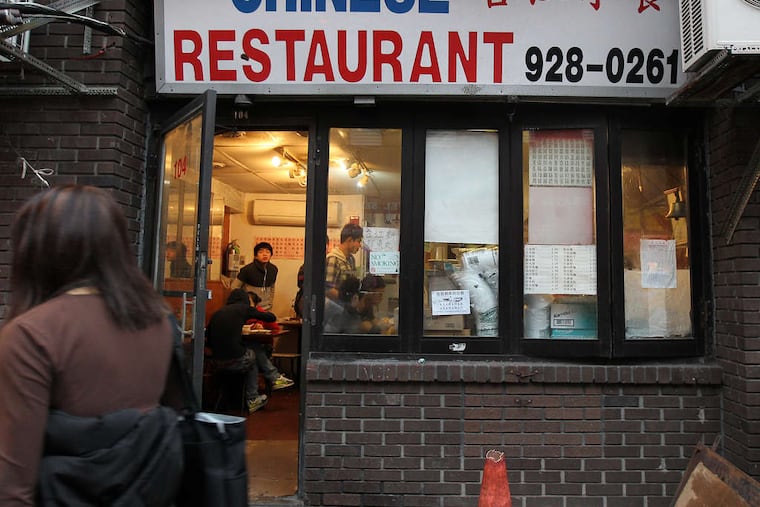
The Christmas Chinese dinner is one of the truly great and unique nights of the American Jewish year. Jewish families patronize the same restaurant every year with the dedication generally reserved for delis and houses of worship.
What makes the night different from all other nights is the special joy that can only be found in our shared otherness. Being with those who share your identity — religious and otherwise — is always a blessing. But that feeling of togetherness is never more poignant than in those moments when what makes us different from others also makes us so alike among ourselves.
What makes the night different from all other nights is the special joy that can only be found in our shared otherness.
And it is often reciprocated by the people feeding us. The owners of the restaurants seem as happy to see us as we are to see them. And to share in our joy.
That I especially feel my Jewishness in a Chinese restaurant on a Christian holiday is the stuff of comedy.
And thus humanity.
Jonathan Shapiro is an Emmy- and Peabody Award-winning TV writer and the author of the recent “How to Be Abe Lincoln: Seven Steps To Leading a Legendary Life.”