Hey Siri, stop snooping
Remember when we started wondering if our phones were not only collecting search data on us, but listening in on our conversations? Well, what felt like paranoia has now been validated as real.
I don’t have bunions.
Last fall I went on a tour of Istanbul — nicknamed the “City of Seven Hills” — with a group that included a woman with severe bunions. She struggled mightily to keep up, hiking poles in hand, wearing open-toed sandals to accommodate her anatomical deformity. Curious about her condition, I did a flurry of internet research on it upon my return. That’s when the algorithm gods went to work.
Nearly every day since then, the ads sprinkled on my internet destinations show products related to bunions. Nighttime Velcro toe braces. Podiatrists. And shoes. Lots and lots of shoes. If there’s a website called www.BunionsRUs.com, I’m sure they’ve already opened an account in my name.
Those ads briefly competed with others for a website that sells clothing made for short men. I’m a tall woman. My husband is a tall man. It appeared to be the rare algorithm failure — that is, until I realized the ads appeared right after I’d spent several days emailing back and forth with a friend who is, yes indeed, a short man.
The algorithm figured, “Hey, you know this guy. He’s spent time on our site. Maybe it’s his birthday and you might — hint hint — want to buy something for him.”
Remember when, not all that long ago, we started wondering if our phones were not only collecting search data on us, but listening in on our conversations? You’d be chatting with someone about taking a trip to X, and the next day you’d see an ad from the X Chamber of Commerce touting “7 Fun Things to Do in X!”
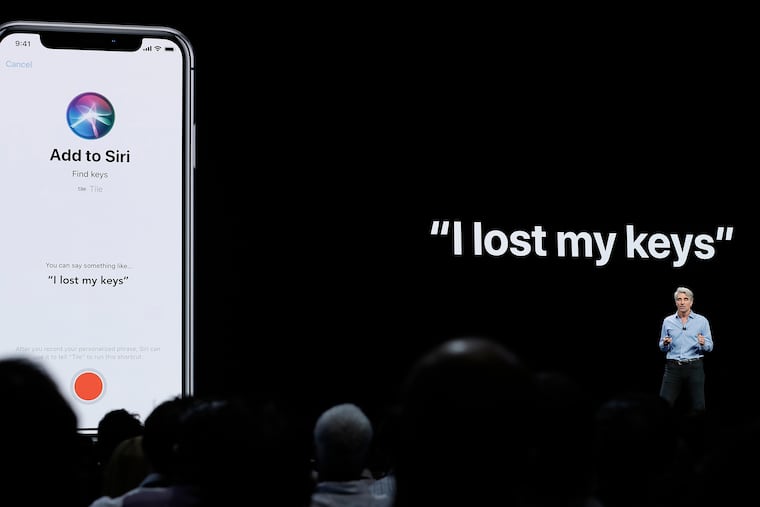
Well, what felt like paranoia has now been confirmed as real: A settlement of a class-action lawsuit against Apple revealed Siri was indeed listening, even if you never asked it a question. (Legal disclaimer: “Apple denies all of the allegations made in the lawsuit and denies that Apple did anything improper or unlawful.”)
Siri was indeed listening, even if you never asked it a question.
If you owned an Apple product during certain years, you can be compensated $25 for each device. The filing deadline is July 2.
Mindful of this snooping, I’m now very careful whenever a medical issue is involved. At my gastroenterologist appointment, I literally turned off my phone before explaining my condition. And I apologized for taking up his time with basic questions, telling him how I had largely avoided online research.
He got it, and countered with an astounding story of his own:
He had recently seen a patient whom he’d diagnosed with a relatively rare disease. Naturally, he had to walk the patient through a lot of information, answering a lot of questions along the way.
And the next day, like clockwork, he started getting ads on his phone for medications to treat that very condition.
Besides being hugely creepy, isn’t that, um, also a violation of a patient’s privacy rights?
Doctors are supposed to take great care to protect patient confidentiality, only to have their efforts undermined by that iPhone in their lab coat pocket. Good Lord.
Siri was apparently listening in on our doctors, and we’re supposed to be satisfied with a lousy 25 bucks?
Why, that won’t even cover the cost of some bunion-friendly shoes. (Which again, algorithm, I don’t need.)
Kathleen O’Brien is a retired newspaper columnist in northwest New Jersey.