Awdah Hathaleen was more than a headline. He was my friend.
This is not a eulogy; it is a call to question how easily somebody can become a statistic — just another dead Palestinian — and how insidious that process is, writes Nina-Jean Saligman.
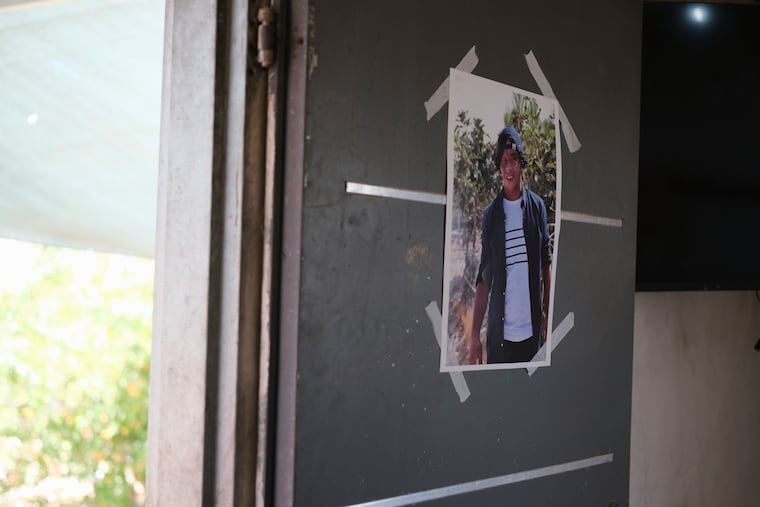
I met Awdah Hathaleen during a visit to the West Bank when I was taking part in a Jewish gap-year program in 2019, my first steps into adulthood after leaving my childhood home on Penn’s Landing, where I was deeply rooted in Philadelphia’s Jewish community.
Awdah was a 31-year-old goofball, creative thinker, an epic host, and a beyond-exceptional friend. He was also an English teacher and a tour guide in Masafer Yatta — the highly militarized cluster of West Bank Palestinian villages featured in the Oscar-winning documentary No Other Land, which he helped produce.
Any foreigner who visits the West Bank for political education is likely to find themselves in Masafer Yatta, and sooner or later, many of the region’s visitors often find themselves speaking with Awdah. He was initially introduced to me as an important activist and public speaker. On a muggy July night in 2021, the formality fell away, and Awdah became my bestie.
At the mercy of a carpooling fiasco in Masafer Yatta. Awdah and I ended up on the side of a desert road for several hours. As we made conversation, we realized we shared a tendency toward saying the uncomfortable thing; the questions that are normally thought but not spoken. We giggled until we were out of breath as we voiced all the taboo questions about each other’s culture we were too afraid to ask anyone else. It was so electric that I distinctly recall locking eyes and squealing.
By the end of the night, we knew we would be in each other’s lives forever. Neither of us knew how short forever would turn out to be.
On July 28, as shown in a widely shared video, an Israeli settler, Yinon Levi, entered the Palestinian village of Umm al-Khair in the West Bank — Adwah’s village — produced a gun during a confrontation, and fired shots in the direction of sweet Awdah.
Awdah was fatally injured. He is survived by his mother, Hajji, his three sons — all of whom are 5 or younger — and his beloved, adorable, “girl’s girl” of a wife, Hanadi.
I am not the one to eulogize Awdah. That honor belongs to Hajji, Hanadi, and the rest of their neighbors in Umm al-Khair. You can find some of their words here and in the village itself, which never closes its doors to visitors.
So this is not a eulogy; it is a call to question how easily somebody can become a statistic — just another dead Palestinian — and how insidious that process is.
News reports about Awdah’s death have correctly noted that his friends and family believe he fell victim to the same kind of violence he devoted his life to fighting against: the widespread attacks against Palestinians in the West Bank by Israeli settlers, which human rights groups have said often occur with impunity.
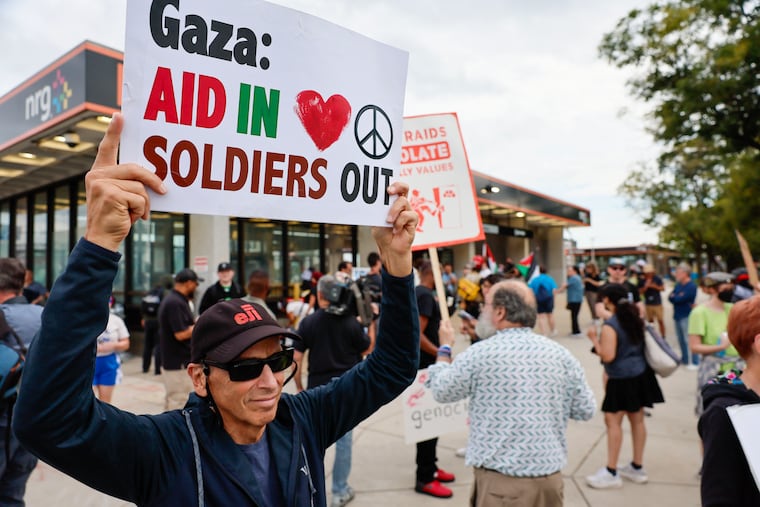
Public rallies in Awdah’s memory have occurred in 20 cities around the world. The demonstrations hope to pressure diplomatic officials to demand accountability from Israel for Levi, who had been sanctioned by British officials after being accused of human rights abuses against Palestinians in the West Bank. (Levi had also been sanctioned by the Biden administration, but the Trump administration lifted that penalty in January.)
Levi was released by the police after three days of house arrest and immediately resumed settlement construction on Umm al-Khair, which continues today.
On the day after Awdah’s killing, right-wing Israeli journalist Zvi Yechezkeli wrote in a Facebook post, “Yesterday a Jewish settler was saved by a miracle against dozens of Arab thugs who tried to lynch him.” If Awdah had not interacted with thousands of people from outside his country, you might read this and believe it. What is more likely is that you would not read about Awdah at all.
In news outlets that fall politically left of the Israeli right-wing, Awdah was frequently pictured holding his babies; a man who loved children and flowers, who spoke passionately of nonviolence and peace. These things happen to be true about Awdah, but none of them are the reason he deserves your sympathy.
As Awdah said in almost every one of his public speaking engagements, “What we are asking for is to be seen as human beings.” The fact that anybody spends their life struggling to be seen as human should outrage the world.
When I see Awdah’s face under headlines that describe him as “prominent Palestinian activist” or “Palestinian who worked on Oscar-winning film,” my heart breaks anew for my dear friend. Awdah spent his life fighting to be respected as a human being, and even in death, that right has been withheld from him. Much of the media covering his murder has reduced him, on the right, to a terrorist, and on the left, to just another Palestinian who struggled and died.
While you read these words, Levi lives down the road from Awdah’s family, armed with both weaponry and the tacit support of a system that has taken so much from Masafer Yatta, yet still finds ways to take more. When my fear for Hanadi and the boys wakes me in the night, Awdah’s light guides me back to center.
I am so sorry, Awdah, that you didn’t get to live a normal life or die a normal death. None of it prevented you from being a superb bestie.
I replay one moment in the passenger seat of his car, when I was nervously rambling about something useless. While I was midsentence, he reached for the radio, turned it to full volume, and said, “Please, my friend, sit and enjoy.”
Awdah, darling, for the rest of my life, whenever despair comes to find me, I will be OK, because I will have our memories to sit and enjoy.
Nina-Jean Saligman is a videographer and freelance journalist raised in Philadelphia, currently based in Butte, Mont., who has engaged in activism related to Masafer Yatta since 2019.