The Bicentennial Class of 1976 turns 50 in the year of America 250. A look back at the future.
The Class of ’76 has found itself straddling a unique period in history, between the signposts of the Bicentennial at one end of our lives and this year’s Semiquincentennial at the other.
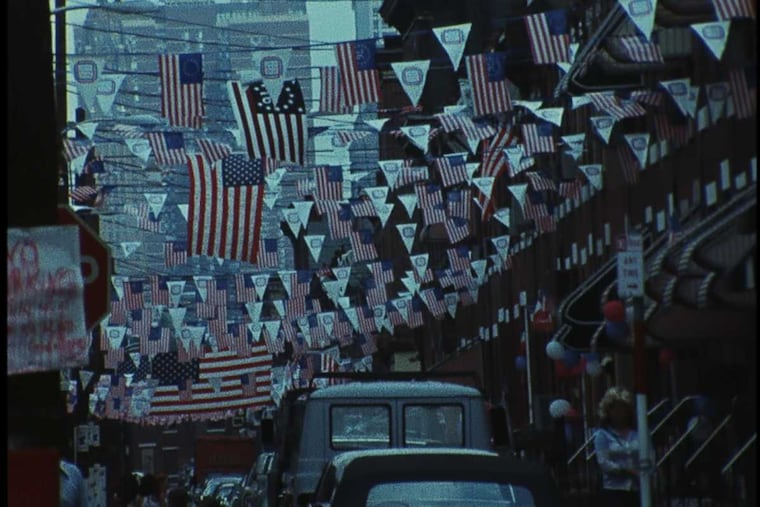
I graduated from high school in 1976, the year of the Bicentennial, in Haverford. Now, right on schedule, the members of my class find ourselves hurtling toward our 50th high school reunion in this, the year America turns 250.
“Let Freedom Ring” was one of the slogans back then. Another one, proposed by Richard Nixon in 1971, had been, “Open Borders, Open Hearts, Open Minds.”
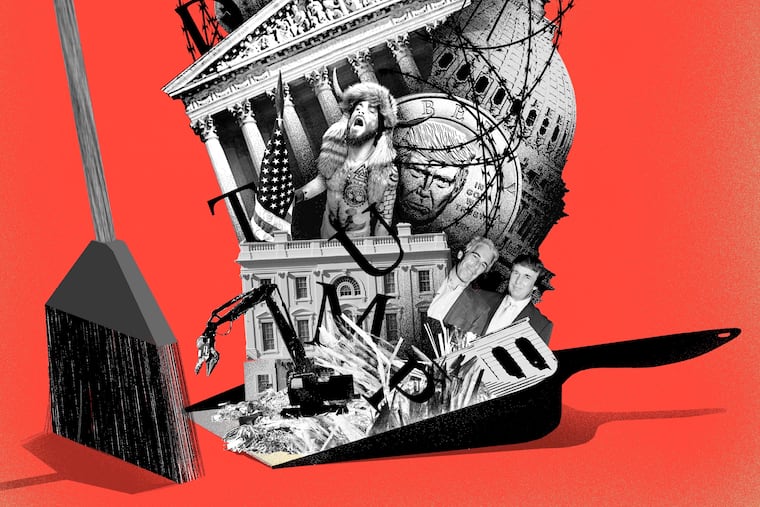
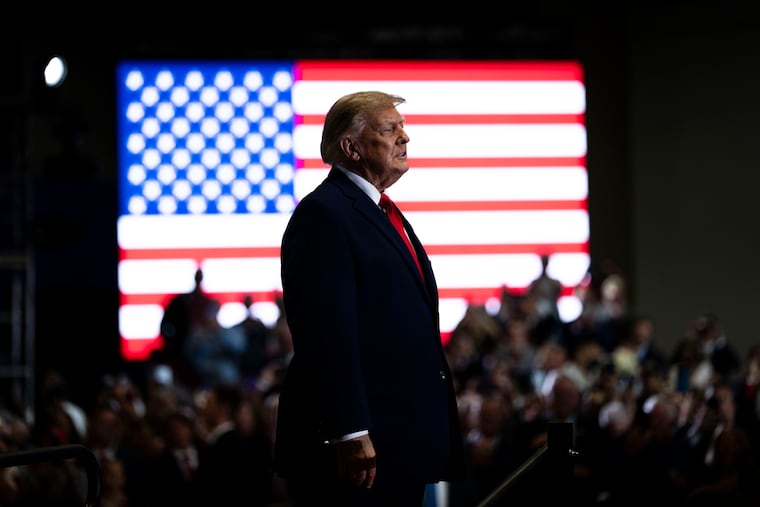
There is no official slogan for the Semiquincentennial so far, but I’m pretty sure that if Donald Trump were to settle on one, it would not involve open borders. Or hearts. If anyone on the America 250 commission is still looking for a good motto, though, author Timothy Kreider has suggested, “America: We Had A Good Run.” Or, somewhat more wistfully, “America: It Was Nice While It Lasted.”
The Class of ’76 has found itself straddling a unique period in history, between the signposts of the Bicentennial at one end of our lives and this year’s Semiquincentennial at the other. We set out in the age of Gerald Ford; we now reach our early dotage in the age of Trump. We began in an era before cell phones, before the internet, before Madonna; we arrive in 2026 in an era of artificial intelligence, “looksmaxxing,” and self-driving cars.
It is hard not to think that we enjoyed some of the best years of the country’s history, only to find ourselves now enduring some of its worst.
A friend of mine took to social media to post a simple phrase on his birthday recently: “How terribly strange.” It was his 70th, of course. Members of my generation — so-called Generation Jones, the trailing edge of the baby boom — didn’t need to be told the line came from Simon and Garfunkel’s “Old Friends,” a song about the weirdness of old age, and the sweet melancholy of memory: Time it was and what a time it was, it was.
I remember the Bicentennial as a yearlong mashup of national pride, brazen commerciality, and weird semi-historical tours de force.
As Jill Lepore recently reported in the New Yorker, “You could buy Old Glory Bicentennial condoms; Kotex Bicentennial sanitary supplies that promised both ‘200 Years of Freedom’ and ‘Personal Hygiene and Cleanliness;’ and two-ply Bicentennial toilet paper.”
Something called the “Bicentennial Wagon Train” passed by my house in Devon on July 3, 1976; I’d handed a hoop-skirted girl from Alabama a giant inflatable package of Wrigley’s Spearmint gum as her prairie schooner rolled past. This had been a prop for a TV commercial of the time, whose tagline had been, “Carry the Big Fresh Flavor.”
The Bicentennial wound up being a lot of fun, in spite of itself, and not least because the celebration itself was mostly driven by individual communities, rather than a single national entity.
What a beautiful night, I thought. What a beautiful country.
I remember sitting on a beach with friends in Stone Harbor, N.J., on the night of July 4, watching fireworks explode above the ocean. What a beautiful night, I thought. What a beautiful country.
Five years ago, in 2021, as the Semiquincentennial commission began its five-year countdown to the big day, I interviewed several of its officials for the Washington Post to find out what sorts of events they were imagining for this year.
Anna Laymon, the vice president of programs and planning, vowed it would be the most inclusive celebration the nation had ever seen; Keri Potts, the communications director, predicted that by 2026, having survived the first Trump administration as well as the pandemic, “Americans will be more connected to one another.”
Oh, what a time it was, and what a time it was, it was.
Laymon and Potts have both since resigned from the America 250 commission, citing the “lack of women in any important positions of influence” on it. As of 2026, Laymon now serves as president and CEO of the Women’s Suffrage National Monument Foundation; Potts now runs something called A Fight Back Woman Inc., an advocacy group for Americans sexually assaulted or abused overseas.
Meanwhile, this being America in 2026, there is now, of course, not only the supposedly bipartisan “America 250” commission (under new leadership), but a second group run by the White House. That one’s called “Freedom 250,” and some of the events it’s planning include a national day of prayer on Memorial Day, and a “Freedom 250 Grand Prix” in the streets of Washington, D.C., set for Aug. 23. Its historical mission, needless to say, is to help celebrate “the storied tradition of America’s motorsports industry.”
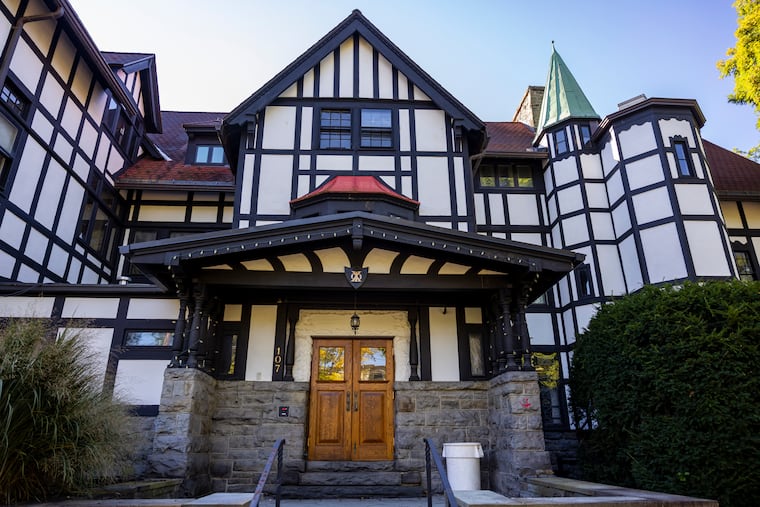
As for my brethren in the Bicentennial class of the Haverford School, we gathered on May 1 to take the measure not only of the nation’s history, but of each other’s, as well. Haverford is an all-male institution, supposedly, although there are at least two women in our class of 69, including me, who’ve come out as trans since graduation.
My classmates have been mostly loving and loyal to me — in spite of the fact that no small number of them are conservatives; my transition, 25 years ago, is now old news. A few years ago, when I addressed an assembly at the school, I began by saying, “If you’re someone I haven’t seen for a couple of decades, let me just say this: You all look different, too.”
I couldn’t wait to see the faces of my friends — along with, OK, a couple of nemeses — to see how they have been altered by time. There is something charming and mysterious about being able to see what became of the people you hung out with before you really even knew yourself — like being able to read the last chapter of a book you lost years ago, and thought you might never finish.
I’m curious about what the next chapters of the country will bring, too.
In March, my wife and I visited Washington, D.C., to see an old friend, who was acting in a revival of the musical 1776 at Ford’s Theater. That show had been everywhere in Philly during the year of my graduation, and I found it just as inspiring — and as corny — as it had been back then. (A singing John Adams! A lascivious Ben Franklin!) The morning after, we went to the National Archives and gazed in awe at the faintness of those sentences affirming “the right to life, liberty, and the pursuit of happiness.”
Not happiness itself, I noted. But its pursuit.
Later, at the Smithsonian National Museum of American History, we took in the exhibit on “Entertainment Nation,” a presentation that the White House has criticized for its emphasis on slavery and colonialism. So many things there moved me deeply: Harpo Marx’s wig. The lunch counter from the Greensboro, N.C., sit-in. Captain America’s shield.
But perhaps nothing touched me as much as the black guitar played by Paul Simon during the 1991 concert in Central Park. I’d attended his similarly iconic 1981 concert in the park as a new college graduate, just starting out on the adventure of adulthood during the age of Reagan. I remembered sitting in the Sheep Meadow, hearing Simon and Garfunkel sing “An American Tune,” with its heartbreaking lines: Still, when I think of the road we’re traveling on/ I wonder what’s gone wrong.
That concert had ended with Paul and Art singing, as an encore, “Old Friends.” Preserve your memories, they sang, they’re all that’s left you.
How terribly strange to be 250.
Jennifer Finney Boylan is a professor of English at Barnard College of Columbia University and a trustee of PEN America.