Philly must designate FDR Park as protected stopover habitat for birds
FDR sits along the Atlantic Flyway, one of the major routes birds use during migration. The city of Philadelphia should take the lead and put a halt to further tree clearing.
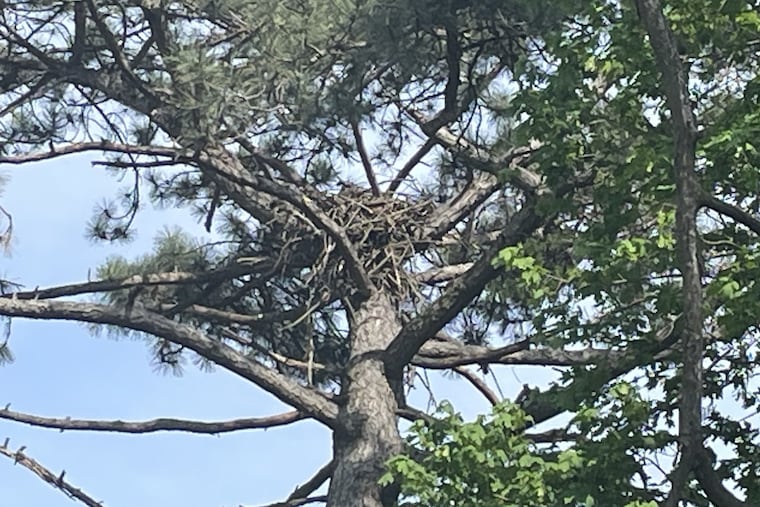
FDR Park has changed a lot since I first engaged in bird counts. Some good and some outright bad.
The National Audubon Society considers the park an Important Bird Area, along with the rest of the city’s Fairmount Park system. The park draws in a wide array of migratory birds and hosts a diverse population of breeding birds. As a member of the Delaware Valley Ornithological Club, as well as cochair of its conservation committee, I am quite familiar with FDR’s diverse bird populations.
When I first started exploring FDR, the southwest section was overgrown woods, with hints of trails, long-lost bits of concrete, and car parts. Now it’s gone, and a wetland has taken its place, an ecology more in line with FDR’s not-too-distant past.
Despite that, I miss the large patches of eastern skunk cabbage that covered parts of the understory, and enjoyed getting turned around as I navigated through it all in the hopes of catching a glimpse of the park’s resident great-horned owls.
I saw my first cerulean warbler there. That’s a special bird, drawing birders from all over the region, and if the city continues to clear trees in that part of the park, it’s a species unlikely to be seen again.
COVID-19 brought people outside, and FDR Park acted as a keystone.
The golf course was abandoned, and it began to rewild into a meadow. The fall of 2020 was quite unique, as it was an irruption year, bringing large numbers of pine siskins to Philadelphia. An irruption, in ornithology, describes large-scale movements of birds not tied to normal migration, often in the search for food.
Pine siskins are finches, streaked brown and white with a noticeable yellow patch on the end of their wings. Philadelphia tends to get a few of these birds every winter, but this was a once-in-a-lifetime occurrence. At one point, an estimated 200 of these birds were recorded, all taking advantage of the overabundant thistle growing throughout the abandoned golf course.
Whenever I am lucky enough to witness such moments, I cannot help but hear the voice of David Attenborough narrating the event.
The annual “State of the Birds” report, compiled by a variety of conservationist organizations such as Audubon, the Cornell Lab of Ornithology, and the American Bird Conservancy, revealed some grim truths.
Currently, a third of all bird species in North America are in dire need of protection. When discussing habitat loss, the initial considerations are breeding and wintering grounds. Both are crucial, but only a part of the story. Without a holistic approach, our efforts at reversing the trends will be in vain. Along the migratory flyways, birds require suitable spaces to stop and refuel.
Last spring, Fengyi “Freda” Guo, a postdoctoral fellow at Cornell, gave a presentation to the Delaware Valley Ornithological Club discussing these issues. Along with her colleagues, she turned to weather radar to better understand migratory habits. By analyzing this collected data, conservationists will be able to identify the busiest rest stops. In doing so, we can earmark crucial stopover habitats for protection.
Currently, a third of all bird species in North America are in dire need of protection.
FDR sits along the Atlantic Flyway, one of the major routes birds use during migration, and during migration, the park sees a healthy cross-section of migratory birds. The park also sits in the confluence of the Delaware River and the Schuylkill, geographical features that birds use during migration.
The city of Philadelphia should take the lead and demarcate FDR Park as protected stopover habitat. This would put a halt to further tree clearing.
Mayor Cherelle L. Parker made a point to include “greener” in her vision for Philadelphia’s ideal future. We, at the Delaware Valley Ornithological Club, would love to see this plan ring true.
Let’s not let the city level yet another field under some ill-defined sense of progress.
Robert Karchnyak is a member of the Delaware Valley Ornithological Club and the cochair of the conservation committee. He leads bird walks at Franklin D. Roosevelt Park, handles BirdPhilly’s Instagram, and engages with other ecology-centered Philadelphia organizations on a variety of projects.