Democracy, engineered in the Black metropolis
From its earliest days, Black Philadelphia nurtured and exemplified the democratic ideals set forth in the Declaration of Independence, while being denied the rights it ostensibly guaranteed.
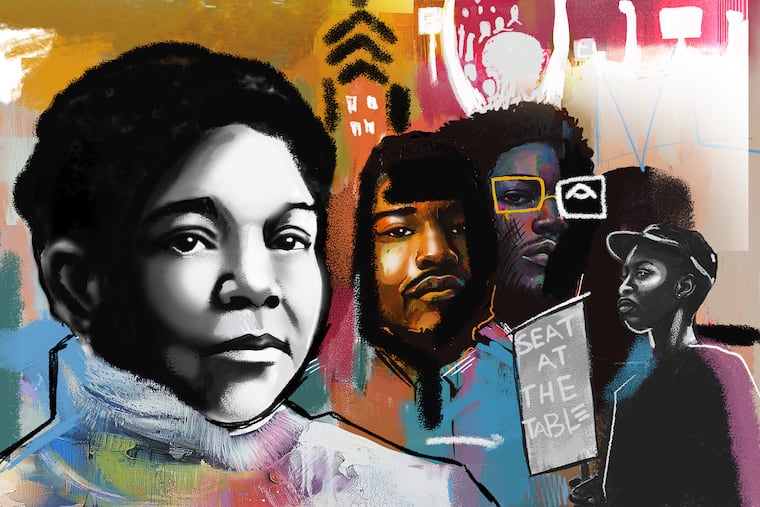
Public narratives of American democracy often emphasize founding documents, elections, and constitutional milestones while obscuring the long and contested process through which democratic practice was learned, refined, and sustained, particularly by people denied formal power.
The portrayal of Black civic life in early America is often reduced to suffering, resistance, or individual achievement, but these things conceal a deeper truth.
In 1840, Philadelphia’s Black community numbered nearly 20,000 people. This population was concentrated in the center of the city, including Society Hill, Queen Village, and Washington Square in the south, 41st and Ludlow in West Philadelphia, and Northern Liberties in the north. With this intensive concentration of people, institutions, and ideas, Black Philadelphia was a metropolitan center in its own right.
A thriving community
By 1845, the community sustained more than 17 Black churches, along with 21 public and private schools, two fraternal lodges, more than 80 mutual aid and literary societies, labor organizations, over 600 Black-owned businesses, and a printing press.
Formal democratic structures grew from these institutions. Churches functioned as civic laboratories, and mutual aid societies were exemplars of rules-based organizations.
Philadelphia was where Black life cohered into a national political identity. People who had defined themselves as African, Caribbean, Indigenous, enslaved, or free identified themselves collectively as African American.
By 1814, the Black Philadelphians were organized. They defended the city at Gray’s Ferry during the War of 1812. In 1817, they met at Mother Bethel, the country’s first African Methodist Episcopal Church, to decide if they would consider emigration to Haiti or Africa. “No!” was the resounding answer.
People who had defined themselves as African, Caribbean, Indigenous, enslaved, or free identified themselves collectively as African American.
Black organizations in Philadelphia served as national models. Conventions at Mother Bethel spawned the Colored Conventions Movement beginning in 1830, which extended concepts of civic and human rights across the United States. Constitutional scholar James W. Fox Jr. argues that these conventions articulated a national constitutionalism rooted in the Declaration of Independence, asserting that human rights were inherent and not contingent on state or local laws, a concept far ahead of its time that anticipated the post-Civil War ideas of citizenship and rights.
A melting pot
Black Philadelphia was its own melting pot, too. People arrived from the Caribbean, including Haiti, bringing revolutionary ideas. These ideas moved outward from Philadelphia nationwide and across the Atlantic through transnational anti-slavery networks. Anti-slavery Black activists Olaudah Equiano and James Somerset moved between London and Philadelphia in the 1760s. A song written by the Philadelphia-based pastor Shadrach Bassett was discovered in the papers of Nat Turner, the enslaved man who led an uprising in the Carolinas in 1831.
The fight for social justice that grew up in Black Philadelphia demonstrated clear evidence of sustained civic practice. By 1787, the Free African Society had formed, and its leaders, Absalom Jones and Richard Allen, appeared in municipal records demanding religious freedom, the right to proper burial, and the right to assembly. In 1838, Black leaders in Philadelphia and Pittsburgh lobbied in Harrisburg.
The understanding that there are civic rights within a democracy was a foundational concept for Black Philadelphians. In fact, we see an early use of the term “civil rights” in the records of the Social, Civil, and Statistical Association in 1863, nearly a 100 years before the 20th-century civil rights movement.
Other examples: In 1842, after mobs destroyed the newly built Beneficial Hall, Stephen Smith sued the city for not protecting the structure. Smith won his case, setting a very public example of Black Philadelphians’ assertion of rights through the rule of law.
In 1861, after the Rev. Richard Robinson was forced to ride outside a trolley during a storm and died when it crashed, Black leaders organized legal aid to support his widow and challenge transit segregation.
In 1867, Caroline LeCount refused to surrender her seat on a streetcar. After being forcibly removed, she obtained a certified copy of the law, returned with a magistrate, and confronted the conductor. He was arrested on the spot.
Asserting their rights
All of this civic activism occurred before Black Philadelphians were enfranchised citizens.
Black Philadelphians boldly asserted their own democratic rights across the 18th and 19th centuries, all within the context of America’s denial of human rights with enslavement and disenfranchisement.
Yet, even as Black Philadelphians engineered this civic infrastructure, the city refused to acknowledge their achievements. Major historical texts on Philadelphia erased Black institutions entirely. Henry Simpson’s Lives of Eminent Philadelphians Now Deceased, written in 1859, doesn’t even mention Absalom Jones, James Forten, or Richard Allen, or the major religious denomination born here in Philadelphia, the African Methodist Episcopal Church.
No Black churches or institutions appear in Moses King’s exhaustive civic visual history, Philadelphia and Notable Philadelphians, from 1902, a purportedly definitive account meant to define the city’s civic identity.
Arguably, there is a deeper reverence in American public memory for a woman who sewed a flag than for an entire population that defined democracy and held the nation accountable to its own written ideals. That imbalance reveals not just a lack of attention to history, but a refusal to honor people who forced democracy to become real.
The question facing Philadelphia now is whether it will recognize early Black civic engineering as foundational to its identity, or continue to exist with parallel histories, thriving yet separate. There could be no better time to ask than the 250th anniversary of our country’s founding.
Michiko Quinones is the lead public historian and cofounder of the 1838 Black Metropolis Collective.

This essay is part of a series exploring the 100th anniversary of the creation of Black History Month.
- How Black History Month endures | Rann Miller
- The fraught politics behind the creation of Black History Month | Solomon Jones
- Black media: Our voice is our most potent weapon and our most sacred sanctuary | Sara Lomax
- Despite Trump’s disdain, Black History Month matters | Harold Jackson
- African American personal faith and organized traditions have had historic impact | Anthea Butler
- Democracy, engineered in the Black metropolis | Michiko Quinones
- Preserving Black history must start in the classroom | Sharif El-Mekki

Inquirer Opinion Newsletter