Black media: Our voice is our most potent weapon and our most sacred sanctuary
Our ancestors didn’t just dream of a free press — they built one. We will continue using all of our platforms to center our history, culture, and community.
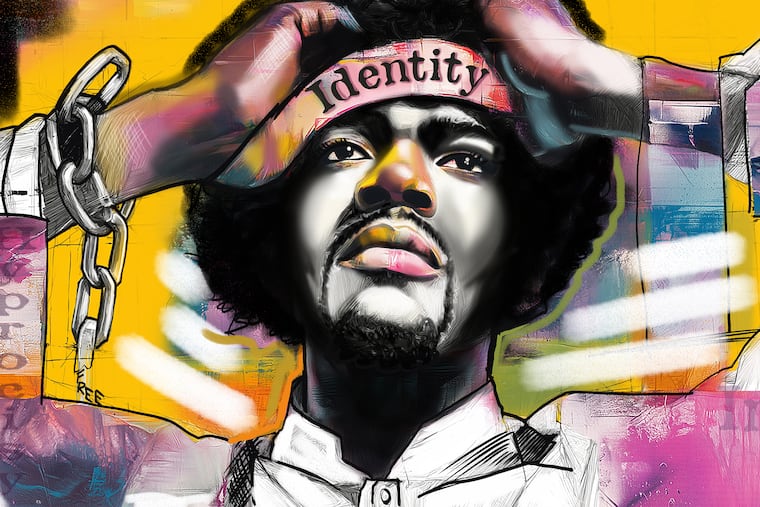
Black media matters. Right here, right now, and more than ever before. We are the essential workers on the front lines of a growing resistance movement.
As the owner and operator of WURD Radio, Philadelphia’s only multiplatform Black talk radio station, my team and I are focused on a singular mission: fighting back against this administration’s attempt to destroy Black history, culture, institutions, and people. We provide our communities with our most powerful weapon: trusted, accurate, culturally specific information.
The recent arrest of Don Lemon and Georgia Fort, two independent Black journalists, underscores the lengths this government will go to silence dissent — which, by the way, is protected by the First Amendment of the U.S. Constitution.
The Black press has been fighting a system that has sought to weaken our institutions, marginalize our reporting, and underfund our organizations for centuries. And frankly, for too long, mainstream media has been complicit in maintaining that system of devastating racial oppression.
In the 1800s, newspapers profited by running ads to capture enslaved Africans, and throughout history, they‘ve reinforced the caricatures and negative narratives used to justify a racial hierarchy.
In this new era, it feels as though we are slipping back in time, forced to fight battles we thought were won. The quest for newsroom diversity in mainstream media, for example. The brief glimmer of self-awareness that followed the murder of George Floyd — when pledges were made to hire more reporters of color, diversify sources, and commit to nuanced coverage — was tragically short-lived.
But if you are Black in America, you know the drill: Racial progress is always followed by a wicked backlash. Now is no different.
Still, we look to our history for the blueprint of our survival.
Our ancestors didn’t just dream of a free press — they built one.
We draw strength from Samuel Cornish and John B. Russwurm, who founded Freedom’s Journal, the first Black newspaper, in 1827. They advocated for the full humanity of Black people nearly 40 years before slavery was abolished nationwide. Imagine the courage and tenacity it took for two Black men to start a newspaper in a country that said it was illegal — in some places, punishable by death or maiming — to read and write.
I am inspired by Ida B. Wells-Barnett, who used the power of her pen to expose the barbaric practice of lynching through the Red Record. She traveled the country with a bounty on her head, determined to move the nation away from its most diabolical instincts.
I think of Robert Abbott, who launched the Chicago Defender from a landlord’s dining room in 1905. He built a secret network of Black Pullman porters to smuggle his papers into the South, serving as a catalyst for the Great Migration — the movement of roughly six million Black Americans from the rural South to the urban North and West between 1916 and 1970.
And, of course, there is Christopher Perry, who founded the Philadelphia Tribune in 1884, which remains the longest-running Black newspaper in the nation.
This history is in our DNA. We call on these ancestors now because we face an overt hostility unlike anything I have seen in my lifetime.
This moment is clarifying. Statistics highlight the stark disparities in housing, health, and education — but without the historical context of Jim Crow, redlining, and voter suppression, the public is left to believe the administration’s lie: that Black people are “inherently inferior” or merely “unqualified social promotions.”
This hypocrisy is as old as the nation itself — a country whose “Founding Fathers” codified slavery while declaring all men equal. When your foundational document is based on a lie you refuse to address, it tracks that you would spawn a president who is morally bankrupt. As Malcolm X said, “The chickens are coming home to roost.”
Yes, our nation has a serious problem. Yet, we persist.
2025 was the most difficult year of my career. WURD weathered an anti-DEI lawsuit, layoffs after an advertising collapse tied to anti-DEI policies, and the day-to-day exhaustion of covering relentless racial animus in Washington.
Yet, we did some of our best work, including a special series called Exonerated, which earned us an NAACP Image Award nomination — a rare recognition for local radio. And we’ve launched two new yearlong initiatives to make sure Black voices are centered as part of the 250th birthday festivities.
Our ancestors didn’t just dream of a free press — they built one. We will continue using all our platforms to tell our stories and center the complexity and diversity of our history, culture, and community.
We know that in this season of increased tension and hostility, our voice is our most potent weapon and our most sacred sanctuary.
We don’t just broadcast; we bear witness. And in that witnessing, we find the power to not only endure the present, but to author a future where there is a possibility to be finally and fully free.
Sara Lomax is the president and CEO of WURD Radio and the cofounder and president of URL Media.

This essay is part of a series exploring the 100th anniversary of the creation of Black History Month.
- How Black History Month endures | Rann Miller
- The fraught politics behind the creation of Black History Month | Solomon Jones
- Black media: Our voice is our most potent weapon and our most sacred sanctuary | Sara Lomax
- Despite Trump’s disdain, Black History Month matters | Harold Jackson
- African American personal faith and organized traditions have had historic impact | Anthea Butler
- Democracy, engineered in the Black metropolis | Michiko Quinones
- Preserving Black history must start in the classroom | Sharif El-Mekki

Inquirer Opinion Newsletter