We cannot understand American history without Black history
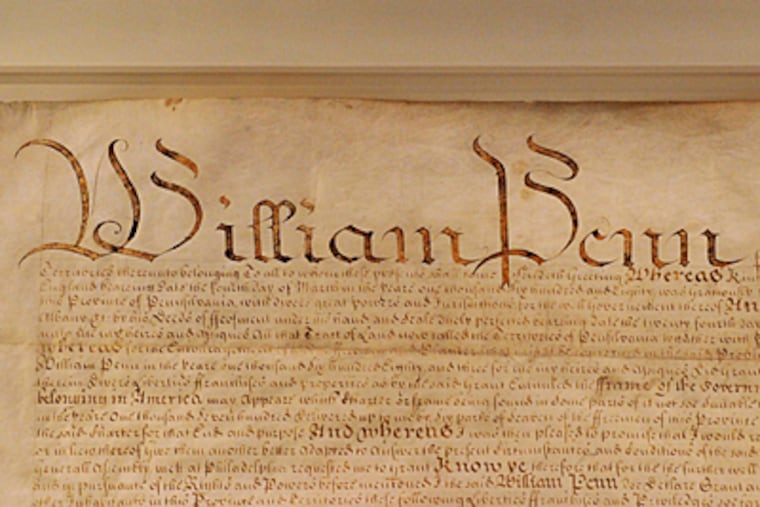
With the recent redaction of our history at the President’s House in mind, I’d like to introduce readers to some little-known history from Philadelphia during World War II.
One cannot truly claim to understand American history without knowing African American history, and without understanding America’s complete history, we’re condemned to repeat past mistakes.
The recent removal of the slavery exhibit at the President’s House made me realize that there were forces at work actively trying to erase uncomfortable truths about America’s history.
With that recent obfuscation in mind — and in celebration of Black History Month — I’d like to introduce readers to some little-known history from Philadelphia during World War II.
Discrimination decades ago in Philadelphia is not to be confused with racial murder in Philadelphia, Miss. However, to understand current race-related issues, we must acknowledge that whatever violence was inflicted on African Americans down south, equally insidious behavior took place in Northern cities like Philadelphia.
Although the Fair Employment Practices Committee barred racial discrimination during World War II, Chester’s Sun Shipyard maintained a 5,000-plus man segregated shipyard, which company officials claimed was needed to limit racial strife.
Philadelphia’s newspapers legally listed nonfederal defense job openings and apartment rentals by race.
Newsreels and movies about the iconic battles of Guadalcanal, Saipan, the Bulge, Iwo Jima, and Okinawa almost never featured any Black servicemen, but they were there.
On D-Day, Overbrook High grad Waverly B. Woodson Jr., a Black combat medic who, despite being wounded, treated over 200 soldiers at an Omaha Beach field dressing station. After toiling for over 30 straight hours and being completely exhausted, he resuscitated three soldiers who had nearly drowned in the frigid waters off the English Channel.
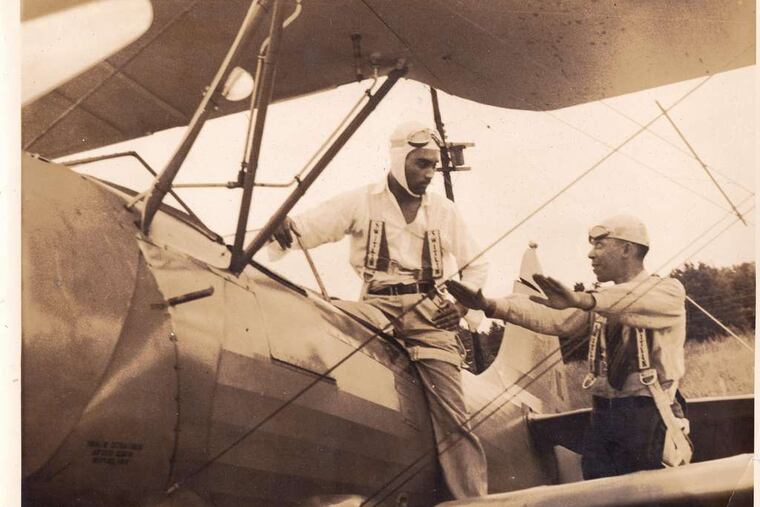
In 1943, Milton R. Henry, a Philadelphia Tuskegee pilot, got into a confrontation with an armed white Montgomery, Ala., bus driver over being forced to sit in the back of a bus. Henry might have been murdered if not for the quick intervention of several white English pilots.
In 1944, a racist Durham, N.C., bus driver murdered Pvt. Booker T. Spicely in cold blood. They had “had words” over Spicely’s initial choice of a bus seat. The bus driver was tried and quickly acquitted. Spicely lived in Philadelphia with his sister prior to his enlistment.
In 1944, racists struck the Philadelphia Transit Co., SEPTA’s predecessor, and prevented workers from using trolleys, buses, and subways for several days. Worker absenteeism caused the loss of a million war matériel production hours. President Franklin Delano Roosevelt ordered 5,000 troops to Philadelphia — instead of to Europe or the Pacific — to restart and guard its transit system.
In a top-secret 1945 operation, African American paratroopers fought West Coast forest fires ignited by Japanese balloon bombs. Norristown native Pfc. Malvin L. Brown died during one of the 555th Parachute Infantry Battalion’s firefighting operations.
Irrespective of the Tuskegee Airmen’s flying skills, after the war, none was hired by a commercial airline. Some pilots had received their initial training from Bryn Mawr native C. Alfred “Chief” Anderson. In March 1941, Anderson flew Eleanor Roosevelt around Tuskegee, Ala., which caused some War Department skeptics to reevaluate their initial hesitancy with Black pilot training.
In April 1945, 101 Tuskegee Airmen, including several Philadelphians, were arrested for disobeying an unlawful discriminatory order. The charges were quickly dropped, but administrative reprimands were placed in these officers’ 201 files.
Philadelphia native William T. Coleman, a summa cum laude University of Pennsylvania graduate, interrupted his Harvard Law School studies to serve as an Army Air Force officer. Honorably discharged, he returned to Harvard, graduated first in his class, and clerked for a federal appeals court judge and a U.S. Supreme Court justice. Armed with his very substantial résumé and glowing recommendations, he initially moved to New York — as no white Philadelphia firm would hire him.
Throughout the war, while Philadelphia-based Whitman’s Chocolates was producing millions of pounds of “Samplers,” it was also producing “Pickaninny Peppermints,” despite protests by the NAACP to remove the offensive slur from the product’s name.
During the war, Philadelphia’s Woodside Amusement Park allowed Black patrons to ride its rides — but barred them from swimming in its pool.
Restrictive deed covenants, redlining, and violence limited where Black veterans could use their benefits to purchase homes. Despite an enormous postwar suburban housing boom, nearly all African Americans were restricted to purchasing homes within certain areas of Philadelphia proper. One legacy of the Greatest Generation is the massive intergenerational transfer of accumulated wealth, much of which was created by suburban homeownership.
Over the last few years, some politicians have claimed that the United States is not a racist country, that slavery didn’t cause the Civil War, and that slavery benefited enslaved people by teaching them useful skills. The ignorance of these 21st-century politicians, who have many followers, makes it imperative that everyone study African American history, not just in February, but all year long.
Paul L. Newman is an amateur historian specializing in African American history of the first half of the 20th century. He has created a mini-series docudrama that highlights the events in this essay.