How Black History Month endures
The annual observance evolved over time, but its fundamental impetus remained unchanged: the celebration and honoring of Black history and culture.
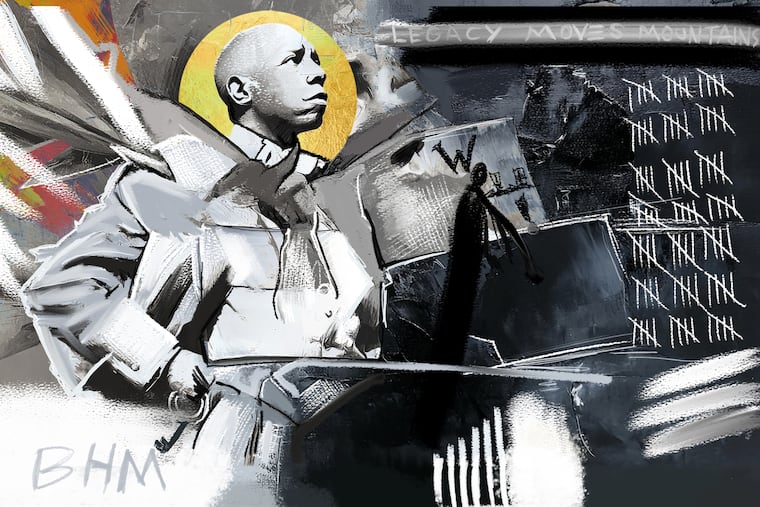
I am not a huge fan of comic books and superheroes, but I appreciate the storytelling. In comics, the origin story is just as important as the hero saving the day. The same is true for Black History Month, which originated as Negro History Week.
Negro History Week was created by Carter G. Woodson, the child of two formerly enslaved parents. According to Harvard historian Jarvis R. Givens, Woodson was taught by his two uncles, John and James Riddle, his mother Anne Riddle’s brothers, who had also been enslaved. Both had been educated in a Freedmen School toward the end of Reconstruction, and they became Woodson’s first teachers.
“As a student, [Woodson] witnessed the shared vulnerability of Black people through the story of his teachers and family,” writes Givens. “These first encounters taught Woodson more than just reading, writing, and arithmetic. He also inherited a political orientation to schooling informed by the lived history of the teachers standing before him … Here, Woodson encountered the project of Black education.”
That project, which continues to this day, was the equipping of Black people with the practical knowledge to do a thing, and the historical memory to understand why they do it. This was the basis with which Woodson founded the Association for the Study of Negro Life and History (ASNLH) in 1915 and created Negro History Week in 1926, as a time for Black people to not only learn about Black history, but to take the time to reflect on it.
In Woodson’s words: “It is evident from the numerous calls for orators during Negro History Week that schools and their administrators do not take the study of the Negro seriously enough to use Negro History Week as a short period for demonstrating what the students have learned in their study of the Negro during the whole school year.”
The first Negro History Week took place from Feb. 7 to 13, 1926. The Philadelphia Tribune, in an article published Feb. 6, 1926, said: “It is essential to the future growth of the Negro race that we become acquainted with our past … We have passed the point in our advancement where we can afford to disregard our history.” That sentiment remains true today.
Woodson created Negro History Week in 1926 as a time for Black people to not only learn about Black history, but to take the time to reflect on it.
In April 1928, the Germantown YMCA hosted an event called Negro Achievement Week for the Germantown community, featuring such prominent African Americans as Alain Locke, W.E.B. Du Bois, and James Weldon Johnson. The week’s events received little media attention but were robust, including a mass community meeting, a music night, an art night, and a history lecture, held in both Germantown and Center City, according to David Young, director of the Historical Society of Montgomery County.
The events were aimed at educating white people, as well, with Du Bois’ pointedly noting that “he reminded the whites too often of their injustice to the Negro.”
Planning for Negro Achievement Week in Philadelphia began in 1923 at the “Black Branch” of the Germantown YMCA, known as the “Colored Y,” under the guidance of Olivia Yancey Taylor and Eva del Vakia Bowles.
Members of the Colored Y formed an interracial committee to plan the week’s activities, including a variety of African American heritage events.
The first Negro Achievement Week, which became Negro History Week, happened in 1925, influenced by a partnership between Woodson and members of the Black fraternity Omega Psi Phi, who created Negro History and Literature Week, first celebrated in April of 1921.
“Celebrations took the form of public programs in churches, schools, and events partnering with literary societies,” according to Givens. “Given the success of the program, a committee was established in 1923 to outline a strategic plan: to develop plans for fostering the study of Negro History in the schools and colleges of the country.”
The week subsequently became a shared project between Woodson and Black schoolteachers.
While Negro Achievement Week in Philadelphia didn’t take place after 1928, Negro History Week continued nationwide because Black people understood that they were past “the point in our advancement where we can afford to disregard our history.”
Although President Gerald Ford officially expanded Negro History Week to become Black History Month in 1976, Black communities had already done so on their own, believing one week was not sufficient to contain their history.
Philadelphia stands proudly in that tradition — from the Colored Y to educator Nellie Bright. Thanks to Carter G. Woodson and countless Black educators, their vision endures a century later.
Rann Miller is an educator and freelance writer based in southern New Jersey. His “Urban Education Mixtape” blog supports urban educators and parents of children attending urban schools. urbanedmixtape.com @RealRannMiller

This essay is part of a series exploring the 100th anniversary of the creation of Black History Month.
- How Black History Month endures | Rann Miller
- The fraught politics behind the creation of Black History Month | Solomon Jones
- Black media: Our voice is our most potent weapon and our most sacred sanctuary | Sara Lomax
- Despite Trump’s disdain, Black History Month matters | Harold Jackson
- African American personal faith and organized traditions have had historic impact | Anthea Butler
- Democracy, engineered in the Black metropolis | Michiko Quinones
- Preserving Black history must start in the classroom | Sharif El-Mekki

Inquirer Opinion Newsletter