The murder of Black women in the U.S. is a public health crisis
The Black women slain daily in the United States represent an urgent yet neglected national emergency. Research supports that racial disparities in female homicides have persisted for decades.
Malcolm X once said: “The most disrespected person in America is the Black woman. The most unprotected person in America is the Black woman. The most neglected person in America is the Black woman.”
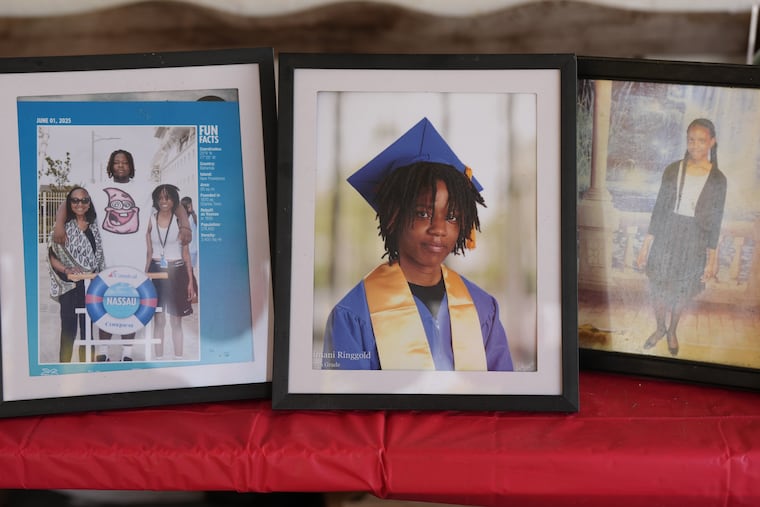
The killing of two Black women in West Philadelphia — one allegedly by an intimate partner, and the other the tragic victim of community gun violence — should alert us to bring attention to the murder of Black women as a public health issue.
The violent deaths of Tyhesia Street, 43, in a rooming house on April 5, and Imani Ringgold, 20, on 60th and Market Streets on April 7, and all of the Black women slain daily in the United States, represent an urgent yet neglected public health crisis. Research supports that racial disparities in female homicides have persisted for decades, with little to no public awareness or action.
Disproportionate rates
One recent study identified a homicide rate of 11.6 per 100,000 for Black women compared with a rate of three per 100,000 for white women. Firearm deaths, in particular, were disproportionately concentrated among Black women.
The magnitude of this disparity varies by state, as Black women in Wisconsin were 20 times more likely to die by homicide than white women. We are at high risk of being murdered by an array of culprits, from loved ones to police officers, or may meet our demise at the hands of complete strangers engaged in the gun violence that continues to plague so many of our communities.
The high rates of murder of Black women mean the devastating loss of many daughters, mothers, partners/wives, sisters, nieces, grandmothers, aunts, cousins, and friends in Black communities, eroding support systems and imparting the psychological trauma of loss. Efforts to raise awareness regarding this public health crisis have been limited, reflecting the low value placed on Black women’s lives.
Gun violence, a public health crisis of extensive magnitude, has significant overlap with the murder of Black women in the U.S. The disproportionate murder of Black women by firearms is clear evidence that we are among the most vulnerable.
Despite the well-documented reality that the murder of Black women is a public health crisis, the evidence continues to be ignored in the media, and results in little to no political action at the state and federal levels.
Lack of commitment
What we need is stronger federal policy changes restricting access to firearms, comprehensive interventions to prevent and address firearm violence, and research efforts to identify effective practices to combat this problem.
Yet, we continue to fail to make progress due to a lack of commitment to making laws to curb firearm violence, and a lack of concern for the lives of those most harmed.
The tragedies this month in West Philadelphia reflect the realities that play out over and over again in Black communities.
As a Black female scholar who grew up in Philadelphia, I have experienced, witnessed, and been affected by the disproportionate impact of this violence and the unique vulnerability of the women in our communities.
For over 25 years, I have conducted violence research in Black communities, hearing heartbreaking stories of women’s victimization and loss, yet have seen little change in the conditions that foster such violence in our communities. In recent articles, my colleagues and I further highlight the devastating impact of the murder of Black women, and what we should be doing about it.
The tragedies this month in West Philadelphia reflect the realities that play out over and over again in Black communities.
The deaths of Tyhesia Street, Imani Ringgold, and the hundreds of other Black women killed annually do not make national headlines, or spur the type of outrage warranted by the magnitude of such loss. And too many culprits are not held accountable. Firearm violence and the murder of Black women in the U.S. are intersecting crises in need of attention and redress.
Guided by the wisdom of Malcolm X, we need to better respect, protect, and value those women who are the backbone of our communities.
Tameka L. Gillum is from Philadelphia and is an associate professor in the College of Population Health at the University of New Mexico, and a violence researcher with more than 25 years of experience.

Inquirer Opinion Newsletter