Let’s talk about blagony: What it means to be the only Black person at work
Let’s retire the idea that burnout is merely overwork. Let’s broaden our understanding to include blagony: the strain of being seen as a single voice for a whole community.
There is a word I want us to consider: blagony. It’s a portmanteau of Black and agony, and it captures a specific psychological space.
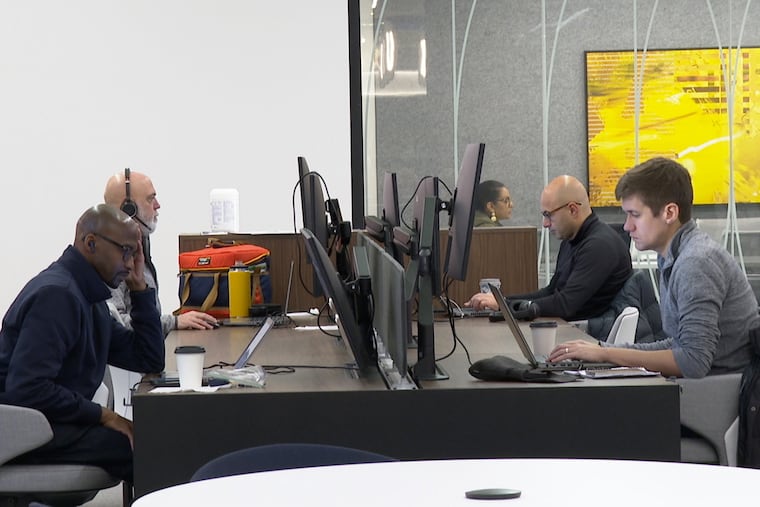
It’s not merely being the only Black person in the boardroom. It’s the sustained emotional labor, the relentless vigilance, the pressure of representation and racialized perception — all while trying to meet the explicit performance metrics of any job.
The only Black engineer in a meeting. The single Black adviser on a team. The only Black teacher, the only Black graduate student. The Black female leader whose presence is always under the magnifying glass.
This is the daily landscape for many, and it is, in its quiet omnipresence, exhausting.
To understand blagony is to understand that workplace stress isn’t just about deadlines and deliverables. In the last decade, a significant body of research has reminded us that burnout — the chronic stress response the World Health Organization formally recognizes in the workplace — emerges not only from workload but from identity threat, lack of psychological safety, and perpetual masking of one’s authentic self. Burnout has been with us for decades, yet we are only beginning to grasp its intersecting causes.
In Burnout: The Secret to Unlocking the Stress Cycle, Emily and Amelia Nagoski explain that stress has a physiological component that often isn’t resolved by self-care alone. Stressors accumulate, and without mechanisms to complete the “stress cycle,” our bodies and minds remain in distress.
Now imagine experiencing the ordinary stress of overwork while also managing the extraordinary stress of visibility — being watched, categorized, and held up as both token and template for an entire community. That’s blagony. It’s not just about being in the room; it’s about being on stage in every room.
Organizational research shows this isn’t abstract. Studies probing wellness in underrepresented groups report that women of color — and particularly Black women — face compounded barriers in professional settings.
They are both underrepresented and overlooked, which research connects to diminished career progression, reduced well-being, and heightened psychological strain.
This isn’t about victimhood. It’s about recognition. True psychological safety — the freedom to bring all of who you are to work — is one of the major predictors of organizational success. Yet, for Black employees, that safety is often a mirage. They must code-switch, temper their expertise with humility, and constantly evaluate whether being authentic will be rewarded or punished.
This labor — unmeasured, unpaid, and deeply internalized — is blagony.
Of course, we talk about inclusion and equity, about diversity plans and affinity groups. But intention isn’t impact. A reading of workplace wellness literature reveals a troubling tendency: The wellness industry urges individual strategies — meditation, resilience, boundary setting — while often ignoring structural stressors that are built into the workplace.
Jennifer Moss, in her widely discussed book, The Burnout Epidemic: The Rise of Chronic Stress and How We Can Fix It, argues that organizations must stop treating burnout as an individual failure and instead redesign workplaces to reduce chronic stress.
Yet, most corporate wellness programs remain superficial: apps, yoga classes, snack bars, mindfulness sessions. None of these treats the root of blagony: the constant cognitive load of being the sole representative of a marginalized group. Psychological research calls this “identity threat,” and it’s real.
In higher education and STEM settings, scholars highlight how Black professionals must mask parts of themselves — hide cultural cues, soften speech, temper humor — to conform to dominant norms. Every day, they must decide: Be fully me and risk being misunderstood? Or mold myself into the organizational ideal and risk losing touch with my own sense of self, or possibly risk losing my job?
In a striking parallel, centuries of research on microaggressions show how seemingly small, everyday slights accumulate into a wear and tear on the psyche. One corporate DEI consultant who has developed mindfulness tools for Black workers notes that these workers face not only the standard burnout of their peers, but additional layers — microaggressions, coded language, isolation, and stereotypical assumptions — which add up over the years.
That is blagony.
Some might raise the counterargument: Isn’t this just the cost of progress? The pain inherent in entering spaces that were never designed for everyone? But that is precisely the problem. Organizations and societies that value innovation, creativity, and collective intelligence must also value plurality of perspective, and the racial and ethnic components that come along with it. If we ignore the emotional costs paid by minoritized workers, we will degrade our own workplaces and squander human potential.
Consider the economy’s current preoccupation with “wellness.” Most wellness initiatives are rooted in an individualistic self-care model that assumes stress arises from personal habits. But when stress is born of organizational dynamics, personal adjustment alone isn’t enough.
Nagoski reminds us: Stress is physiological, yes, but it’s also social. You cannot meditate your way out of an environment that constantly signals that your presence is provisional.
Blagony demands more than corporate slogans or pulse surveys. It demands structural change. It demands that we rethink hiring, promotion, and evaluation criteria. It demands that we foster climates where people don’t feel the need to mask their identities to fit in. It demands sustained effort to build genuine psychological safety.
There is also a cultural dimension. We must shift from valuing perfection to valuing wholeness. We must recognize that human beings — especially those carrying the cumulative weight of historical and structural marginalization — cannot compartmentalize identity from performance. Workplaces that expect competence without empathy will find neither.
In my own conversations with Black professionals, what emerges over and over is not a desire for special treatment, but for authentic belonging. They don’t want to be tokens. They want to be colleagues whose full humanity is recognized and respected.
Blagony demands more than corporate slogans or pulse surveys. It demands structural change.
So let’s retire the idea that burnout is merely overwork. Let’s broaden our understanding to include blagony: the strain of being seen as a single voice for a whole community, the chronic vigilance against bias, the emotional taxation that is neither acknowledged nor compensated.
If we want workplaces that are not just more diverse but more human, then we must reckon with this. Because until we address the unique stressors Black employees carry — and redesign institutions to reduce them — we will continue to lose not just talent, but our shared moral coherence.
Blagony is not a symptom of individual weakness. It is a signal that our workplaces — and our culture — still have far to go.
Jack Hill is a diversity consultant, child advocate, journalist, and writer.

- Let’s talk about blagony: What it means to be the only Black person at work
- Trump isn’t battling crime — he’s stress-testing the state
- Charlie Kirk and the unbearable cost of political violence in America
- The American history of Black fatherhood demands a new narrative
- Let’s talk about Carla Hayden and America’s discomfort with Black women in positions of authority