Combatting Islamophobia through days filled with ordinary decency
People are rarely changed by argument alone. They are altered by proximity, by repeated exposure to what does not confirm the story they have been told about others, writes Yahia Lababidi.
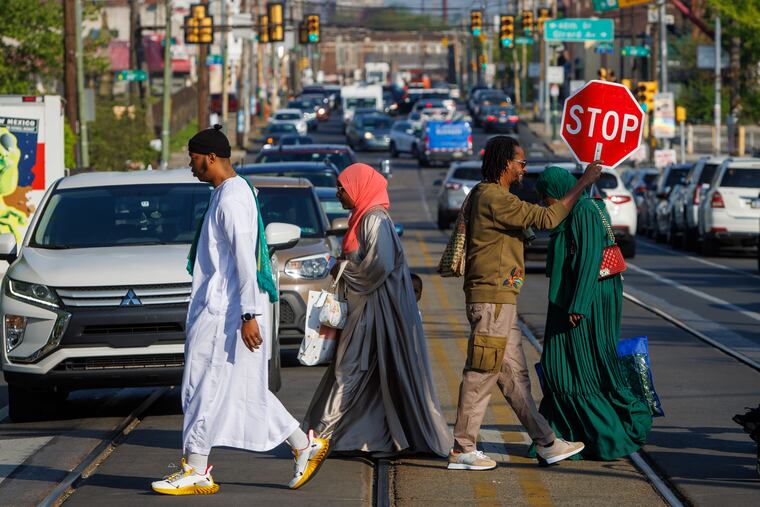
Stepping out of my apartment building, a neighbor stopped me to say he was sorry for the Islamophobia he felt circulating lately in Donald Trump’s America.
At the post office, the man behind the counter asked if I could write “Happy Holidays” in Arabic for a sign he wanted to hang. I wrote it carefully, conscious of my uneven hand. He thanked me and taped it up. I hope the small sign does its modest work, easing someone without calling attention to itself, doing what such gestures often do best when they pass quietly.
At the bus station, a large man asked to borrow my phone. When he handed it back, he asked where I was from. I said Egypt. He swore, laughed, and spoke with me for a few minutes about the world, about worry, about what people owe one another. Before boarding, he offered a blessing.
These moments remind me how relatively easy my passage as an immigrant has been.
I have not encountered violence directly. What I have met, mostly, is ignorance, and even that only recently.
I have rarely felt compelled to take it personally. I tend to think that most people would not speak as they do if their lives had widened just enough to complicate what they take for granted, if familiarity had been allowed to interrogate fear.
That belief comes from observation over decades and across cultures. People are rarely changed by argument alone. They are altered by proximity, by repeated exposure to what does not confirm the story they have been told about others or about themselves. Knowledge and kindness work slowly. They loosen bias and false certainty by degrees.
I carry sorrow for the violent pain and murderous ignorance that continue to surface where I come from, and far beyond it. The point is not to rank suffering or distribute blame. The point is recognition: We are capable of living far better than we do.
After the recent mass shooting at a Hanukkah celebration at Bondi Beach in Sydney, where 15 people were killed, a Muslim man, Ahmed al Ahmed, intervened by tackling and disarming one of the attackers. He was shot twice in the process and is credited with saving lives. Past narrow religious allegiances, this was a human refusal to stand aside.
That matters, because it interrupts the story we are encouraged to believe about what people inevitably are.
In recent months, reported incidents of anti-Muslim harassment and threats have risen across the country, echoing what many Americans are experiencing in daily life.
Living in the United States for nearly two decades, I am well aware that this country has inflicted violence both inside its borders and far from its shores, for generations, often while renaming it, often while insisting on its necessity.
Any serious reckoning with this asks more of us than explanations shaped for a news cycle.
It asks for patience, attention, and the willingness to trace continuities rather than isolated events. It asks us to notice how harms travel, and how language perpetuates those harms. It asks us to notice how easily whole communities are reduced to headlines, faiths are flattened into caricature, and violence becomes explanatory shorthand.
When we make others suffer, we do not escape the damage. We carry it, often without knowing how it has narrowed us.
But none of this survives sustained attention. What does endure are the small acts that refuse the terms we are handed and the gestures that loosen suspicion.
Goodness is practiced. It appears in ordinary exchanges.
In the traditions that have shaped my thinking, love is not postponed until some imagined future. Mercy is learned here, among people who misunderstand one another, who arrive carrying inherited fear, who fail but try again.
Decency is possible. I encountered it on the street, from ordinary people who spoke plainly and put distance between the human being and the headlines.
As a discipline of perception, it is worth the effort to try to see the Divine in everyone. Much depends on the effort, repeated daily, without witnesses.
Yahia Lababidi is an Egyptian-American writer and poet, the author of 12 books, including Palestine Wail: Poems. His work has appeared in World Literature Today, The New Arab, NPR, and PBS.