Pa. leads in making breast cancer screening more accessible
Congress is following Pennsylvania’s example in cutting costs for preventive cancer care.
Pennsylvania is leading the way on breast cancer screening policy. Thanks to Senate Bill 88, a decisive move from the commonwealth, patients with state-regulated health plans will no longer face high out-of-pocket costs when an abnormal screening requires follow-up breast imaging.
Many Americans assume this is already the case, given the Affordable Care Act’s promise of no-cost preventive services. With breast cancer, however, that’s not always true.
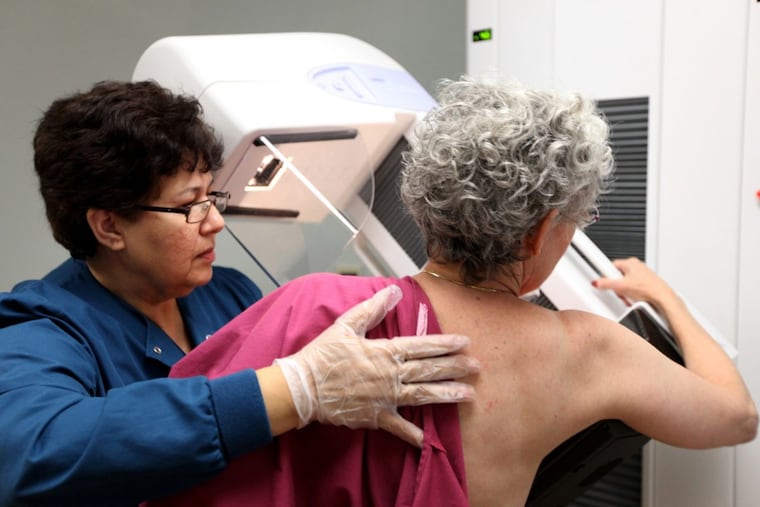
Patients whose routine screening mammogram reveals an abnormality require additional imaging for a more detailed look. Those who are at high risk due to family history, dense breast tissue, or a genetic abnormality may need an MRI or ultrasound for their routine screening, rather than a standard mammogram.
Neither meets most health plans’ technical definition of “preventive care.” And, in many parts of the country, both can cost hundreds, even thousands, of dollars out of pocket.
By eliminating out-of-pocket costs for patients, Pennsylvania is establishing itself as a national leader in breast cancer treatment. But this state legislation can only go so far, and many people still face major gaps in coverage when they need breast imaging beyond a screening mammogram.
As it turns out, that lack of coverage doesn’t sit well with voters.
Support for treatment
In a national poll of 1,000 Republican primary voters commissioned by the Alliance for Breast Cancer Policy, sentiment on the topic was clear: If a patient needs breast imaging, they should get it — with the full cost covered by their health plan.
A full 95% of polled voters said insurers should cover the full cost of all recommended breast imaging, not just the standard screening mammogram. After all, preventive care means preventive care. Voters recognize that. When health plans split hairs and argue technicalities, they do so at the patients’ risk.
A bill before Congress would help, covering many in Pennsylvania who will still fall through the cracks even after the passage of SB 88. Known as the Access to Breast Cancer Diagnosis (ABCD) Act (S 1500/HR 3037), the federal legislation would eliminate out-of-pocket costs for patients’ necessary breast imaging.
And 85% of polled voters responded to the legislation’s primary goal: ensuring women get the answers they need before it’s too late. When breast cancer is caught early, treatment is more effective, less invasive, and far more likely to lead to positive outcomes — with five-year survival rates as high as 98%. Early detection saves both lives and dollars.
Respondents expressed support for the ABCD Act, especially given the impact the bill would have on those who often can’t get the help they need: rural, lower-income, Black, Hispanic, and younger women.
Outdated insurance rules still force patients to choose between life-saving breast imaging and paying their bills.
With costs for healthcare so high, many, especially younger women who make up 10% of all new breast cancer cases in the U.S., are looking toward high-deductible health plans to lower their monthly costs. But this often comes with less comprehensive coverage before a deductible. Two-thirds of polled voters say the full cost of necessary breast imaging should still be covered for those with high-deductible health plans.
Pennsylvania is proving that bold, patient-centered policy can save lives and reduce costs. Yet, in more than half the country — and still for some in the Keystone State — outdated insurance rules still force patients to choose between lifesaving breast imaging and paying their bills.
It’s time for Congress to follow Pennsylvania’s lead and make comprehensive breast cancer imaging a priority.
Breast cancer doesn’t wait. In 2025, an estimated 43,000 women and men in the U.S. lost their lives to the disease, including 1,800 in Pennsylvania alone. Access to early diagnosis should never hinge on the state you reside in. Congress should take note of Pennsylvania’s recent legislation and ensure lifesaving screenings are within reach for everyone.
Molly Guthrie is vice president for policy and advocacy at Susan G. Komen and leads the Alliance for Breast Cancer Policy.