A vacant lot, a health fest, and a vision for the next 250 years
Health isn’t just about choices. It’s about access. It’s about design. It’s about whether the environment gives people the opportunity to live well, or quietly makes it harder, writes Shalimar Thomas.
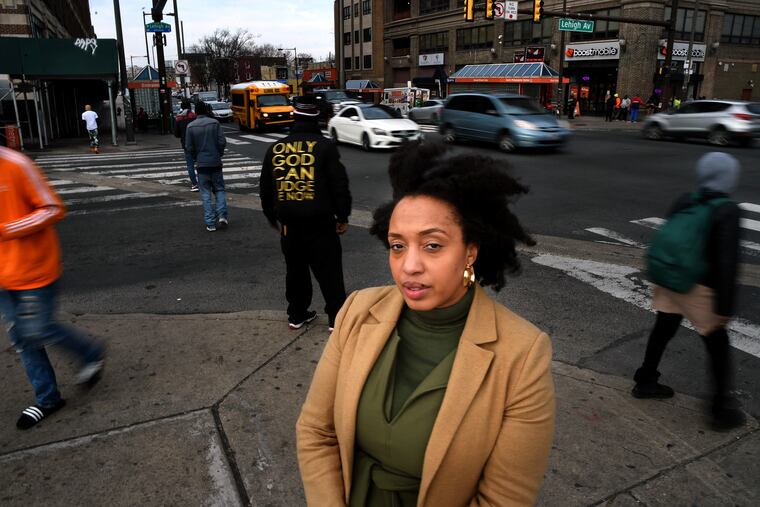
Next summer, as Philadelphia gears up to celebrate America’s 250th anniversary, we find ourselves in a unique moment — one that invites us not just to look back on our nation’s founding, but to look forward. What kind of future do we want to build over the next 250 years? What kind of city will we leave behind?
On Saturday, a glimpse of that future will unfold — not in a major civic building or grand plaza, but in a vacant lot on North Broad Street. That’s where the Summer aBroad Health Fest — hosted by the organization I lead, North Broad Renaissance, in partnership with Shift Capital — will bring together community members for a day of music, movement, and wellness. It’s a joyful, intentional effort to reimagine how space can be used to promote community health and connection.
It’s also a response to a quiet crisis.
In Philadelphia, nearly 1 in 3 adults (32%) lives with obesity. About 13% of residents have diabetes — a rate higher than the national average. More than 22% of adults report poor mental health, and many neighborhoods lack access to healthy food, safe places to exercise, or clean air to breathe.
According to the city’s own Community Health Assessment, “place” remains one of the strongest predictors of health outcomes — with life expectancy varying by as much as 20 years between zip codes.
These aren’t just statistics. They’re signals — and they tell us that personal responsibility isn’t enough. Health isn’t just about choices. It’s about access. It’s about design. It’s about whether the environment gives people the opportunity to live well — or quietly makes it harder.
That’s what makes the Summer aBroad Health Fest meaningful. A vacant lot becomes a canvas for health, joy, prevention, and belonging. It challenges the idea that wellness is a luxury or a privilege. And it sends a clear message: healthy environments don’t appear by accident — they are built, intentionally, together.
This work couldn’t come at a more meaningful time. As Philadelphia prepares for 2026 and the semiquincentennial celebrations, we have a rare civic opportunity to think boldly about what we’re building — not just monuments, but legacies. We can celebrate our history, while also committing to a more inclusive, healthy, and hopeful future. The Summer aBroad Health Fest is not a one-day fix — it’s a one-day model for how we might use space differently.
The upcoming health fest isn’t your typical initiative — and that’s exactly what makes it worth paying attention to. It’s not about setting up a folding table to hand out pamphlets on how to manage diabetes, heart disease, or obesity. It’s about preventing those outcomes in the first place by activating joy, movement, and connection. This event reimagines what public health can look like when it’s embedded in community — when people walk away not just with information, but with energy, intention, and a clearer sense of what wellness feels like, in real time, right where they live.
Organized by a local nonprofit, a developer who said yes, and a small team that simply decided to show up, this fest is a quiet but radical demonstration. When research and marketing data suggest this neighborhood isn’t ideal for health and wellness, this event pushes back — and says, it absolutely is.
Most importantly, it’s asking us to do better. It challenges our assumptions — about which neighborhoods are worth investing in, about what kind of health programming people want and deserve, and about how dignity shows up in public space. Whether the message is for policymakers or urban planners, the takeaway is clear: health equity is not just about access to care — it’s about how we treat the spaces people live in every day. From its “no lazy tables” approach to vending to the intentionality behind every offering, this health fest models a shift from reactive interventions to proactive care.
What if, 250 years from now, people looked back and said this was the moment when cities like Philadelphia started designing for prevention, not just reaction? When developers, community leaders, public agencies, and residents worked together to turn underused land into spaces that served the public good? When we began to treat access to wellness as a shared civic responsibility?
This health fest offers a hopeful blueprint — one where every neighborhood has space to move, breathe, and belong. One where a vacant lot doesn’t signal disinvestment, but transformation. One where health equity is not just a goal, but a guiding principle in how we shape our streets, our parks, our housing, and our public spaces.
It’s not about perfection. It’s about progress — and participation.
Everyone is invited. And in showing up, we’re doing more than attending a health fest. We’re helping to imagine the next 250 years of community-centered design and wellness.
And it all starts in a lot on North Broad.

Saturday, Aug. 23
3709 N. Broad Street
Gates open at 9 a.m.
Shalimar Thomas is the executive director of the North Broad Renaissance, a nonprofit whose mission is to revitalize North Broad Street with intention and equity in mind.