Using a migrant’s shooting death to attack immigration itself
By blaming the Brown University shooting on a long-standing visa program, the Trump administration diverts attention from the real problem: guns.
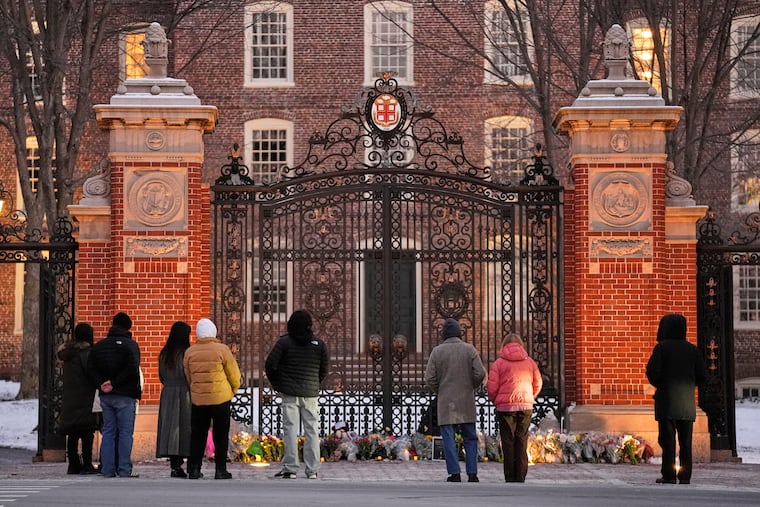
In the days after the mass shooting at Brown University and the killing of a Massachusetts Institute of Technology professor, the Trump administration suspended the diversity visa “green card lottery,” saying the suspected shooter, a Portuguese national, had obtained permanent residency through it. It’s a convenient move that redirects attention from what happened to whom to blame.
But one of the two students killed at Brown was a migrant, too.
Mukhammad Aziz Umurzokov was a Brown freshman, raised by a family that came to the United States from Uzbekistan to build a life here. Those who knew him described his kindness and generosity. Friends and family said he dreamed of becoming a neurosurgeon, a goal shaped in part by the brain surgery he needed as a child.
This young man represented what so many families come here hoping for: safety, education, a bright future. His death should have sparked a national reckoning with gun violence. Instead, the policy response once again targeted immigration, even as an immigrant family is among those grieving.
Freezing the diversity visa lottery doesn’t touch the core problem of mass shootings at schools across the country. It doesn’t answer the question that matters most in the wake of any campus shooting: How is it so easy to get a gun, let alone bring it into a place built for learning?
The administration’s response hinges on a simple narrative in which the suspected shooter’s immigration history becomes the headline, and the first policy move becomes a freeze on a visa program that has nothing to do with how a gun was obtained or used.
Even the publicly reported timeline is more complicated than that talking point suggests. What’s clear is that the suspension of this visa program diverts attention from gun access and campus safety.
The diversity visa lottery is one of the few legal routes for people from underrepresented countries to come to the United States. This year alone, more than 5,500 people from Uzbekistan were selected in the lottery. For many families, it represents the only legal path forward. The administration has closed the door on that pathway.
So when the administration suspends the program in the name of “safety,” it does more than change a policy. It tells grieving immigrant families that their place here can shift with every news cycle.
It also asks the public to draw the wrong lesson from what happened at Brown. If leaders want to prevent another campus shooting, they have to deal with the common denominator across these tragedies: easy access to guns and the absence of meaningful guardrails.
Suspending a visa program does not keep a firearm out of an attacker’s hands. It does not make a classroom safer. It does not protect the next student walking into an engineering building on an ordinary day.
Umurzokov should not be an afterthought in this debate. His family came here to build a future. He earned his place at Brown. He wanted a life spent helping others. Yet none of that kept him safe.
If we are serious about honoring the lives of people like Mukhammad Aziz Umurzokov, we should resist the impulse to turn grief into scapegoating.
In a nation built by immigrants and now mourning an immigrant student, leaders should be focused on preventing the next shooting, not using this tragedy to deepen fear while guns remain exactly where they are.
Mehri Hamrokulova grew up between the U.S. and Uzbekistan, and recently graduated from Colgate University with a degree in sociology, focusing on immigrant experiences.