The closure of the Bryn Mawr birth center is an inconceivable loss
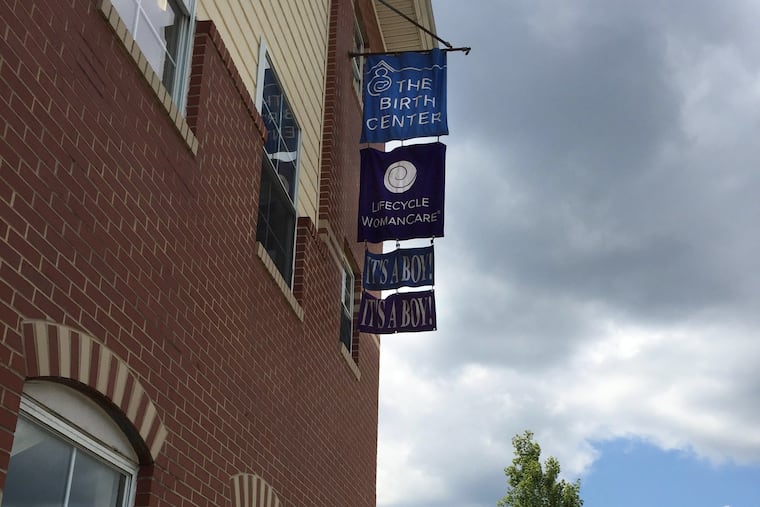
After 47 years and over 16,000 deliveries, the birth center will close its doors. The reason is simple and stark: It can no longer afford the rising cost of insurance.
Five and a half years ago, I was 41 weeks pregnant and in active labor with my second child, trying to breathe through the pain as my husband sped us to the Bryn Mawr birth center.
Hobbling up to the birth center door, my husband in tow, I was greeted by the on-call midwife whom I had spoken to right before leaving home. She showed us to a yellow room, a beautiful birthing suite with a queen bed and window shutters that could’ve been in any home, where 15 minutes later, my healthy baby boy came screaming into the world.
Relief flooded my body. Only days earlier, COVID-19-related policies had locked down maternity and postpartum floors. My heart ached reading stories of mothers laboring alone and being separated from their new babies. Pregnant women around me felt scared and powerless.
Instead of pandemic-forced isolation, my husband, newborn, and I spent a peaceful night together in that yellow room, quietly being cared for by the nurse and midwife. It’s a night I’ll always cherish as the calm in the storm of an otherwise scary and painful time.
I’ve come to see the birth center as the gold standard — an antidote to healthcare systems that are so large that patients feel invisible.
And it’s that night I thought of when I learned that, after 47 years and over 16,000 deliveries, the Bryn Mawr birth center, also known as the Lifecycle Wellness and Birth Center, will close its doors early this year. The reason is simple and stark: It can no longer afford the rising cost of insurance.
As a woman, I feel devastated that this choice will no longer be accessible to Philadelphia mothers. As a physician, I am angry at the continued erosion of patient care by a healthcare model that values money over people — an insurance system in which a successful, hugely impactful clinical practice nearly half a century old could dissolve under the threat of massive insurance premium hikes.
I’ve been practicing medicine for eight years at three different hospitals in the Philadelphia region, first within general internal medicine and now within the subspecialty of cardiology. Despite my decision to work at large academic centers, I’ve come to see the birth center as the gold standard — an antidote to healthcare systems that are so large that patients feel invisible.
At every stop of my career, I have been mentored by brilliant, dedicated health professionals. But what I’ve learned from the midwives and nurses at the Bryn Mawr birth center has profoundly impacted who I am as a doctor, and what I believe medicine should and can look like.
In medical training, we’re rewarded for memorizing guidelines, drug mechanisms, trial names, and dates. We are taught to apply a rigid standard of care that too often ignores patient realities. The truth of medicine is that there is a lot that is not under our control.
We miss the boat as doctors when we focus too much on medications, testing, and interventions, and fail to see the human in front of us who is suffering. Patients suffer alone, confused, bouncing around providers who don’t look up from computers to see the person in front of them for who they are.
The Bryn Mawr birth center was different: A place where people, including me, felt seen and cared for.
With the loss of the birth center, Philly mothers are losing that intimate, personalized care I received in the yellow room.
There has been an outpouring of grief from women and providers who see what a profound loss this is for our larger community. It feels devastating to me that, in a time when so many people feel disappointed by their experiences with healthcare, one of the few clinical models that actually succeeded in making patients feel cared for would be the one to close.
And still, the birth center will close its doors. My heart is full of sadness for this inconceivable loss. But I’ll hold that alongside gratitude: for the midwives, nurse practitioners, and nurses who have taught this doctor so much about seeing patients for who they are, and respecting our bodies for what they can do.
Cara Lea Smith is a physician at a local hospital, who was born and raised in West Philadelphia and continues to live there now with her husband and two children.