It’s time to ban cell phones in Pennsylvania schools
In the digital age, a clear statewide standard that restricts students' use of cell phones is needed, writes Pennsylvania Rep. Mandy Steele.
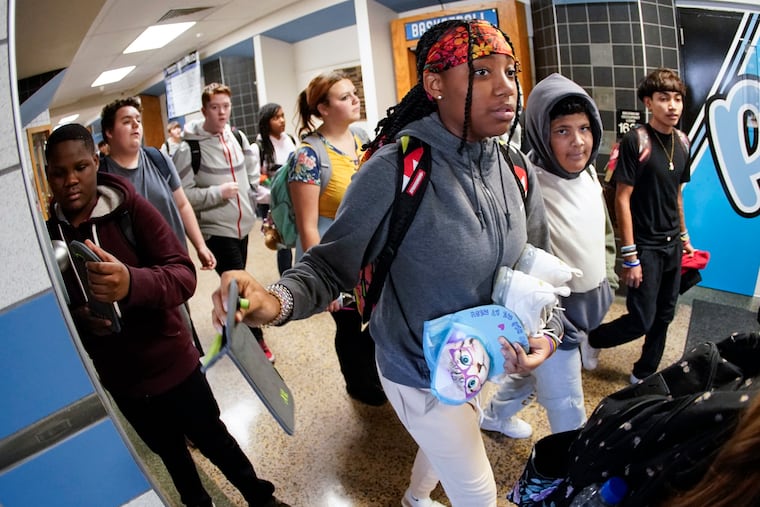
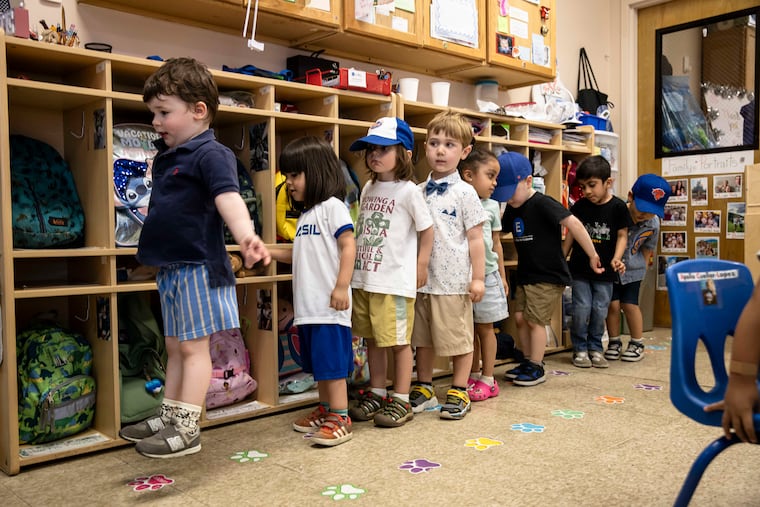
When students put their phone away for the day, they are more focused in the classroom, and their teachers are more satisfied with the classroom atmosphere.
Those are the findings released last month by Phones in Focus, a nonpartisan research initiative supported by the National Governors Association, after surveying 20,000 public school educators.
Those results also underscore that, in a digital age, a clear statewide standard that restricts cell phone use in schools is needed. Many states already have one; Pennsylvania does not.
It’s been 18 years since the iPhone debuted in 2007, and since then the impact of the technology on classroom learning has been a growing concern among many educators, parents, and policymakers. Frequent access to cell phones during the school day can contribute to distractions, cyberbullying, and reduced engagement.
As the mother of four children in public schools, I am one of those concerned parents and policymakers.
Bill to ban phones
That’s why I introduced the bipartisan House Bill 1814, which would prohibit students in public schools from using or possessing a cell phone during the school day. Students would be required to secure their phones in a way that prevents access until the end of the school day — in a hallway locker or lock bag, for instance — with exceptions for certain emergency and medical needs approved by school authorities.
Some Pennsylvania school districts already have policies to limit phone use, but these rules vary widely across districts and can be inconsistently enforced.
Twenty-two other states have a bell-to-bell ban, also known as an “away for the day” policy, according to Education Week. Eight other states restrict cell phone use only during instructional time.
By reducing in-school access to cell phones, we can create a more focused, respectful, and productive learning environment.
Polling shows that support for restrictions is on the rise. Nearly three-quarters of U.S. adults support banning phones in high school and middle school classrooms, and nearly half support a bell-to-bell ban, according to recent polling by Pew Research Center.
My bill hasn’t yet reached the full chamber for a vote, but House members are paying close attention to this issue. Recently, the House Education and Health committees held a joint hearing, at which educators and experts detailed the academic, emotional, social, and safety benefits of restricting cell phones in schools.
Negative effects
“Without phones as a distraction, students are more focused and present,” said Lisa Graham, a school counselor at Seneca Valley Intermediate High School in Butler County, which implemented a bell-to-bell ban this year.
Mitch Prinstein, chief of psychology for the American Psychological Association, said device use contributes to psychological problems and leads to poor academic achievement, both for the student using the device and the student sitting behind them. Yet high schoolers report using their phones as much as 20 minutes per hour during the school day, predominantly for social media and AI platforms, he said.
“Youth themselves know that they are using devices too much and are now experiencing what scientists refer to as digital stress,” Prinstein said.
Beth J. Sanborn, president of the Pennsylvania Association of School Resource Officers, said restricting phone use during the day makes schools safer.
She said students sometimes use their phones to continue arguments or plan fights. In an emergency, she said, access to phones makes it harder for students to focus on emergency plans and instructions from school staff.
“In crisis situations, cell phones create chaos,” Sanborn said.
The evidence is clear: By reducing in-school access to cell phones, we can create a more focused, respectful, and productive learning environment in every classroom, and we can encourage healthier interactions among students.
Perhaps most importantly, it would reduce the burden on teachers to deal with digital distractions, allowing them to focus on teaching our children.
State Rep. Mandy Steele, a Democrat from Allegheny County, represents Pennsylvania’s 33rd House District. She is the sponsor of legislation to ban cell phone use in Pennsylvania schools.