After visiting historic sites from the Civil Rights Movement, I feel even more strongly about retaining the President’s House slavery exhibits
Visiting the sites was especially profound at a time when other forces seek to erase, minimize, or redefine the complicated history that shapes this evolving experiment we know as the United States.

The Lorraine Motel in Memphis, Tenn., where the Rev. Dr. Martin Luther King Jr. was assassinated in 1968.
The convenience store in Greenwood, Miss., where Emmett Till was falsely accused of flirting with a white woman in 1955 — and was brutally murdered because of that lie.
A fully immersive bus ride experience in Montgomery, Ala., where Rosa Parks’ refusal to give up her seat a few months after Till’s death began the public transportation boycott that lit the spark of social change.
Earlier this month, I joined about three dozen people on a journey to visit some of the historic sites throughout the South that defined the Civil Rights Movement. I traveled with a group of seminary students, pastors, and ordinary folks connected with the Campolo Center for Ministry at Eastern University in St. Davids, Delaware County. Each of us is committed to the work of achieving social justice in our communities, and our journey — which was arduous physically and emotionally — helped us learn more about many of the sites that frame the nation’s civil rights story.
And for those of us with Philadelphia connections, the trip seemed to hit particularly close to home.
Visiting those sites was even more profound at a time when other forces seek to erase, minimize, or redefine the complicated history that shapes this evolving experiment we know as the United States of America.
Our city has seen that fight play out firsthand in the efforts by the White House to remove references to the history of enslaved people at the President’s House Site on Independence Mall.
While the slavery exhibits have been partially restored pending the outcome of an appeal, my visit to those faraway memorials served as a reminder to me that it is precisely this complicated reality that we must fight to preserve.
However, it’s more than just monuments and markers that contain our history. Our collective narrative exists in the recesses of our memories. It’s in the stories that we share. It’s in the pain from which we try to heal and in the victories that fuel our determination to push forward.
One of the most profound experiences our group had was in Selma, Ala., where we crossed the Edmund Pettus Bridge.
More than 60 years ago, hundreds of men, women, and children were viciously attacked as they attempted to cross this same expanse on a protest march to the state Capitol in Montgomery seeking equal justice.
It became to be known as “Bloody Sunday” and — because the confrontation was caught on camera and televised on the news — it was a significant turning point in the movement.
While we crossed that same bridge, we did so without the terror or the violence that occurred there six decades before us. There were no police mounted on horses. No tear gas fired. No racial epithets being shouted our way.
Instead, we shared quiet but meaningful conversations about the state of our country. We discussed how we would continue to work to make things better. We walked across that bridge with deep gratitude that those who preceded us sacrificed their bodies so this multiracial group could even be on such a journey together.
Some 20 years ago, the bravery of those marchers inspired me to create the Bridge Walk for Peace here in Philadelphia. For nearly two decades, I have gathered a small group of brave souls at dawn on the Philly-side of the Ben Franklin Bridge on April 4 — the date when Dr. King was killed 58 years ago.
We walk every year — rain or shine, warm or frigid — with the goal of gathering at the bridge’s highest point in prayer at 7:01 a.m.; the timing is in itself another kind of tribute — Dr. King was fatally wounded on the balcony of the Lorraine Motel at 7:01 p.m. Philadelphia time.
If you don’t tell the truth about your history, you’ll always be bound by the lie.
These acts of commemoration require a commitment, not just to show up at a meeting point, but to do the hard work every day that often goes unnoticed and unacknowledged. They serve as the foundation of any effort to effectuate change that pushes our society forward — despite attempts to drag us backward into the past.
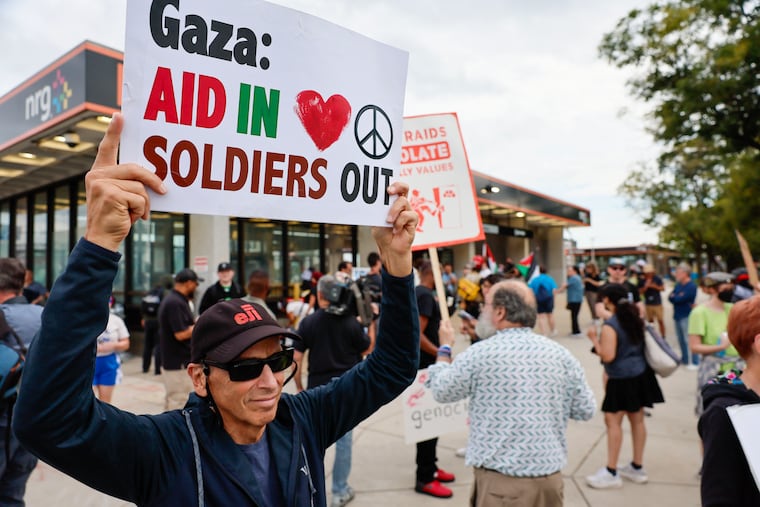
Shortly before I began this pilgrimage, I stood at a rally led by the Avenging The Ancestors Coalition (ATAC) protesting the removal of the panels that tell the story of the people who were enslaved at the President’s House — the attempts to sanitize a story that needs both the ugliness and the beauty in depicting the history that we as a people share.
It’s been said that, if you don’t tell the truth about your history, you’ll always be bound by the lie. We have too much promise and potential to let lies hold us back. If the story is uncomfortable, let’s learn from the discomfort — not pretend it isn’t there. The firmer our terrain, the better traction we’ll have as we pursue our path. Anything less would put us on a slippery slope that ultimately crumbles beneath our feet.
The Rev. David W. Brown is one of the founders of Philadelphia’s Bridge Walk for Peace — one of the nation’s longest observances commemorating the assassination of the Rev. Dr. Martin Luther King Jr.