The Senate must reject Trump’s extremist nominee for the U.N.
Other countries will rightly see Jeremy Carl’s racist and antisemitic views as abhorrent. As a member of the Senate Foreign Relations Committee, Sen. Dave McCormick must reject this nomination.
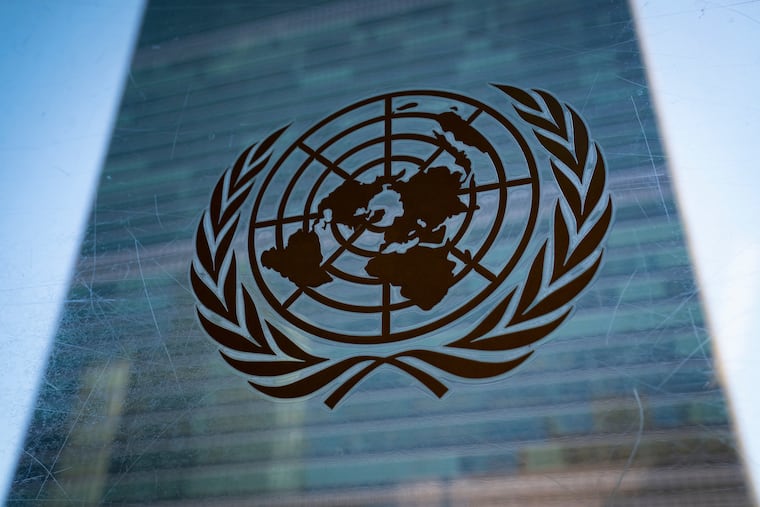
When President Donald Trump and Secretary of State Marco Rubio gutted the U.S. Department of State last year, they said they were doing it to make America “safer, stronger, and more prosperous.” Yet, Trump’s nominee to be assistant secretary of state for international organization affairs, Jeremy Carl, is a white supremacist conspiracy theorist who would undermine the United States’ standing at the United Nations and destroy our relationships with countries around the world.
As former American diplomats, we’ve worked to promote human rights globally. We know the inner workings of this world and can say unequivocally that Carl would be a grave threat in this post, and his nomination must be resoundingly rejected.
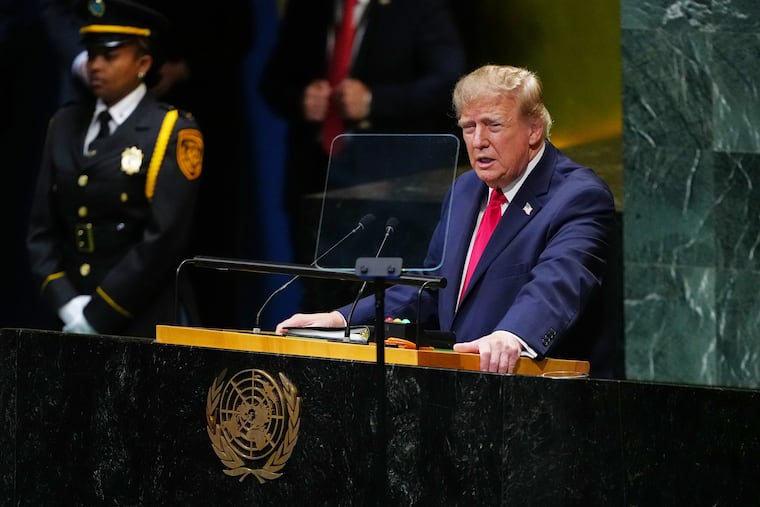
The assistant secretary of state for international organization affairs is the architect of U.S. policy at the United Nations and across a wide range of multilateral arenas. Few outside diplomatic circles have heard of this position, but it’s one of the central posts through which the U.S. interacts with the world.
For example, when we stop defending fair labor standards in places like Bangladesh or Vietnam, American workers pay the price as competitors in those countries cut corners and flood markets with cheaper goods. When we look away from corruption and repression in energy-rich regions, instability follows — driving up oil prices and hitting Americans at the pump. When we ignore humanitarian crises until they explode, we spend far more on aid and crisis response than it would have cost to prevent them.
These aren’t far-off problems. In an interconnected world, they’re immediate issues that impact American jobs, consumer prices, and national security. That’s why this role is so crucial.
Carl is moving quietly ahead in the Senate Foreign Relations Committee, on which Pennsylvania Sen. Dave McCormick serves, and his nomination hearing is slated for Thursday. The Senate should stand up for American values and the interests of the American people by rejecting this dangerous nominee.
He has promoted political violence, including calling for the execution of the president of the American Federation of Teachers.
Carl is not just unqualified for the role — he has no experience working with the U.N. — he represents a dangerous rejection of the ideals of the Universal Declaration of Human Rights: that all humans are born with equal dignity and rights.
Carl has promoted the racist and antisemitic “great replacement” conspiracy theory — claiming that there is a covert effort led by elites to replace white people in Western countries through mass migration and high birth rates of people of color, Muslims, Jews, and immigrants.
He has promoted political violence, including calling for the execution of the president of the American Federation of Teachers, a Jewish lesbian. He claimed that identifying as transgender is “somewhere between demonic and laughable.”
Though he has deleted thousands of his inflammatory tweets, these views are memorialized in his book, The Unprotected Class: How Anti-White Racism is Tearing America Apart. He gave a speech last year titled, “On the Persecution of Whites in America.”
These are not stray remarks. They reflect who Carl is, and the message the U.S. would send by giving him a senior diplomatic post. They are so alarming that the Global Project Against Hate and Extremism wrote an entire article about his work to champion “anti-white racism.”
If Carl becomes the face the U.S. presents to the world, we’ll be telling the world that we care about only one group of people. We also will undermine our interests, because in our racially, religiously diverse world, other countries will rightly see Carl’s views as abhorrent.
A world where human rights are optional and the United States fails to hold abusers accountable is a world where corruption grows, conflicts fester, and authoritarian regimes operate unchecked. The result: increased human suffering at home and abroad, higher prices for Americans, fewer protections for American workers, and greater instability that threatens our own security.
Last month, the Trump administration issued an executive order withdrawing the U.S. from 66 organizations, including 31 U.N. mechanisms. The U.S. was not a significant political or financial supporter of all of them, so the substantive consequences of withdrawal are debatable.
Yet, the symbolism is clear: The U.S. is disproportionately targeting mechanisms that serve the most vulnerable and marginalized, like U.N. Women and the Permanent Forum for People of African Descent, or those tackling the climate crisis, like the U.N. Framework Convention on Climate Change. In other words, being unqualified, opposed to universal human rights, and seeking to undermine global governance is the point of Carl’s nomination.
We know what effective diplomacy looks like. It is steady, principled, and grounded in the belief that America’s power is greatest when guided by its conscience. It also treats the rights and dignity of the most vulnerable as a priority, not an afterthought.
When we lead with our values, we build coalitions that prevent wars and foster prosperity. When we abandon them, chaos fills the vacuum — and history shows that chaos never stays overseas.
Desirée Cormier Smith was the inaugural special representative for racial equity and justice. Jessica Stern was the special envoy for the advancement of the human rights of LGBTQI+ persons at the U.S. Department of State. They are now both cofounders and copresidents of the Alliance for Diplomacy and Justice, promoting human rights as a central pillar of U.S. foreign policy.

Inquirer Opinion Newsletter