As the nation nears a milestone, Pa. high schoolers assess the state of ‘life, liberty, and the pursuit of happiness’
The Committee of Seventy’s annual essay contest asked students to reflect on the 250th anniversary of the signing of the Declaration of Independence.
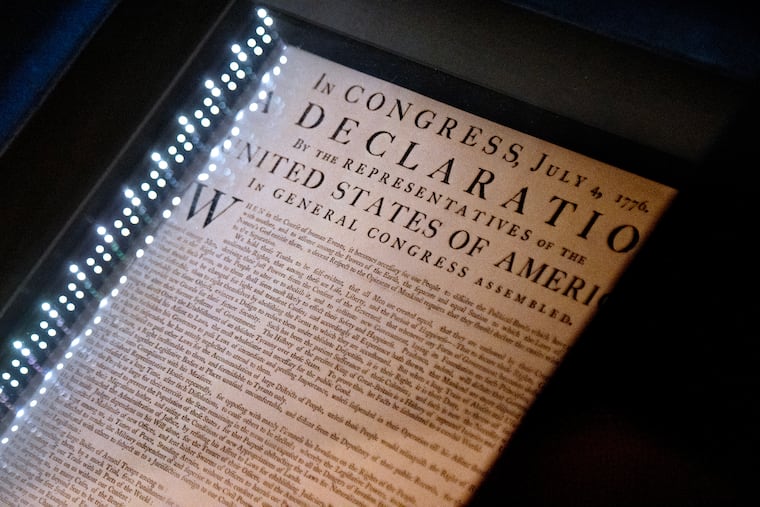
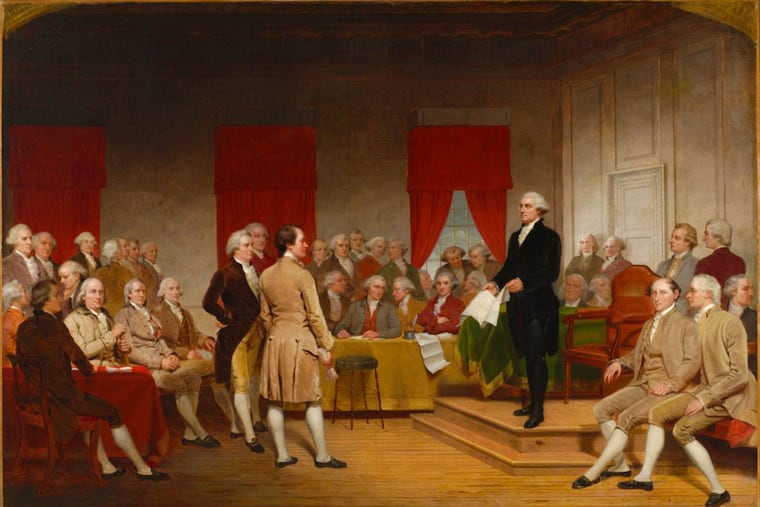
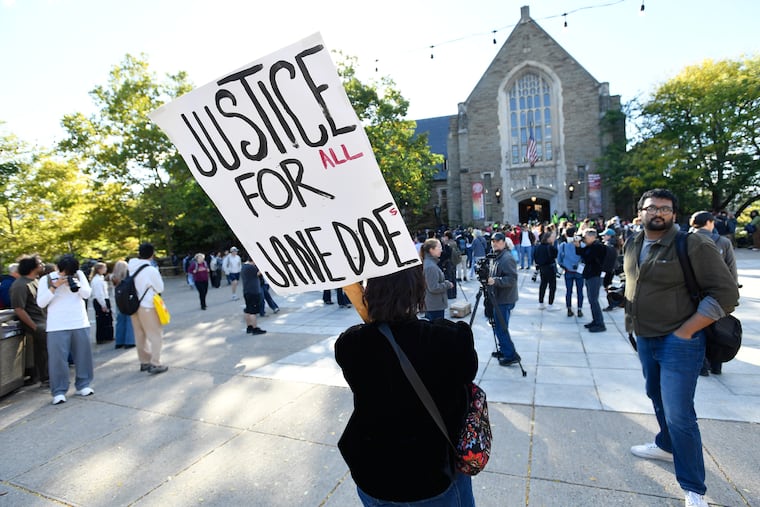
Earlier this year, the Committee of Seventy, the nonpartisan, nonprofit group devoted to government improvement and protecting voting rights, asked high schoolers around the state to write an essay based on the 250th anniversary of the signing of the Declaration of Independence.
“In this anniversary year, how well do you think the American people and their government are doing at upholding equality, human rights and ‘life, liberty, and the pursuit of happiness’?” read the prompt in the committee’s annual essay contest, which is part of its “Can We Talk?” student dialogue initiative.
The grand prize was won by Laura Messamore, a senior at the Baldwin School in Montgomery County. The runners-up were Elizabeth Grohsman, a junior at Cheltenham High School in Montgomery County; Yoyo Lu, a junior at the Baldwin School; and Alivia Watkins, a sophomore at Northwest Area High School in Luzerne County.
Here are a few excerpts from the honored essays:
Life, liberty — and the bus stop
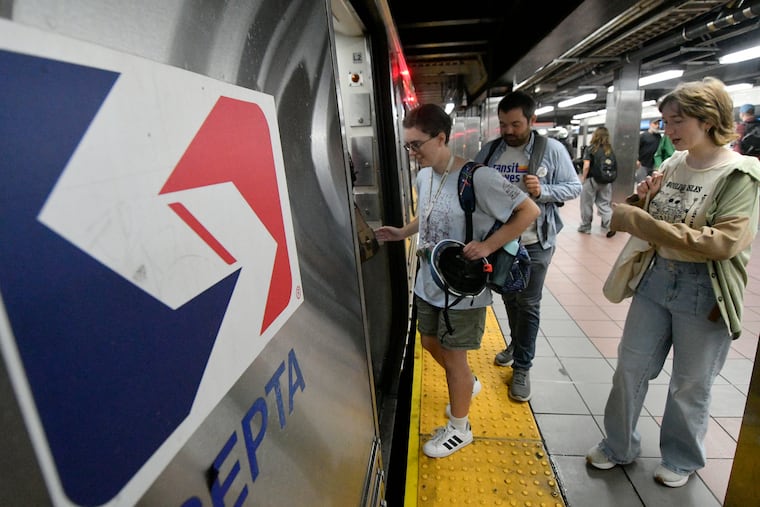
The Declaration of Independence promises Americans the right to “life, liberty, and the pursuit of happiness,” secured by a government accountable to the consent of the governed. Two hundred and fifty years later, those ideals are dissected in courtrooms, legislatures, and nightly political commentary. But if you want to see how we’re actually doing? Check the bus stop.
In most American cities, a bus stop is a stick in the ground with a number on it. No roof, no seat, no lights. Just you, standing six inches from an F-150 doing 60, getting slow-roasted in August or flash-frozen in January. And if you don’t own a car (which often means you’re working two jobs, or you’re 73, or you’re 16), this is your daily reminder that some people get heated leather seats and some people get a metal pole next to an Arby’s.
So how are we doing at upholding those founding promises? Honestly? We’re all over the place.
Transportation isn’t some nice extra. It’s how liberty actually happens. Miss the 6:15 bus because it showed up at 6:11? You’re late to work. Do that twice and you’re job hunting.
Then there’s equality, which is really just a nice word for “some people matter more than others.” The rich suburb gets pristine sidewalks and a transit center with real-time screens. Three miles over? That pole and some hope. Your right to pursue happiness looks completely different depending on your address.
Your right to pursue happiness looks completely different depending on your address.
Bus stops also show you who actually gets a voice. When routes disappear or stops move, riders are rarely consulted. The people most affected usually have the least power to change the outcome.
But sometimes things actually work. People show up to city council meetings. They explain that their neighbors shouldn’t have to dodge traffic to get to work. And every once in a while, the city puts up a shelter. Installs a bench.
The pattern shows up everywhere. We’ve gotten better at some things. More people can vote. Gay people can get married. People with disabilities have legal protections. Those aren’t small wins. But at the same time, people are dying younger, medical bills bankrupt families, and whether you get a real shot at happiness still depends heavily on where you were born.
Two hundred and fifty years later, the bus stop asks a simple question: Who did we actually build this place for? You can tell by whether there’s somewhere to sit. We’re doing OK in some spots, failing hard in others, and mostly stumbling through the middle. The ideas in the Declaration still hold. We just keep forgetting they were meant to apply to everyone, not only the people who don’t need the bus.
Laura Messamore, senior, The Baldwin School
A toppled dream
John Locke claimed everyone was born equal and free, and the government should exist solely to serve the people. America’s Founding Fathers assumed this philosophy because they knew what happened when power was abused. They revolted, not out of convenience, but out of necessity. The revolution was not simply against the British, but also a revolt against injustice. America was manufactured as a test with self-governance, established on the pledge that no one could stand above the law.
Nonetheless, modern America struggles to honor its promises. Economic inequality runs rampant, making success more reliant on background instead of effort. Millions cannot get access to healthcare, housing, and education, toppling their ability to pursue the “American Dream.” Concurrently, flaws in the electoral system like voter suppression and gerrymandering, sabotage the foundations of democracy. Self-governance has become controversial and people feel powerless. The American dream is actively crumbling; work hard, follow the rules, and still your children are not guaranteed a better life.
Perhaps, the most uncomfortable belief that gained popularity is selective accountability. When individuals at the top hide behind money and influence from consequences they should absolutely face, the vision of justice becomes distorted. Selective accountability rots public trust and sends a dangerous message, that equality may exist theoretically, but not in practice. We cannot claim to honor liberty while allowing privilege to decide responsibility.
Elizabeth Grohsman, junior, Cheltenham High School
Expanded equality
The promise that “all men are created equal” has expanded beyond its original boundary. The recent view of a same-sex couple marrying freely would have been unimaginable in 1776. This highlights the document’s living spirit which is to finally include those it initially ignored. Laws like the Americans with Disabilities Act move us from basic words toward a society where liberty is accessible to everyone. The “consent of the governed” grows more tangible when a record number of women and people from diverse backgrounds help shape our laws. These victories represent a nation slowly learning to see its own people by demonstrating the foundational idea of equality can spread to those its authors never imagined.
Yoyo Lu, junior, The Baldwin School
Confronting shortcomings
The enduring strength of the United States lies in its ability to confront its shortcomings. The Declaration of Independence did not create a perfect nation, it created a standard. Each generation has been called to interpret and expand the meaning of life, liberty and the pursuit of happiness. Progress has never been immediate or easy, but it has been real.
Alivia Watkins, sophomore, Northwest Area High School
Working twice as hard
Growing up in a Guatemalan family, I see how discrimination shaped opportunities. My father came to this country seeking a better life, but the path was not easy. He faced judgments about his intelligence, his status, and his ability to speak English. Questions about where they’re really from or jokes about accents are daily reminders that they aren’t seen as fully American. As his daughter, I learned early that equality in America is not experienced the same way by everyone. I watched families like mine work twice as hard to prove themselves, even when they were just as capable as anyone else.
These everyday moments of discrimination show that the pursuit of happiness is not equally accessible. It is shaped by race, culture, and stereotypes.
Nicole Diana Barrera, senior, Mapletown High School
Feeling like an ‘outsider’
Being a young Black woman in America I have experienced racism even though society acts as if it is a thing of the past. I often felt like an “outsider” and an “outlier” in my own community. I always dreaded the month of February because my history teachers would go into depth about how and why slavery impacted this nation. My peers never took the topic seriously and instead they would often make jokes about lynchings, whipping and harming each other just as slave masters once did to my ancestors.
Many people of color often feel like an “outlier” in this nation. We are living on stolen land yet people can dictate who does and doesn’t belong.
Zoe Kelly, junior, Abington High School
A mixed bag
The picture for the U.S. in 2026 is a mixed bag. In many ways, America has moved closer to its founding promise. However, serious gaps remain between the principle of the Declaration, and the practice that America uses. Economic inequality has widened recently, making the “pursuit of happiness” less accessible for some than others. Access to quality education, safety, and reliable healthcare often depends on location, creating disparities in opportunity. When opportunity is uneven, liberty becomes theoretical rather than real.
On this 250th anniversary, the Declaration stands less as a finished achievement as it is a compass for the future of America. The U.S. has not fully realized “life, liberty and the pursuit of happiness” for all, but it has expanded the circle of those included. The test for future generations is whether we will narrow that circle out of fear or widen it in faith.
Mark Papakirk, senior, Central Bucks South High School

Inquirer Opinion Newsletter