Time to reengineer democracy
In 1787, the U.S. Constitutional Convention issued a blueprint for representative democracy. Today, we are in a crisis because democracy has failed to scale up to match population growth since.
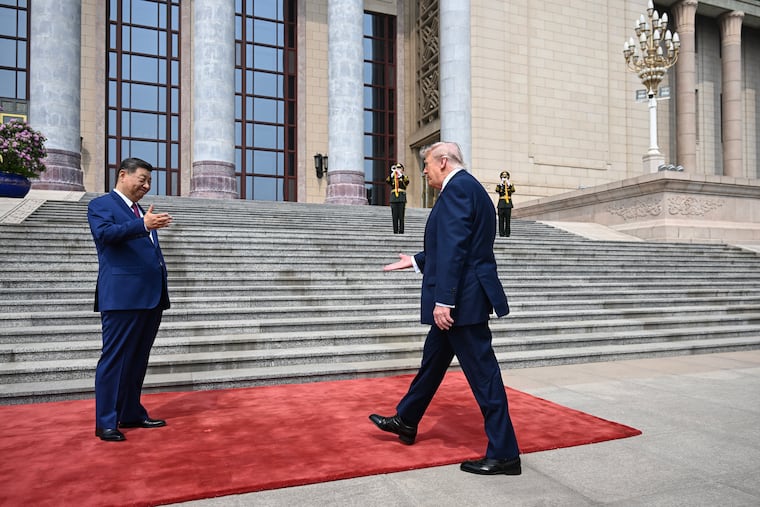
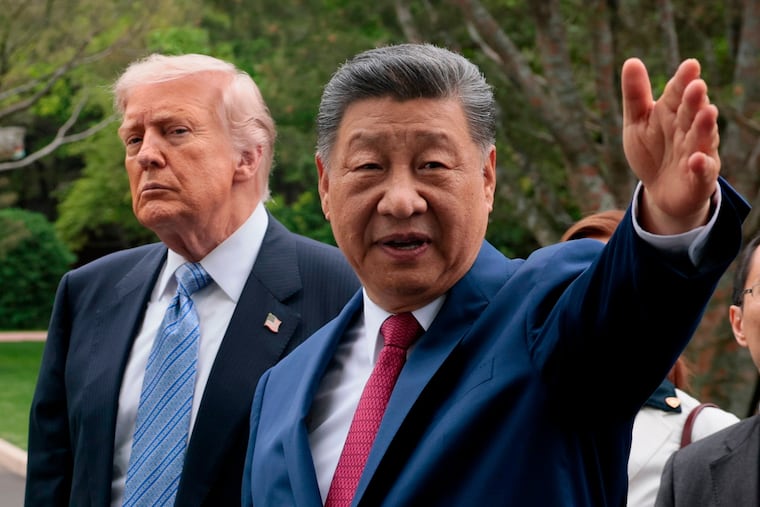
Last month’s summit in Beijing between Donald Trump and Xi Jinping, the presidents of the world’s largest economies, drove home the magnitude of the crisis facing democracy. At the scale of decisions affecting billions of people, nobody was properly represented.
Trump and Xi were negotiating for all of us, but representative of hardly any of us, whether American, Chinese, or, like most of the world, completely voiceless in the selection of either leader.
Americans have a bigger say than most nations in the selection of their leaders, but when the leader of the world’s preeminent representative democracy is openly envying the power of the leader of the world’s biggest autocracy, we know that democracy is in trouble.
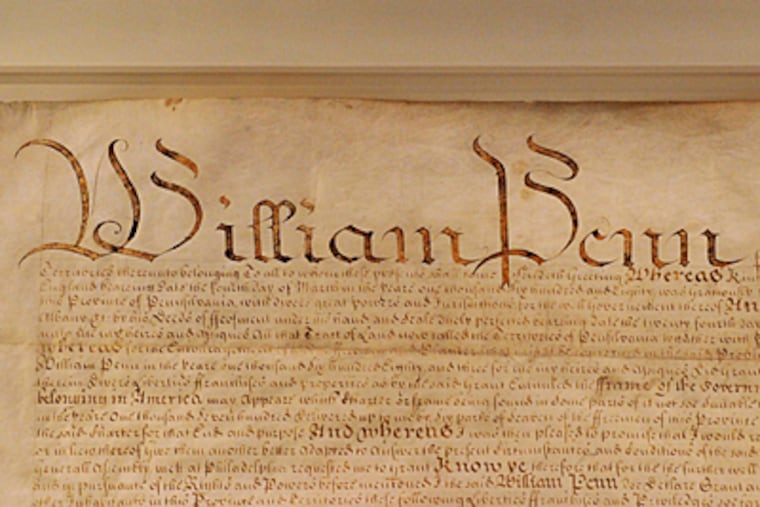
In 1787, the Constitutional Convention in Philadelphia hammered out a blueprint for representative democracy. Today, we are in a crisis because democracy has failed to scale up to fit the nearly 100-fold growth in population since then. We need to think of alternative ways of ensuring that diverse interests and diverse expertise are represented for the good of the people. We need a new constitutional convention.
This is not the first time that democracy has failed to scale.
Athenian direct representation was only barely functional at the scale of the Greek city-state. Even though only male landowners were enfranchised, it was still impossible to accommodate them all at once in the Pnyx, so each voter was required to show up only for a subset of the votes.
It took another two millennia to invent representative democracy: a manageable number of legislators, each of them elected to represent the interests of thousands of people. The first U.S. census in 1790 recorded just shy of 4 million inhabitants. The newly formed House of Representatives had 65 members: roughly one per 60,000 people.
Today, over 331 million Americans are represented by 435 members: a ratio of roughly 1 to every 760,000. Not only is each member tasked with representing so many more people, but the diversity of interests in each constituency and the sheer range of issues that must be addressed at this scale mean that practically nobody is properly represented on all issues.
Electors face impossible choices. The chance that any one candidate represents all of a voter’s views is vanishingly small. Casting a ballot often feels like selecting the lesser of several evils, and is at best a compromise forced by the need to decide which issue is most important. At worst, voters disengage entirely or resort to preferring qualities that would be more suitable for dominance contests among apes. These problems are aggravated because social media has fractured communal purpose, and gerrymandering is splitting natural constituencies.
The whole approach to democratic governance needs to be reengineered from the ground up.
The possibility of electing leaders with autocratic tendencies has always been a weakness of democracy. This weakness is magnified at scale: Larger, more diverse constituencies can come to seem ungovernable, favoring politicians who project strength. We need to grapple collectively with these problems and find better ways of allocating our votes among representatives whose values and expertise match the scope of their powers.
How might this be done?
The whole approach to democratic governance needs to be reengineered from the ground up. For example, the existing separation among legislative, executive, and judicial powers should be supplemented by erecting firewalls among different spheres of political decision-making.
Existing government departments (health, education, agriculture, defense, etc.) provide an initial sketch of where separate legislative bodies might be desirable. Separating legislative functions along these lines would serve to concentrate expertise where it is needed.
Legislation in one domain would no longer be encumbered by riders that belong in other domains. Funding of health or science initiatives would not be held hostage to disputes about unrelated matters. Reducing the scope of individual legislators would also make them less prone to targeting by the full spectrum of lobbyists.
We also need to rethink the relationship between geography and representation. Some areas of governance are inherently more tied to location than others. The Nobel Prize-winning work of Elinor Ostrom showed how management of scarce common resources is often best handled through local self-governance. People whose livelihoods depend on shared resources they jointly control make better decisions than those acting under rules imposed remotely.
We also need to rethink the relationship between geography and representation.
Current political systems (whether democratic or not) aggregate legislative and economic power hierarchically over increasingly large geographic areas. This favors decisions by people who have little or no skin in the game when it comes to good stewardship of local resources. Hence, in the domains of agriculture or the environment for example, it makes sense that one’s choice of representative should be tied to your location.
But for other issues, such as justice and civil rights, national defense, or international trade, a voter’s interests and values may be better represented by someone living far away than by local politicians. At-large representation could provide a mechanism for voters to select representatives for domains where geographic location is less important. For some domains, a mixture of local and at-large representation may produce the best deliberative bodies and the greatest sense by voters that their views are adequately represented.
These ideas merely provide one set of suggestions. They admittedly bring new problems with them. An obvious challenge for multiple specialized legislative bodies is that of coordination among them. Possible solutions to be explored include constitutionally mandated joint sessions. Elected delegations from one legislature could also have voting rights in another. Other solutions come from the power of the purse.
I suggest giving some of that power back to the people by allowing voters to allocate a certain number of shares of the government’s total revenue to various legislative bodies. A pacifist might opt to allocate zero shares to defense while splitting the remainder 50-50 between health and education, for instance. Other voters with different priorities could steer the money differently. Such a scheme would help to address “not with my tax dollars” complaints that are often heard when people don’t like some government programs that others believe essential.
In a pluralistic society we can be fairly confident that the allocations emerging from these individual choices would keep the essential parts of the government going via the wisdom of crowds. But there are many reasons for retaining some degree of top-down control. An elected body specializing in finance and taxation would be particularly important. This body could be constitutionally mandated to control some percentage of the total budget, say 30% with the other 70% being allocated through voter preferences.
The finance body might itself consist of a mixture of at-large representatives and district-based representatives. It could be constitutionally mandated to allocate a substantial portion of revenues to domain-crossing projects, such as education that serves agriculture, or medical research that serves defense department needs, and it could also provide funding in cases where an urgent or unanticipated need has arisen.
I present these ideas in the spirit of trying to think creatively about how we can harness democracy for the large-scale challenges of the 21st century. I am sure that all of these proposals can be improved upon collectively through the mechanism of a constitutional convention.
Pie in the sky? Clearly this is not an overnight project. The Philadelphia Convention took place 11 years after the signing of the Declaration of Independence. The deliberations that occurred there were a matter of intense public scrutiny.
The Constitution took another two years to be ratified. Compromises were necessary and were made. We are still living with the effects of some of those compromises today. But something workable emerged, although it notoriously failed to treat all people as equal.
The system we have is no longer suited to a modern society in which hard-won gains of underrepresented groups are being rolled back by a Supreme Court that regards the application of the Constitution more as an academic exercise than a serious attempt to deal with all that has changed in the past 239 years.
Calls for a new constitutional convention, allowed under the Fifth Amendment, have already made progress with resolutions in multiple state legislatures. Such calls have so far mostly been associated with individuals and organizations on the American right wing. But some on the left are beginning to argue that a new convention should not be taken off the table.
Those on both wings can be suspicious of the motives of those on the other side, but all should be able to take seriously the idea that the United States has outgrown the clothes originally tailored for it almost 250 years ago.
Colin Allen is a distinguished professor of philosophy at University of California, Santa Barbara and a Public Voices fellow of the OpEd Project.