Kenyatta Johnson: Broader impacts of Supreme Court decision will be felt in Mid-Atlantic states
The court has made it harder for minority voters and civil rights groups to challenge electoral maps that dilute African American or Latino voting power.
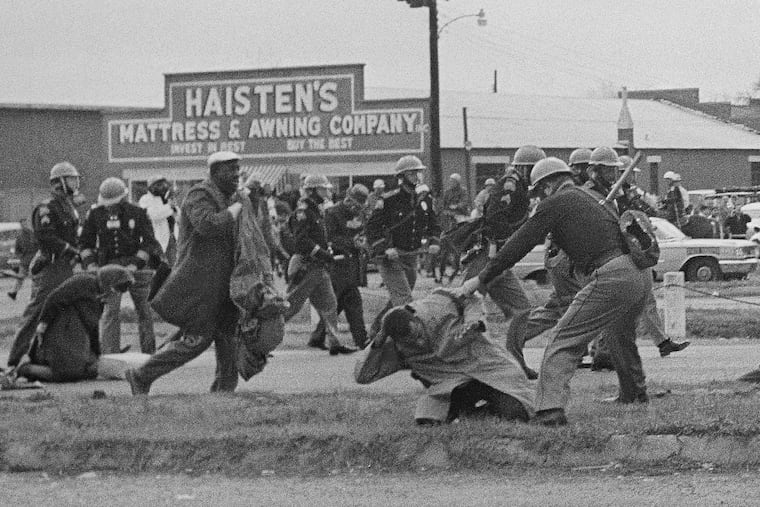
The U.S. Supreme Court did not repeal the 1965 Voting Rights Act in Louisiana v. Callais, but by hollowing out Section 2 — the law’s last meaningful enforcement mechanism — the court has moved the United States closer to a democracy in which minority voting power exists largely at the mercy of state legislatures.
With its decision in Louisiana v. Callais on April 29, the justices struck down Louisiana’s congressional map. This latest court ruling shows that the current political climate in America is to strike down decades of advancements from diversity, equity, and inclusion (DEI) to civil rights, thus rolling back the hands of time when it relates to African Americans and other historically repressed groups in this country.
For decades, Section 2 of the Voting Rights Act enabled courts to intervene when electoral maps diluted the voting strength of racial minorities. It was the primary legal tool for challenging discriminatory district lines after the court’s 2013 decision in Shelby County v. Holder dismantled federal preclearance requirements. Now, the Supreme Court has sharply narrowed that remaining avenue.
In practical terms, the decision makes it harder for voters and civil rights groups to challenge electoral maps that dilute African American or Latino voting power.
Before this ruling, Section 2 allowed courts to require states to draw congressional districts that gave Black and Latino communities a realistic opportunity to elect candidates of their choice. Now, challengers face a much steeper constitutional hurdle if race appears to play a major role in redrawing those districts.
Race remains deeply tied to voting patterns in the South. Congressional district maps are not abstract geometry; they are instruments of political power. When legislatures can fracture communities of color without meaningful federal oversight, representation shifts dramatically.
The consequences are already evident.
Congressional district maps are not abstract geometry; they are instruments of political power.
On May 11, the Supreme Court ruled that Alabama can use a congressional map that a lower court had blocked for violating Section 2 of the Voting Rights Act, although an appeals court blocked that map again on Tuesday. Other Southern states are following suit. The decision opens the door to mid-decade redistricting battles that could reshape congressional representation well before the next U.S. Census in 2030.
The Voting Rights Act was born of the violence and exclusion of the Jim Crow era. It was designed not merely to prohibit explicit discrimination, but also to confront systems that weakened political participation by traditionally excluded groups through structure and design. Louisiana v. Callais signals that the high court no longer views that mission as constitutionally acceptable.
This decision will have uneven effects across the country, but its broader impact will likely be felt for decades to come in both Southern and Mid-Atlantic states — including Pennsylvania, New Jersey, and Delaware — through redistricting, election litigation, and reduced representation for minority groups in Congress, and in statehouses and state senates nationwide.
What’s left of the Voting Rights Act still exists on paper, but it is a hollow shell of itself, and that is not good for American democracy.
Kenyatta Johnson is president of Philadelphia City Council. He represents the 2nd Council District, including parts of Center City, South Philadelphia, and Southwest Philadelphia.

Inquirer Opinion Newsletter