Civility in the courtroom should be a model for our public life
The courts remind us that American justice is built on adversaries treating one another as colleagues, with respect and decency.
Public discourse today feels like a shouting match — hostile, polarized, and quick to “cancel” those who disagree.
Yet in the courtroom, there remains a model for conflict that doesn’t turn toxic. There, fierce disagreement unfolds with civility when the stakes couldn’t be higher. The norms that make justice possible serve as an example for the public square.
Shakespeare’s famous line: “The first thing we do, let’s kill all the lawyers,” is often quoted as a jab. But in Henry VI, the line is spoken by a would-be tyrant’s accomplice.
Shakespeare understood that to impose tyranny, one must first destroy the lawyers — the guardians of due process and rational debate. Rather than mock the profession, the line underscores the indispensable role of civility in preserving liberty, justice, and our way of life.
Reasonable people can differ
Law is built on the recognition that reasonable, ethical people can look at the same facts and reach opposite conclusions.
One lawyer argues for conviction, another for acquittal. One sees a statute as broad, another as narrow. Their task is not to despise each other, but to argue — forcefully, yes, but intellectually within rules, procedures, and professional decorum.
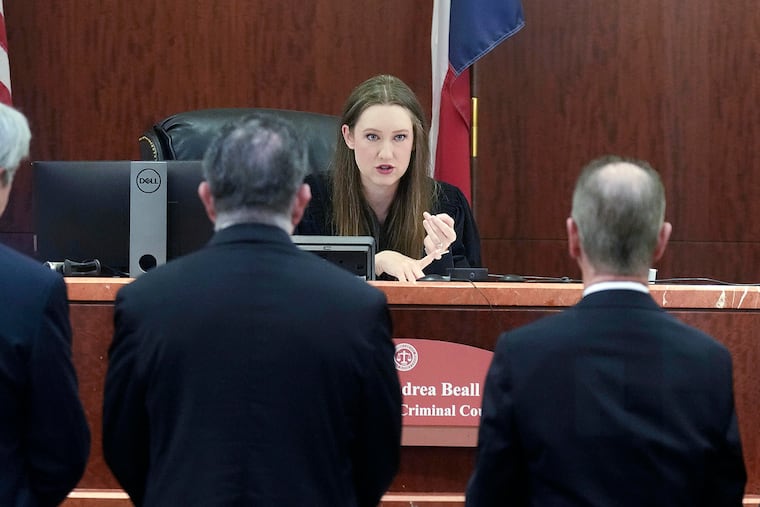
In court, a lawyer does not shout down an opponent. A judge does not belittle the losing side. Objections are made in accordance with established procedures and professional standards. Rulings are issued without personal attack.
Disagreement is not only inevitable but healthy. Truth is sharpened by opposing arguments.
This disciplined approach requires patience, listening, and respect. The process is grounded in fairness and reason. Contrast that with today’s public square — particularly social media. People who differ are demonized. Disagreement is cast as patriots vs. traitors. No wonder our democracy feels frayed.
The legal profession offers a vital lesson: Disagreement is not only inevitable but healthy. Truth is sharpened by opposing arguments. What keeps the system intact is the civility with which those arguments are conducted.
Picture a trial: The gavel strikes. Two sides rise, ready to battle over questions of fact and law. The plaintiff’s attorney delivers a fiery close. The defendant’s attorney responds just as vigorously.
It is possible to disagree passionately without resorting to insults or treating opponents as enemies.
Afterward, no matter the outcome, the two shake hands. The judge thanks both for their professionalism. Each has fought hard, yet neither has questioned the other’s intent or integrity. Even in profound disagreement, opponents are not enemies. Respect prevails.
Imagine if political debates resembled appellate arguments: sharp, disciplined, but respectful. Imagine if social media mirrored courtroom decorum, where civility restrains the loudest voice and allows reasoned discourse to be heard.
It is possible to disagree passionately without resorting to insults or treating opponents as enemies.
Civility is not surrender
Of course, lawyers and judges are human. They sometimes fall short. Bar associations remind members of their duty of civility because the temptation toward hostility is real. Judicial misconduct, including poor courtroom demeanor, is policed in many states by independent boards and commissions.
But the profession understands that its legitimacy depends on restraint. When civility fails, the entire system suffers. So does democracy.
Civility does not mean surrender. Lawyers cross-examine with intensity. Judges write sharply worded opinions. Citizens, too, can argue with passion. But passion that eclipses respect erodes the common good.
We are living in a moment in time when polarization tempts us to see neighbors as enemies. The courts remind us of a better way. American justice is built on adversaries treating one another as colleagues, with respect and decency, bound by a higher purpose.
That lesson could not be timelier.
P. Kevin Brobson is a justice of the Supreme Court of Pennsylvania.