Toomey: Getting rid of merchant ‘swipe fees’ would punish consumers
Credit cards ensure safety, speed, and efficiency. Trimming costs for restaurants and stores would create hassles for patrons and headaches for tipped workers.
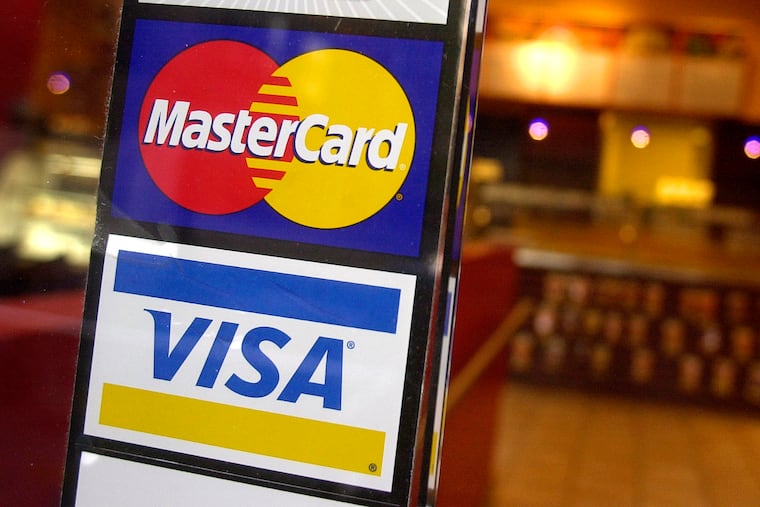
Imagine going to pay for a meal at a restaurant, only to be told you need to run two separate transactions — one for the meal, and another for the tax or tip. Or worse, you could be asked to pay part in cash because your card cannot be charged the full amount.
These are hypothetical situations, at the moment, but for Pennsylvania and Delaware consumers, local restaurants, mom-and-pop shops, and tipped workers — all struggling with rising prices — it could soon become reality.
Lawmakers in both states are considering legislation aimed at reducing interchange fees, commonly known as “swipe fees,” paid by merchants when customers use credit cards to pay for goods and services. In Delaware, House Bill 315 would forbid charging these fees on tips, while Pennsylvania’s House Bill 2090 would forbid them on sales tax charges. Both proposals attempt to lower costs for merchants, but will, if enacted, inconvenience consumers and cost tipped workers far more than merchants will save.
Harms consumers
The result will be disruption at checkout, longer lines, and more failed transactions. For example, some businesses may resort to requiring multiple forms of payment — card for part of the purchase, cash for the rest — while others may stop accepting cards for certain transactions altogether. That’s a step backward for convenience, safety, and efficiency. Small-business owners who can’t afford to set up a new payment system will have to reduce services or raise prices, which ultimately harms customers.
There is never a good time to add unnecessary burdens onto consumers and businesses, but now is an exceptionally poor time to do so. People are struggling — nearly 30% of Philadelphia residents are receiving healthcare and social assistance. These proposed changes would hurt our local economies and the nearly 30,000 small businesses in Philadelphia alone who are banking on transactions, tips, and more. The state could also miss out on critical sales tax revenue, especially as we prepare for major events like the Semiquincentennial and the FIFA World Cup, which are projected to infuse $1 billion into Philadelphia.
Creating uncertainty around card payments risks frustrating tourists and undermining local businesses at this critical moment.
Delaware’s proposal raises an additional concern for service industry workers. Tourism is the fourth-largest private employer in the state, while restaurant and food services are the third. By carving tips out of card transactions, the bill could unintentionally push gratuities back into cash at a time when Americans no longer carry cash. More than 50% of Americans under 50 typically don’t have cash on hand. This combination would lead to lower take-home pay for servers, bartenders, and hotel staff who rely on tips to make ends meet and support their families.
Costs to business
Beyond the very real impact on consumers and families, the operational and financial burden on small businesses would be significant. These proposals would require new hardware and software, employee retraining, and more complex accounting systems to reconcile split transactions. The price of software and a new point-of-sale system alone could cost businesses up to $2,000 a month.
On top of that, there is an increased risk of fraud and error when using cash. It’s also more expensive for a business to process cash than credit card payments.
The reality is that credit cards ensure safety, speed, and efficiency. Those protections and that convenience are not free, but they cost a lot less than most other forms of payment.
A secure digital transaction requires software and safeguards to prevent theft and fraud, which are financed by these fees. While merchants do not enjoy paying fees, the convenience enabled at checkout results in greater retail sales. And rates have remained stable over time, and are not the drivers of the affordability challenges we’re facing.
There are more effective ways to reduce costs for merchants, such as streamlining tax compliance, reducing regulatory burdens, and working with industry experts to improve efficiency and security within the payments system broadly.
Pennsylvania and Delaware lawmakers should reconsider proposals like restructuring credit card payments that would harm service industry workers, impose new operational burdens on small businesses struggling to break even, and turn everyday transactions into frustration.
Workers depend on tips, small businesses are navigating tight margins, and customers expect speed and reliability. Policymakers should focus on promoting economic activity, not needlessly complicating payments that will burden consumers, workers, and job creators.
Pat Toomey is a former U.S. senator from Pennsylvania and current adviser for Americans for Free Markets.

Inquirer Opinion Newsletter