Data centers pose big challenge for Pa.’s energy future
The concentration of information technology systems from AI to cloud computing has dramatically increased costs for the commonwealth’s energy consumers. It’s not going to get cheaper.
As we settle into the new year, the idea of “leftovers” might not be quite as appetizing as it was a few weeks ago, while we were relaxing with family and friends during the holidays. But 2026 greets us with a challenge that went unmet last year: securing Pennsylvania’s energy future in a way that benefits our economy, environment, and everyday lives.
Why is this a challenge? Because we are currently facing difficulties of our own making, or perhaps more accurately, the consequences of our own inaction. Like New Year’s resolutions, the solutions will take more than promises.
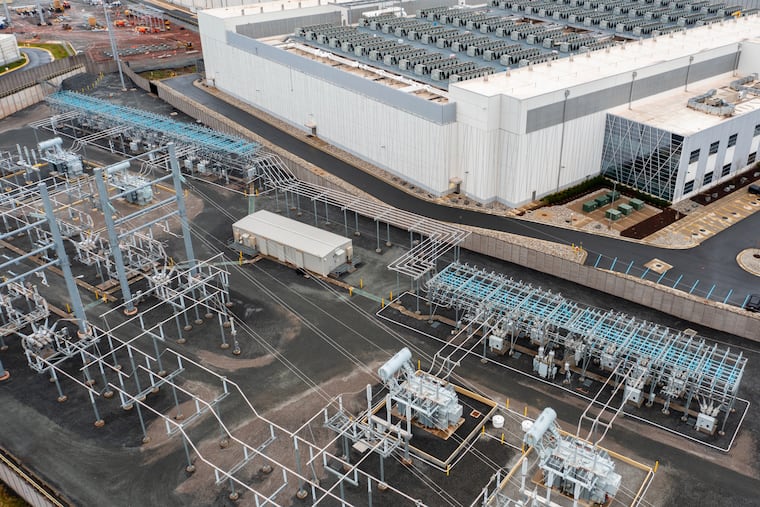
At the heart of the issue is the remarkable speed and intensity of data center development in Pennsylvania. According to the most recent report from the independent market monitor for the 13-state PJM regional electric grid, data centers have dramatically increased costs for Pennsylvania’s energy consumers by as much as $23 billion across the PJM footprint over the past three years.
Rising electric costs
In other words, the primary reason electric costs are going up, and what increasingly worries public officials about grid reliability, is existing and projected future energy demand from data centers. That demand shows no sign of slowing down.
To be fair, data centers provide vital construction and technology service jobs, can help build local tax bases, and are seen as essential to economic competitiveness and national security. But all this comes at a very real cost borne by citizens — including those who may benefit, and many who do not.
So, what does this mean for decision-makers?
First, we need to manage the frenzied rush to build data centers by enacting strong standards to protect communities and energy consumers. These measures include requiring data centers to directly pay for necessary grid connection and expansion costs to accommodate their demand, and securing additional, preferably clean, generation to meet their needs. This is essential to help ensure grid reliability, along with expanding other programs and policies to make our grid more efficient and electrons more abundant.
Data centers provide jobs, build local tax bases, and bolster economic competitiveness and national security. But at a very real cost.
Between recent efforts by the state Public Utility Commission to manage large energy user demand and legislation introduced in the General Assembly to address consumer and community concerns, we’re seeing the beginnings of a solution to several of these challenges.
These are urgently needed and should be advanced as soon as possible. Pennsylvania is not alone in developing these safeguards, so putting reasonable protections in place won’t hinder our competitiveness and will ensure this important industry develops in a sound and sustainable manner.
Diversifying the grid
Pennsylvania also needs to do all it can to diversify our electric grid, make it more efficient, and incentivize new, cleaner energy generation. Legislation from Gov. Josh Shapiro’s Lightning Plan (House Bill 501 and Senate Bill 501) to expand our state’s Alternative Energy Portfolio Standards should be front and center, as it would bring new generation technologies like advanced nuclear, renewables, and geothermal to our state and help reduce long-term costs.
Legislation to modernize existing energy efficiency programs (House Bill 505 and Senate Bill 505) — which have proven to reduce energy demand and save consumers money — should also cross the finish line this year. So should policies that further encourage utilities to deploy advanced transmission technologies to bolster grid resilience.
Pennsylvania also needs to examine how we can better facilitate project development at the local level, where both a lack of capacity and intentional impediments have stymied the expansion of a clean energy supply. We can have strong protections in concert with fair and efficient review.
On top of the energy cost considerations, we also need to ensure data centers do not overtax water resources (which could cause similar cost inflation for public water users) or worsen our air quality. On this latter point, data centers should be required to maximize battery storage instead of using polluting backup generators.
This may sound like a large to-do list, but it’s one Pennsylvania can’t afford to ignore any longer.
2026 can be the year we move forward together and forge energy solutions that help our communities, economy, and environment. Let’s not lose another moment or any further opportunities to build an affordable, reliable, and prosperous clean energy future.
Tom Gilbert is president of the Pennsylvania Environmental Council.

Inquirer Opinion Newsletter