Pa. lawmakers must pass a full moratorium on hyperscale data centers
Instead of diving in headfirst, Pennsylvania lawmakers must consider the real-world consequences of a largely unfettered data center buildout.
Artificial intelligence is fundamentally changing the world we live in at a speed unprecedented in modern history.
Headlines buzz with warnings that this tech boom will bring a disruptive reindustrialization, and people are already seeing this play out in real time. Behemoth data center campuses have been proposed across the nation, including dozens right here in Pennsylvania.
Gov. Josh Shapiro has been at the helm of this push, incentivizing data center developers to take advantage of Pennsylvania’s resources to accommodate these energy-guzzling facilities and offering industry tax breaks that will cost taxpayers big time.
The governor’s so-called Responsible Infrastructure Development (GRID) standards, which passed the House last week, are yet another effort to grease the wheels for data center developers. These voluntary half-measures are a naive effort to placate widespread data center opposition — worse still, Right to Know files obtained by Concerned Citizens of Montour County found that Amazon had first dibs on GRID input. That doesn’t sound like putting Pennsylvanians first.
Instead of diving in headfirst, lawmakers must consider the real-world consequences of a largely unfettered data center build-out. That’s why the grassroots organization I am part of, Food and Water Watch, has endorsed the three-year moratorium State Sen. Katie Muth (D., Berks, Chester, and Montgomery) introduced in the Assembly.
A recent comprehensive report from Food and Water Watch details the harms AI-driven hyperscale data centers will bring. Shapiro’s embrace of this technology — notwithstanding his recent attempt to make data center development less worrisome to Pennsylvania residents — has left communities grappling with secretive billion-dollar projects that threaten to swallow agricultural land, drive up residential and small-business electricity rates, and ruin quality of life.
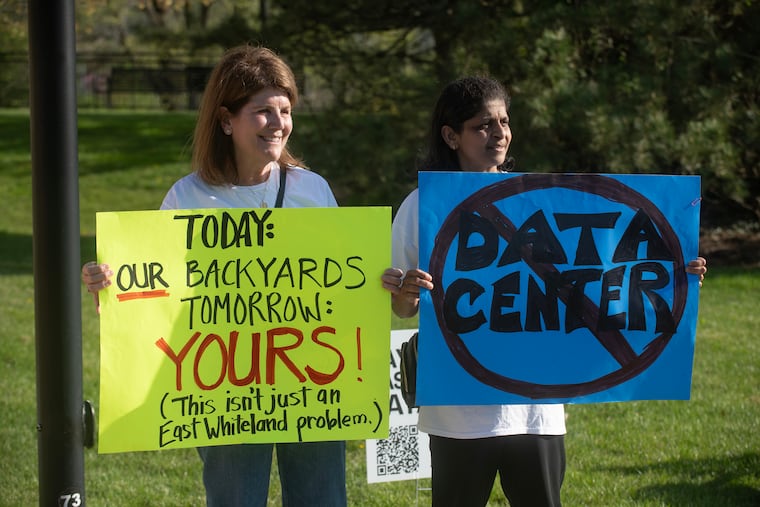
Communities across Pennsylvania have pushed back on each and every data center project, from East Whiteland and Hazle Townships to Montour County and beyond. Concerns include lack of transparency and due process, high water use, skyrocketing energy prices, an unprecedented build-out of power plants and high-voltage transmission lines, and more.
These concerns are not purely theoretical — Pennsylvanians are already seeing the financial impacts of the data center build-out. In 2024, Pennsylvanians paid $492 million in energy infrastructure upgrades for 16 data centers. Shapiro’s GRID plan notwithstanding, as more projects are proposed and more infrastructure is needed to bring these sites online, we can expect ratepayers to fork over more of their hard-earned cash for facilities that do not serve their needs or interests.
Pennsylvanians don’t have to look far to see what unchecked data center expansion can do to communities.
Two states away in Virginia, massive, loud data centers have been built right next to homes, turning neighborhoods into industrial sites. Now this industry is attempting to bully Pennsylvania communities to accept the same fate.
Many of these industrial compounds are proposed for rural Pennsylvania, threatening to disrupt communities’ way of life. A proposed data center in South Whitehall Township, Lehigh County, would include six buildings spread across 410 acres — which Food and Water Watch analysis finds is equivalent to the size of 100 Walmart supercenters.
On an even grander scale, as part of the Shapiro-touted $20 billion data center AI investment by Amazon, a proposed campus in Luzerne County would stretch across 1,5200-1,700 acres.
These are not modest developments. They are sprawling industrial complexes that threaten to reshape rural and residential communities beyond recognition.
Data centers are not a public good.
These proposals also threaten drinking water supplies. Hyperscale data centers can consume as much as two million to eight million gallons of water daily, putting enormous strain on local water supplies. This comes as the majority of Eastern Pennsylvania, a hot spot for development, is currently experiencing moderate to severe drought.
Nationwide, two-thirds of data centers built since 2022 have been built in water-stressed regions, showing an alarming pattern of development that ignores the limits of local resources. Pennsylvanians should not be forced to compete with corporate server complexes for access to safe, reliable drinking water.
Data centers are not a public good. They are profit-driven extractive industrial facilities that destroy local communities’ quality of life, all while draining their most necessary resources.
Lawmakers have the choice to stand with communities and allow state regulators to pause and take an informed path when deciding if — not how — data centers can coexist with the needs of Pennsylvanians.
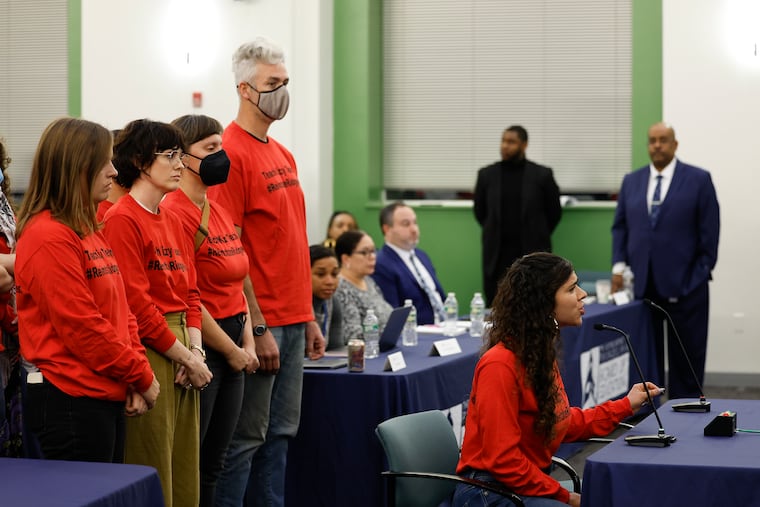
It’s why Food and Water Watch drove 180-plus impacted residents facing data center projects in their communities to Harrisburg on June 23, and it’s why Pennsylvanians across the commonwealth must call on their legislators to support Muth’s bipartisan moratorium on hyperscale data centers today, before we all pay the price later.
Ginny Marcille-Kerslake is a senior organizer for Food and Water Watch in West Whiteland Township.