The dawn chorus: The sounds of early morning are more than just birdsong
Scientists don’t know exactly why birds sing in unison at sunrise. The mystery adds to the majesty. I want my granddaughter to hear more birdsong than I do, not less.
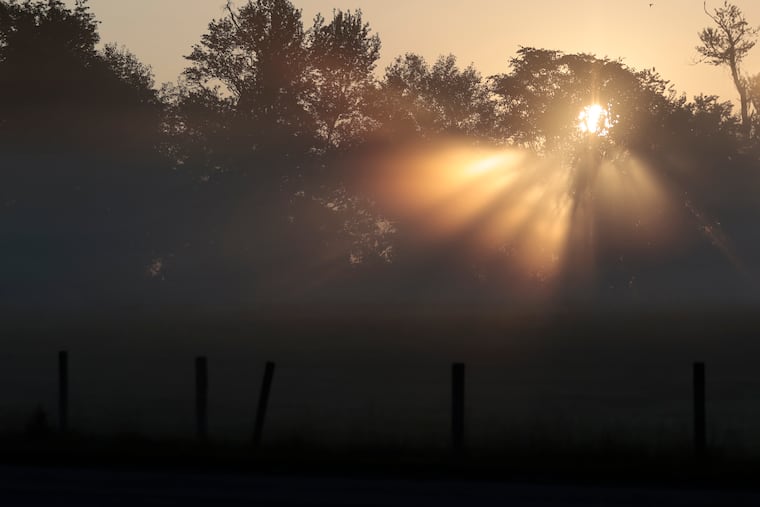
I swing open the doors of the sleeping porch. All 11 of them. I see a streak of pink in the east as the sun begins to rise. But it’s not the sunrise that has made me leap out of bed at 5:15 a.m. I want to hear the dawn chorus. Every last note. I have been to the Amazon, and this sound is just as spectacular.
It is May on our Pennsylvania farm, and spring migration is at its peak, warblers and other birds stopping by briefly on their way to the boreal forest. Some days are not as easy as others to hear the birds sing.
If we’ve had heavy spring rains, birdsong can get drowned out by the creek raging below me. Some mornings start early with the hoofbeat of horses, tractor noise, or chain saws. But this morning is still, perfect for listening. Even the dogs, on the floor next to me, don’t want to budge at this hour.
I crawl back into bed — the dawn chorus my morning meditation on the world.
Every branch in every tree erupts, or so it seems. At first, I can distinguish one song from another. I hear the eastern phoebe closest to the house; they have a nest underneath the eaves of the porch, their first clutch recently hatched and getting ready to fledge. An American robin, a bird so common I underestimate it, belts out its lovely song. I hear the glorious sound of a wood thrush, one of my favorites.
I can make out the song of the eastern towhee, too, the first birdsong I ever learned. “Drink your tea …” A red-winged blackbird. A Carolina wren. A northern cardinal. The sun rises as the chorus builds.
More birds chime in. A Carolina waterthrush? It is getting difficult now to distinguish one song from another, to hear the individual over the whole. A tufted titmouse? A red-eyed vireo?
Theories exist as to why the dawn chorus takes place. It is mating season, and birds are looking for partners. They are claiming territories. It is mostly the males that sing their hearts out. But there are other conjectures, too: It’s too dark to look for food. Early mornings are less windy, so sound travels faster. The truth is, though, scientists don’t know exactly why the birds sing so loudly and in unison at sunrise. The mystery adds to the majesty.
And what would the world be like without these sounds? I can’t help but think of the loss of almost three billion North American birds, a colossal number — many of which are the common birds I watch every day: juncos, finches, sparrows, even the ubiquitous red-winged blackbird.
And if there are fewer birds, is the dawn chorus quieter than my mother heard, my grandmother?
The British Trust for Ornithology has raised an alarm, calling today’s dawn chorus “a much-diminished event, with many of our favourite birds continuing to decline in devastating numbers.” And according to a 2021 study in Nature Communications, not only have bird populations in North America and Europe declined, but the “decline is changing the acoustic properties of soundscapes, most pronounced during spring, when birds are most vocally active.”
Rachel Carson wrote in her essay, “Help Your Child to Wonder,” “No child should grow up unaware of the dawn chorus of the birds in spring.” I want my new granddaughter to hear more birdsong than I do, not less.
A brown-headed cowbird? American goldfinch? Chipping sparrow? Mourning dove? Blue jay? Perhaps they are all singing, but I’m not sure. I know the Baltimore oriole has arrived from its wintering grounds of Florida to South America because I heard it while working in the vegetable garden the other morning.
I have heard a song sparrow and seen a rose-breasted grosbeak at the bird feeder, an iridescent indigo bunting on the ground below. But if they, too, are singing in this refrain, only an experienced ornithologist would know for sure, not I.
The sound is a jumble to me now — warbles and trills, crackles and twitters, buzzes and shrieks, beats heavy and soft. Nothing short of Carson’s wonder.
The sound gets louder and blends together into a symphony, each instrument playing its own tune — strings, percussion, woodwinds — building to a divine crescendo, the greatness in the melding, one of the glories of spring.
But these sounds are more than just birdsong. As I lie here in the peace of early morning, I think that listening to the dawn chorus makes me feel something bigger than myself.
I imagine each bird a different color with varied markings and particular habits, each with its own beautiful song, unique nest, and different ways of raising chicks. I think about how grateful I am for birds, how they make my life richer every day.
“There’s a hooded warbler at the top of the hill,” my husband says to me. My daughter and her fiancé send us photos of a great horned owl from an early-morning walk in the Arnold Arboretum. I receive the first photo of my granddaughter looking at a picture book by herself — tiny, colorful birds on the open page. My daughter-in-law’s father helps to rescue a great kiskadee in Buenos Aires, Argentina.
Then I ponder each of us, we humans, with our own languages and songs, foods, customs, dances, and dress, varied and spectacular. If only we might unite to sing one bold, beautiful song. Together. In harmony. If we did, we, too, might summon the light and raise the day.
At the very least, let us open the windows and listen.
Daryln Brewer Hoffstot is a freelance writer whose book of essays, “A Farm Life: Observations From Fields and Forests,” was published by Stackpole Books. Her new book, “This Patch of Earth,” will be published next month and is available for preorder.

Inquirer Opinion Newsletter