When the DNC theater comes to town — again
Each time a major political gathering returns here, the familiar narrative is invoked: This is the birthplace of democracy. Yet anyone who lives here knows the city has a far more complicated history.
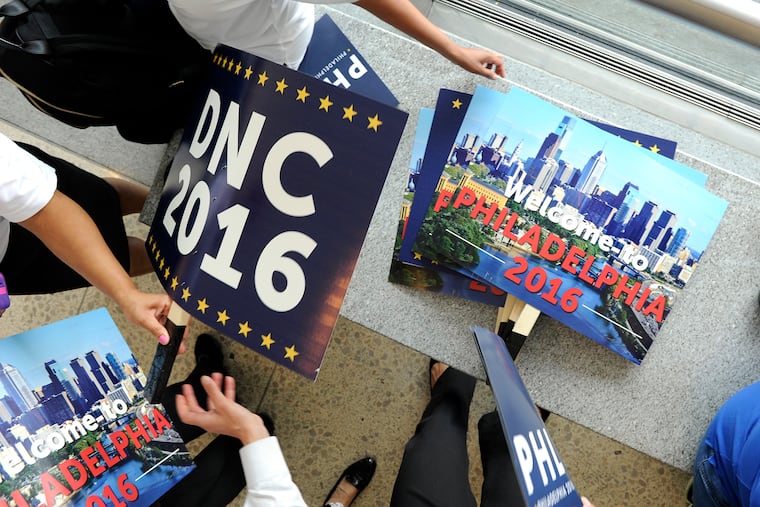
Philadelphia is once again being discussed as a potential host city for the Democratic National Convention. The argument is familiar. Economic impact. National attention. A reminder that this city is the birthplace of the U.S. version of democracy.
All of that may be true. It is also only part of the story.
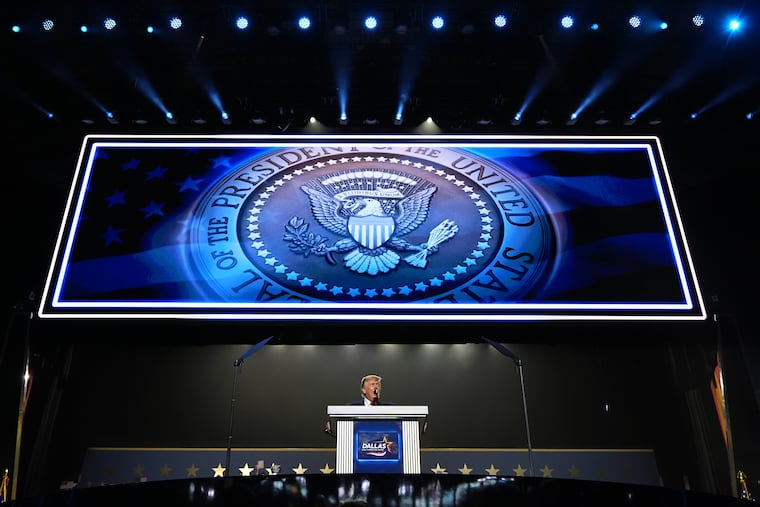
Political conventions in contemporary America function less as arenas of democratic decision-making and more as carefully produced broadcasts. The nominees are known well before delegates arrive. The choreography is rehearsed. The speeches are calibrated for television. What remains is theater.
That observation is not meant as cynicism. Theater has always been part of American political life. Rhetoric matters. Symbolism matters. A speech delivered at the right moment can still move millions watching from living rooms, phones, or laptops internationally.
But if conventions are theater, we should at least be honest about the stagecraft.
Philadelphia has long been asked to play a symbolic role in this national production. Each time a major political gathering returns here, the familiar narrative is invoked. This is the birthplace of democracy. The place where ideals were first written into law. The place where the American experiment began.
Yet anyone who lives here knows the city carries a far more complicated history. The story of American democracy is not simply written in the architecture and myths promoted at Independence Hall. It is written in neighborhoods, in struggles for civil rights, sacrifices for our youth and elders survival and in unfinished battles over who fully belongs within the promise of the republic.
I was asked recently to share my thoughts on the possibility of the convention returning, in part because I was one of the producers of a cultural activation during the 2016 Democratic National Convention in Philadelphia titled Truth To Power. That project brought artists, celebrities, writers, musicians, and organizers together to explore how culture and civic imagination intersect with politics.
At the time it felt urgent and contemporary. Looking back nearly a decade later, the moment almost feels like another century. So much of American public life has shifted since then that it is difficult not to view that summer through a different lens.
What felt like political turbulence then has hardened into something else entirely in the era of Donald Trump and his particular interpretation dream, seemingly reinterpolating the era of President William McKinley, American imperialism, and expansion of territory like in 1900. The same style of governance our region’s most famous military hero, Marine Corps major general and two-time Medal of Honor recipient Smedly Butler decries in his 1935 book, War Is a Racket.
In moments like this, it is worth remembering that conventions have occasionally produced genuine sparks of inspiration.
One of the most powerful examples occurred in 2004 when a relatively unknown state senator from Illinois addressed the convention on behalf of the Democratic nominee John Kerry.
The speaker was Barack Obama.
For many people watching that night the speech felt electric. Obama spoke in a cadence that drew deeply from the Black prophetic tradition. His language moved easily between the spiritual and the civic. He described the United States as the greatest nation on earth, a place where you did not have to be rich to achieve something meaningful, a country animated by the belief that ordinary people could shape history.
There is a moment in that speech that still lingers.
As Obama’s words gather momentum the camera pans toward a luxury box where the Rev. Jesse Jackson is seated. Jackson rises first. Slowly and knowingly he stands and begins what becomes a series of standing ovations.
Watching the footage now, it feels almost ceremonial. A passing of a generational baton.
Jackson had delivered some of the most memorable speeches in convention history during his presidential campaigns in 1984 and 1988. His oratory drew from a tradition that merged moral witness with political imagination. When he stood that night in 2004 it felt as if he recognized something familiar in Obama’s voice. The cadence of the Black prophetic tradition was moving from one generation to another.
Those earlier speeches by Jackson are worth revisiting today. They were not simply political messaging but the distilled language of a movement that had been patiently built through years of organizing in churches, union halls, barber shops, and community spaces across the country. They carried the cadence of lived struggle and the collective imagination of people who believed democracy could still be expanded.
Jackson’s moments on the DNC stage were performances in the highest sense of the word. Not theater, but the disciplined craft of political oratory rooted in movement work. They were a master class in how rhetoric, memory, and organizing meet.
I won’t force a perfect comparison, but in retrospect it feels a bit like watching Black Thought deliver that legendary "HOT 97 (Freestyle.)" The depth, the improvisational brilliance, the sense that decades of study and lived experience are being channeled in real time. Obama, by contrast, often lands closer to Drake: enormously successful, culturally fluent, and widely appealing, but operating in a different register of performance and relationship to the tradition.
That tradition has always been about more than rhetorical peacocking. It carries the weight and responsibility of lived experience. It speaks from service and struggle rather than from the safety of a stage.
Today too many politicians attempt to borrow that cadence when convenient and the cameras are on. The emotional architecture of the moment is well understood by speechwriters, PR consultants, and producers. But the prophetic voice cannot be manufactured purely for broadcast.
It grows out of community.
The history of American democracy in Philadelphia extends well beyond the founding era. It includes the lives of men and women like William Still and Letitia Still, architects of the Underground Railroad whose work helped guide hundreds of enslaved people to freedom. Their daughter, Caroline Still Anderson, would go on to become one of the first Black women physicians in the United States.
Their story reminds us that Philadelphia’s democratic tradition was not written only by founders in powdered wigs. It was also written by Black families who risked everything to expand the meaning of freedom.
Recently I’ve had a series of experiences that brought that history into sharper focus.
During the Next City Vanguard Conference in Philadelphia in October 2025, a colleague visiting from out of town reflected in a group conversation on how inspiring it was, as a Latinx person, to know of William Still’s work. They spoke about the courage of those who built the Underground Railroad while also reflecting on our present moment, when immigration enforcement once again evokes the specter of state sanctioned pursuit of human beings. The language may have changed, but the imagery remains hauntingly familiar. Agents chasing bodies across borders. People fleeing systems that treat them less as citizens than as capital.
History has a way of whispering across centuries.
Philadelphia hosted another remarkable small gathering. In the summer of 2024, Democracy 2076 convened organizers, civic leaders, and advocates from across the country to imagine what American democracy might look like as the nation approaches its tricentennial.
The room was filled with people doing the difficult and often unglamorous work of democratic renewal. Organizers from cities and rural communities alike. Civic innovators experimenting with new forms of participation. Advocates working across dozens of states red and blue to strengthen the fragile infrastructure of democratic life.
Their brilliant executive director Aditi Juneja is exactly the kind of voice I would nominate for prime time for the stage of the next Democratic National Convention. Not as a symbolic gesture, but as a reminder that the future of democratic participation is being built every day by people who rarely appear beneath the bright lights of national political theater.
Last September, I was in Chicago for the Assembly of Black Possibilities where I witnessed something equally inspiring. In a room filled with organizers, artists, scholars, and civic leaders from cities large and small, a youth and women-led delegation convened a citizen assembly imagining what they called a radical Black future.
What struck me across these gatherings was something simple.
The future of democracy may not arrive through one grand national spectacle. It may not come through a single speech delivered beneath bright television lights.
I increasingly believe it will emerge through thousands of smaller moments. Conversations in community spaces. Kitchen tables, local assemblies. Artists, teachers, organizers, and ordinary citizens choose to participate in civic life even when institutions feel distant or broken.
Democracy, at its healthiest, grows like a field of wildflowers. Thousands of small blooms emerging across the landscape at once.
It is far more resilient that way.
One aging plant sitting alone in a pot on grandpa’s porch may look dignified, but it does not regenerate the soil.
Fields do.
If the political theater returns to Philadelphia once again, perhaps the city can remind the nation of something deeper.
The most important stories of democracy are rarely written into the script.
They are still unfolding beyond the stage. Next Sept. 18, 2026, my colleagues from the Assembly of Black Possibilities will meet in Kensington with Boston Ujima and Kensington Corridor Trust, with practitioners who aren’t waiting for Big Brother’s stage.
The Revolution will never be televised, as Gil Scott-Heron told us.
Tayyib Smith is a dynamic entrepreneur working at the intersections of art, real estate, and economic vitality.

Inquirer Opinion Newsletter